Eagle E-Type
Eagle, a British firm, has been rebuilding Jaguar E-Types since the 1980s, first as improved restorations and then as cars of its own: the Speedster, the Low Drag GT, the Spyder GT and the Lightweight GT, each built on an original E-Type.
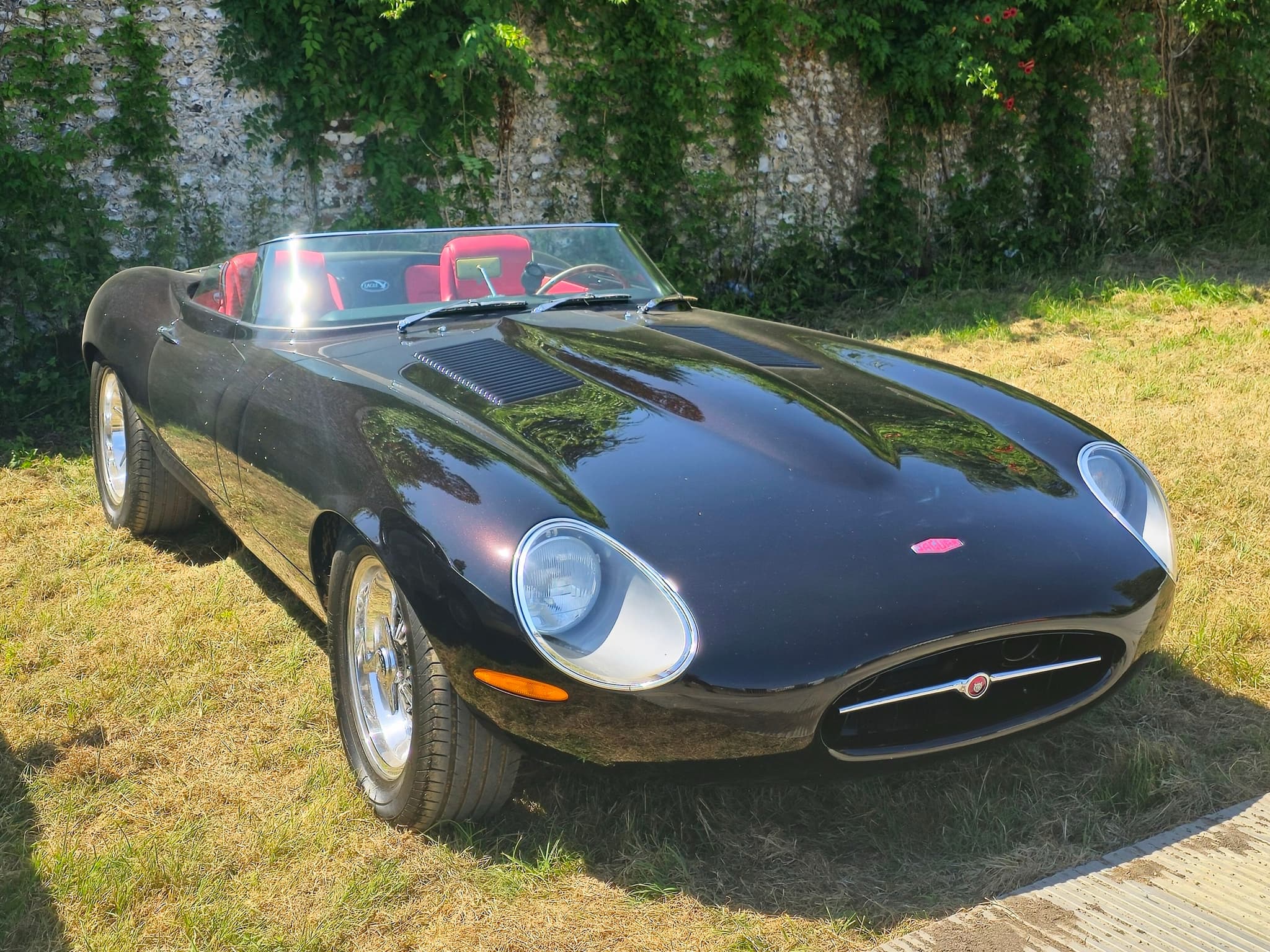
Every Eagle begins as a Jaguar. The firm takes an original E-Type, strips it, and rebuilds it either as an improved version of itself or as one of its own designs, and the finished car "still carries its VIN plate", as CAR put it in 2014. That makes an Eagle something between a restoration and a new car, and the firm has made a business of the space between the two.
Eagle is its own maker, not a version of the Jaguar. This site's pages on restomods and Jaguar Classic's own cars set it beside the other ways the E-Type has been rebuilt.source 1source 2source 3
The company
Henry Pearman founded Eagle in 1984, by the account of Motor Sport in 2020 and of Octane the same year; CAR, in 2014, gives 1982, and Motor Sport's review of the Lightweight GTR, published in December 2025, 1981. In 1989 it was "Eagle Racing in Kent", in the words of Gordon Cruickshank, who that year sat beside Pearman to win the second Pirelli Classic Marathon outright, in a "completely standard 4.2 roadster". Pearman had been fifth in the first, in 1988. Paul Brace, Eagle's development engineer, joined in 1989, and Matthew Dewhurst soon after; both were directors by 2020.
The first car Eagle completed to its own recipe, "Eagle Number One", a 1966 4.2, was launched in 1994, Octane reports. By 2014 the firm was in East Sussex, and by 2020, Octane wrote, "nearly 70 E-types have been turned into Eagles of all kinds". It restores standard E-Types too, but only completely: "we're not interested in half-doing things", Pearman told CAR.source 2source 3source 1source 4source 5source 6
The cars
Eagle's own cars are built on E-Types but share few of their panels. The magazines that drove them describe each:
| Model | What it is | As the magazines describe it |
|---|---|---|
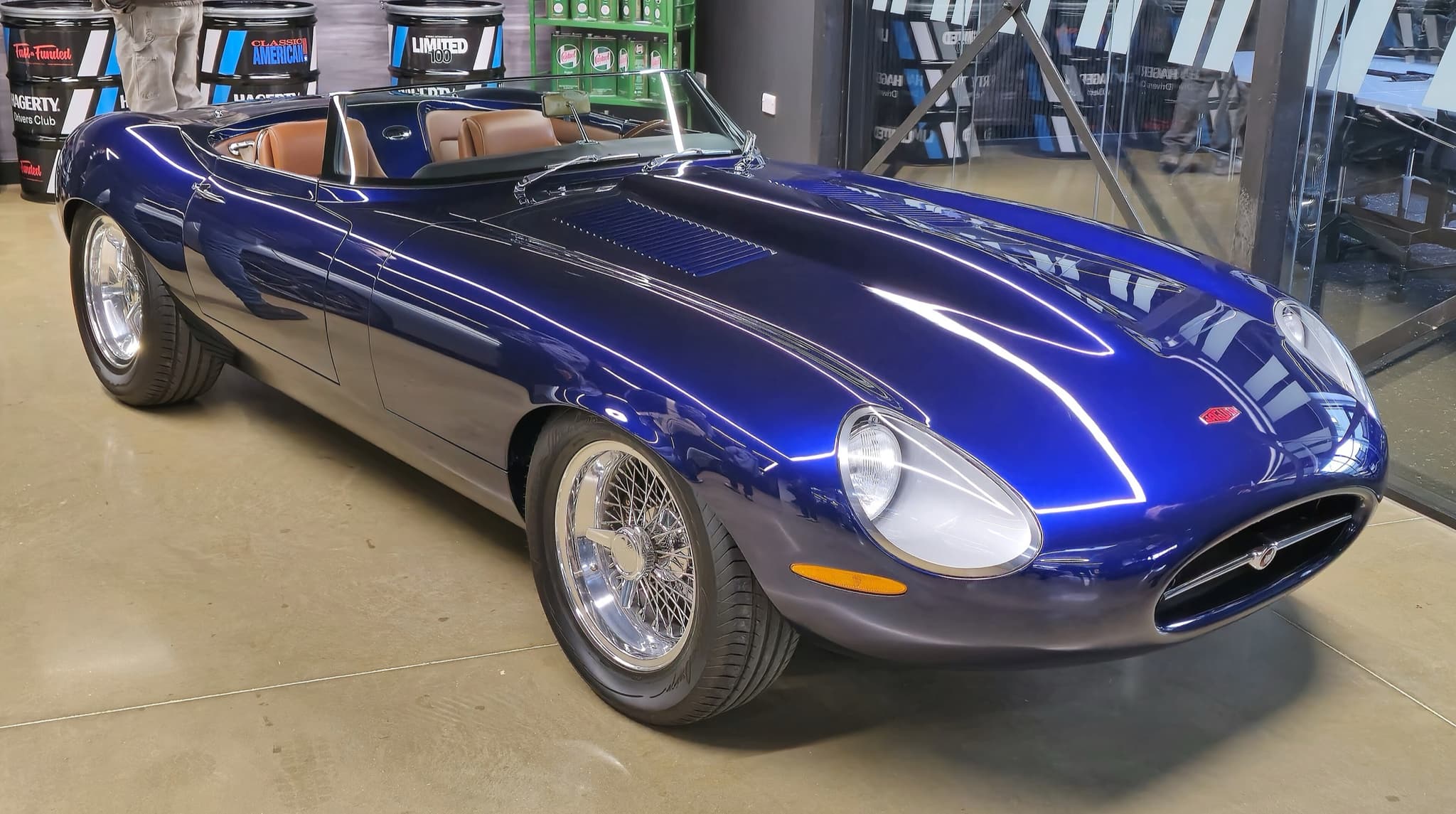
| Speedster | A roofless aluminium car with a low screen and flared arches | Six built by 2014, "a run of six roofless Es which all sold", CAR wrote |
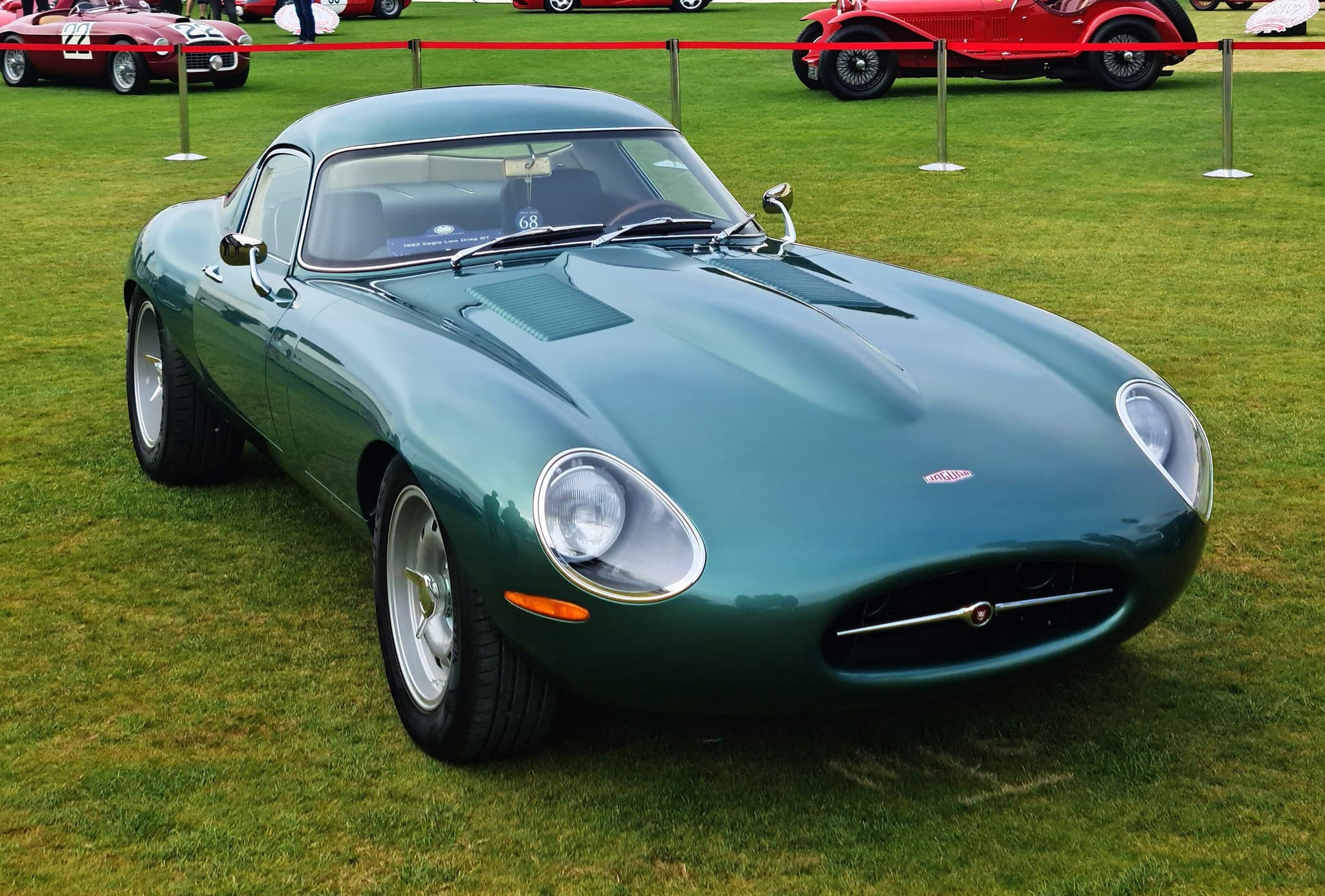
| Low Drag GT | A coupé whose upper body recreates the shape of Jaguar's one-off Low Drag Coupé of 1962 | The first just completed when CAR drove it in 2014, "probably no more than six" planned |
| Spyder GT | "In effect the Speedster with a fully functional soft top" | Octane's description |
| Lightweight GT | An aluminium body with a fixed hardtop, after Jaguar's Lightweight of 1963 | Motor Sport drove the first in 2020, built on a 1963 roadster |
| Lightweight GTR | A lighter Lightweight GT, with magnesium, titanium and carbon-ceramic parts | Reviewed by Motor Sport for its issue of February 2026 |
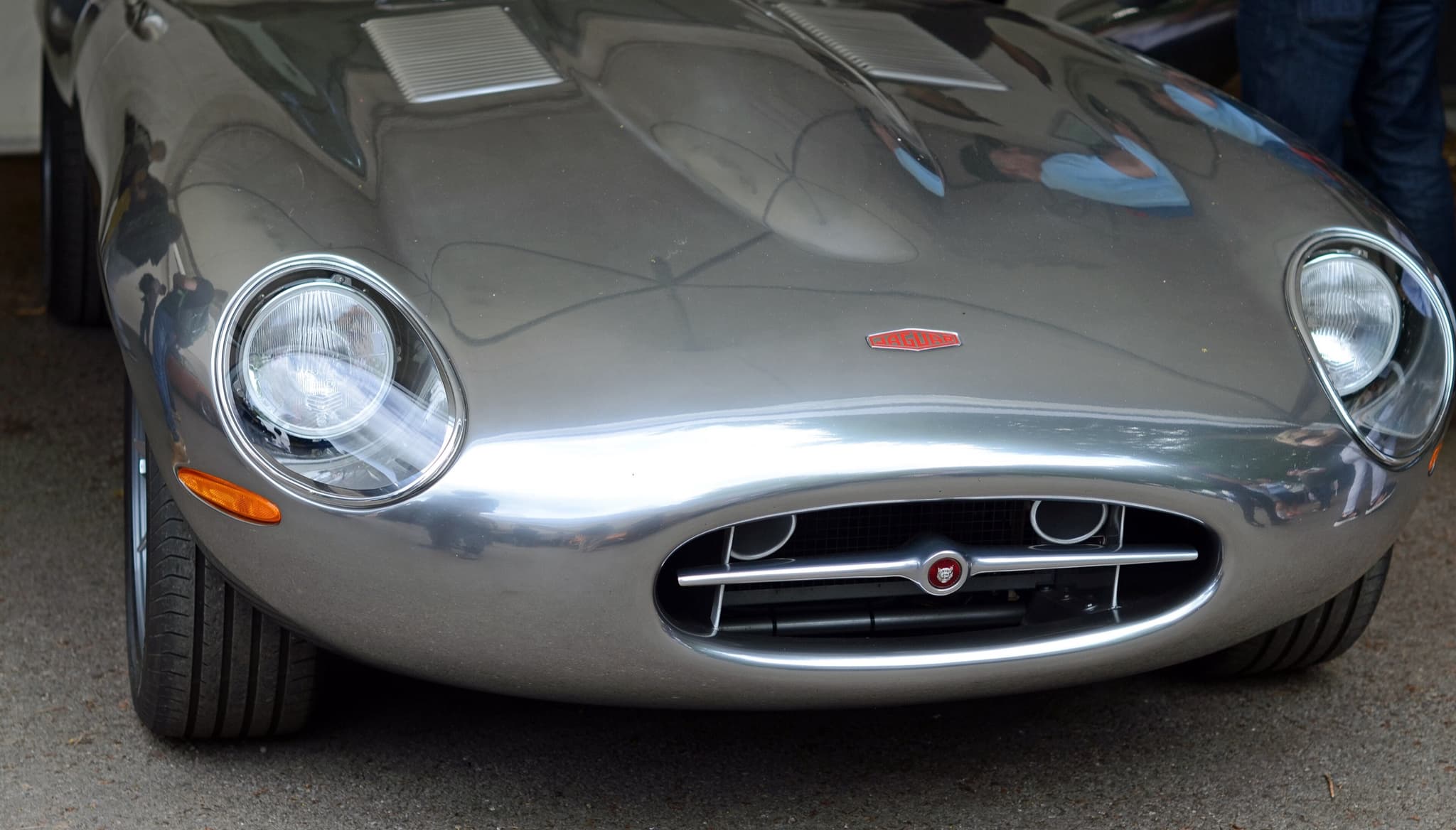
The specials use Eagle's own 4.7-litre version of the XK six, with an aluminium block in the lighter cars, and its own five-speed all-synchromesh gearbox (transmission). Every Eagle gets the changes Brace described to Octane: wider wire wheels, Eagle's own seats, a deeper front valance against lift at speed, as Jaguar had on its Low Drag Lightweights of 1964, and, on cars with sports suspension, revised steering arms against bump-steer. The work is slow, by Eagle's own figures as the magazines report them: 7,000 hours for the first Low Drag GT, CAR was told, and about 8,000 for a Lightweight GT, 2,500 of them on the body, Motor Sport reported.
Pearman's argument for the specials, to Octane, starts from the original:
When it was launched in 1961, the E-type was a quantum leap over every other car. The contemporary Aston DB4 and Ferrari 250 SWB were designs from a different era, with old-fashioned chassis and solid rear axles.
Motor Sport put the result in a sentence when it reviewed the GTR: "It doesn't remind you of how things used to be … it demonstrates how things would have been, were it only possible at the time."source 1source 3source 2source 4
An Eagle is still an E-Type underneath
Eagle chooses its own donor cars: "The folk at Eagle won't let you supply your own donor because they don't know where it's been", Motor Sport reported, and about 60% of a Lightweight GT is new. What stays is the car's identity, with its Jaguar car number and VIN plate, and on the Lightweight GT Eagle reworked the floor, the rear bulkhead and the pedals for the leg room that the early flat-floor E-Types lacked.
Pearman put the case for changing an original to CAR in a sentence:
You wouldn't live in a beautiful Georgian house and still chuck your sewage out of the window
An Eagle is never a Jaguar Classic car or a factory continuation; those are on the Reborn and Lightweight pages.source 1source 2
Sources
Sources are given as plain text; their addresses are on the sources page.
- Referenceserious later work: clubs, specialists, magazines, books
- Ben Oliver, "Eagle Low Drag GT (2014) review", CAR magazine (carmagazine.co.uk), updated 26 Jan 2015, 2014, the donor car and its VIN plate; the founding year; the Sussex lanes; Pearman on full restorations; the Speedster's run of six; the Low Drag GT: its body, engine, weight and hours; the donor's VIN plate; Pearman on improving the original. Reference
- Andrew Frankel, "Seeing the light: On the road in the new Eagle E-type Lightweight GT", Motor Sport, Oct 2020, p. 116, p. 116, the company and its founder; p. 116, "founded by Henry Pearman in 1984"; the directors; pp. 116–120, the Lightweight GT: body, engine, weight, hours, donor cars and floor; p. 117, the donor cars. Reference
- Robert Coucher, "Octane drives every flavour of Eagle E-type", Octane (octane-magazine.com), 22 Apr 2025, the company's history and its cars; "36 years ago"; Brace in 1989; Eagle Number One, 1994; "nearly 70 E-types"; each model driven: the Speedster, the Low Drag GT, the Spyder GT, the Lightweight GT; Eagle's standard changes. Reference
- Andrew Frankel, "2026 Eagle E-type review" (the Lightweight GTR coupé), Motor Sport, Feb 2026, p. 37, review of the Eagle Lightweight GTR: the founding year; review of the Eagle Lightweight GTR: specification and verdict. Reference
- Gordon Cruickshank, "1989 Pirelli Classic Marathon" ("We didn't mean that tough"), Motor Sport, Aug 1989, p. 61, p. 61, Eagle Racing in Kent; the 1988 and 1989 Marathons; the standard 4.2 roadster. Reference
- Paul Hardiman, "Flying high: 25 years and counting for Eagle E-types", Classic & Sports Car, 22 Feb 2022, "a quarter of a century ago". Reference