Jaguar E-Type by Year
Every year of the E-Type, 1961 to 1974: what was on the line, what changed, the car numbers that mark each year, and how the American cars differed. Coventry built by the calendar; from 1968 America also counted model years.
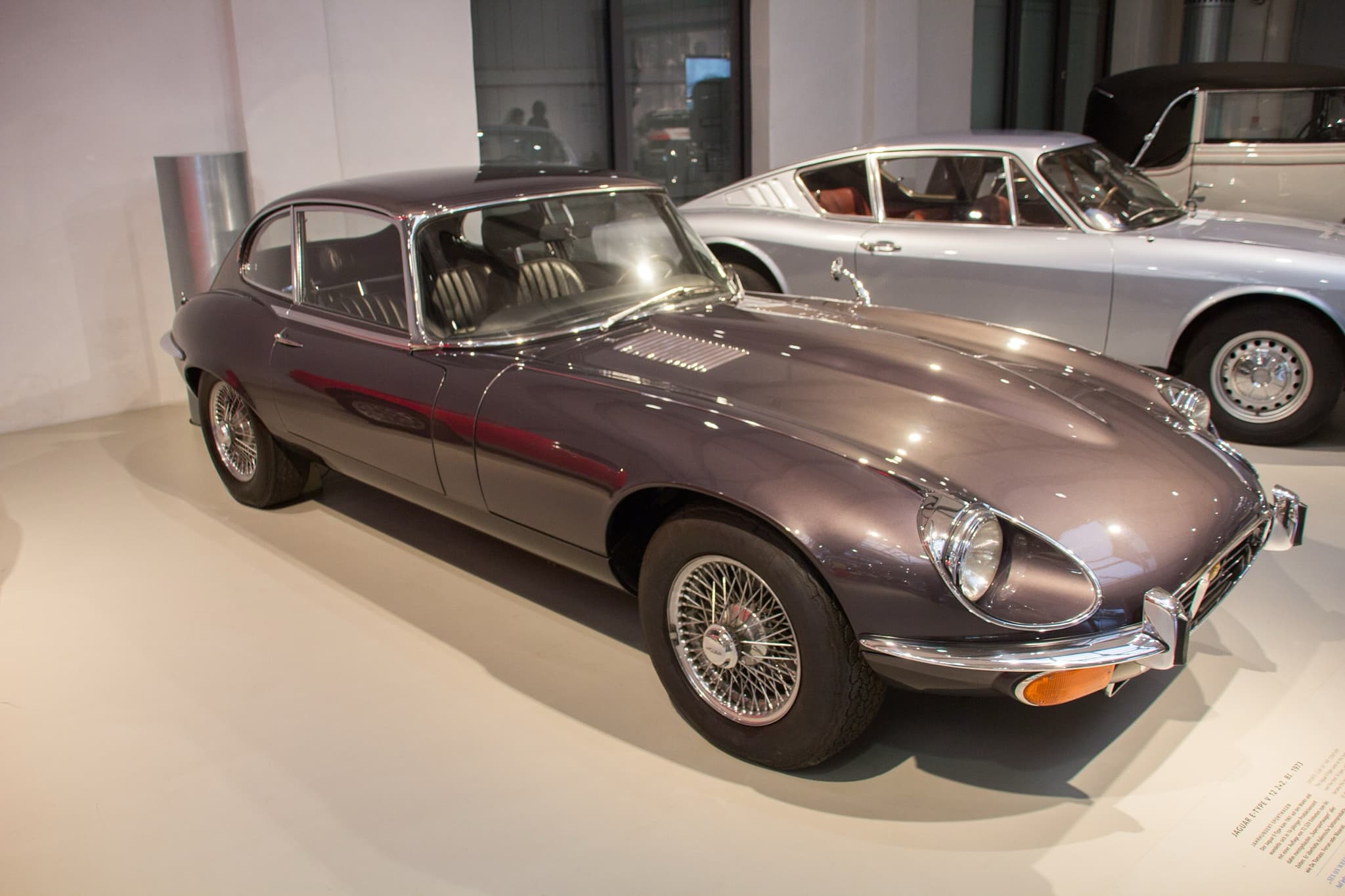
The E-Type was built in Coventry for a little over 13 years, from March 1961 to 12 June 1974, and it changed in most of them. Some years brought a new series, others a dozen small alterations. The Jaguar Heritage Trust's tables give the first car number Jaguar used in each year, for each body and steering side, and those numbers are what date a car.source 1source 2
Calendar years and model years
Each year below is a calendar year of building, as the Heritage Trust's tables give it. America also counted model years. No source read gives Jaguar's American model-year boundaries before 1968; from the 1968 model year, which the Jaguar Clubs of North America date from about August 1967 to August 1968, the model year matters, and from 1970 it is written into the car number: a 2R prefix for the 1971 model year, and UC, UD and UE for 1972, 1973 and 1974.
The numbers in the table are car numbers issued in each year, worked out by our arithmetic from the Trust's first numbers for each year. They are numbers, not cars built, and the Trust calls its dates approximate.source 1source 3source 4
| Year | On the line | Numbers issued |
|---|---|---|
| 1961 | Series 1, 3.8 | about 2,328 |
| 1962 | Series 1, 3.8 | about 6,264 |
| 1963 | Series 1, 3.8 | about 4,206 |
| 1964 | Series 1, 3.8, then 4.2 | about 3,810 |
| 1965 | Series 1, 4.2; 2+2 from autumn | about 5,310 |
| 1966 | Series 1, 4.2 | about 6,957 |
| 1967 | Series 1, 4.2, open headlamps from mid-year | about 4,969 |
| 1968 | Series 1 to July; Series 2 from August | about 7,416 |
| 1969 | Series 2 | about 10,164 |
| 1970 | Series 2; Series 3 from December | about 6,400 |
| 1971 | Series 3 | about 3,414 |
| 1972 | Series 3 | about 4,330 |
| 1973 | Series 3; last 2+2 cars in summer | about 5,087 |
| 1974 | Series 3 roadster, to June | about 1,869 |
1961
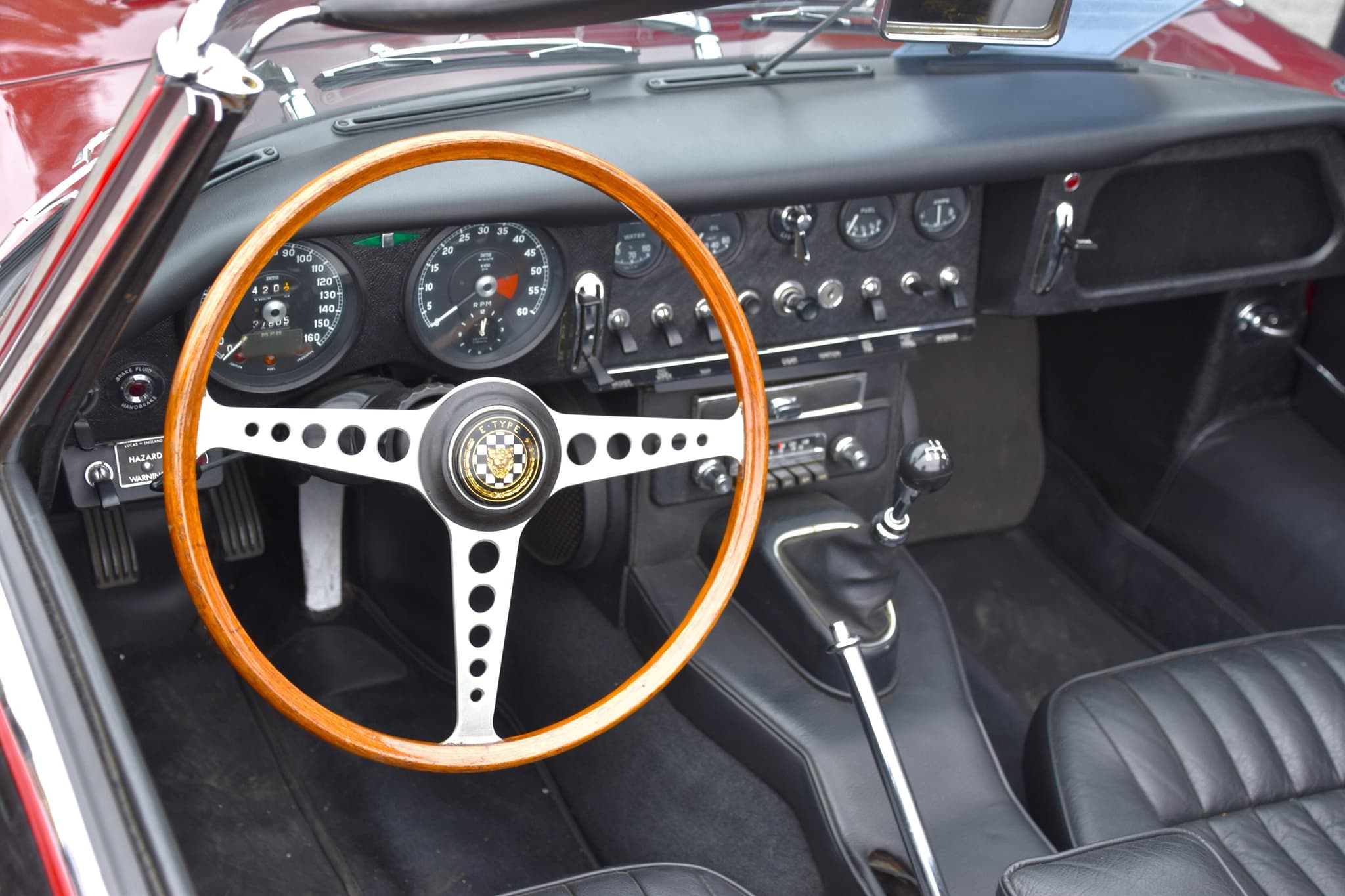
Jaguar showed the E-Type to the press in Geneva on 15 March, the Geneva show opened the next day, and the car was in New York, as the XK-E, on 1 April. The 1961 Jaguar E-Type tells that spring. The first numbers were 850001 and 875001 for right- and left-hand-drive roadsters and 885001 for left-hand-drive coupés, all in March; the first right-hand-drive coupé, 860001, followed in July, when home-market sales began.
By Jaguar's service bulletins, as the Jaguar Clubs of North America reproduce them, the first 500 cars had outside bonnet (hood) latches, which moved inside from October, and the floors stayed flat into the new year. Jaguar's own list of changes, as Motor Sport printed it in 1972, is short:
In that first year of its introduction as one of Britain's most intriguing sports cars the only modifications deemed necessary were a self-adjusting hand-brake, shields to deflect water from being flung into the front hubs, the removal of the catches for the long bonnet to within the car, and a heated back window as an optional extra on the coupé.
The Trust puts the year's completed cars at 2,160.source 5source 6source 3source 7source 4source 1source 8
1962
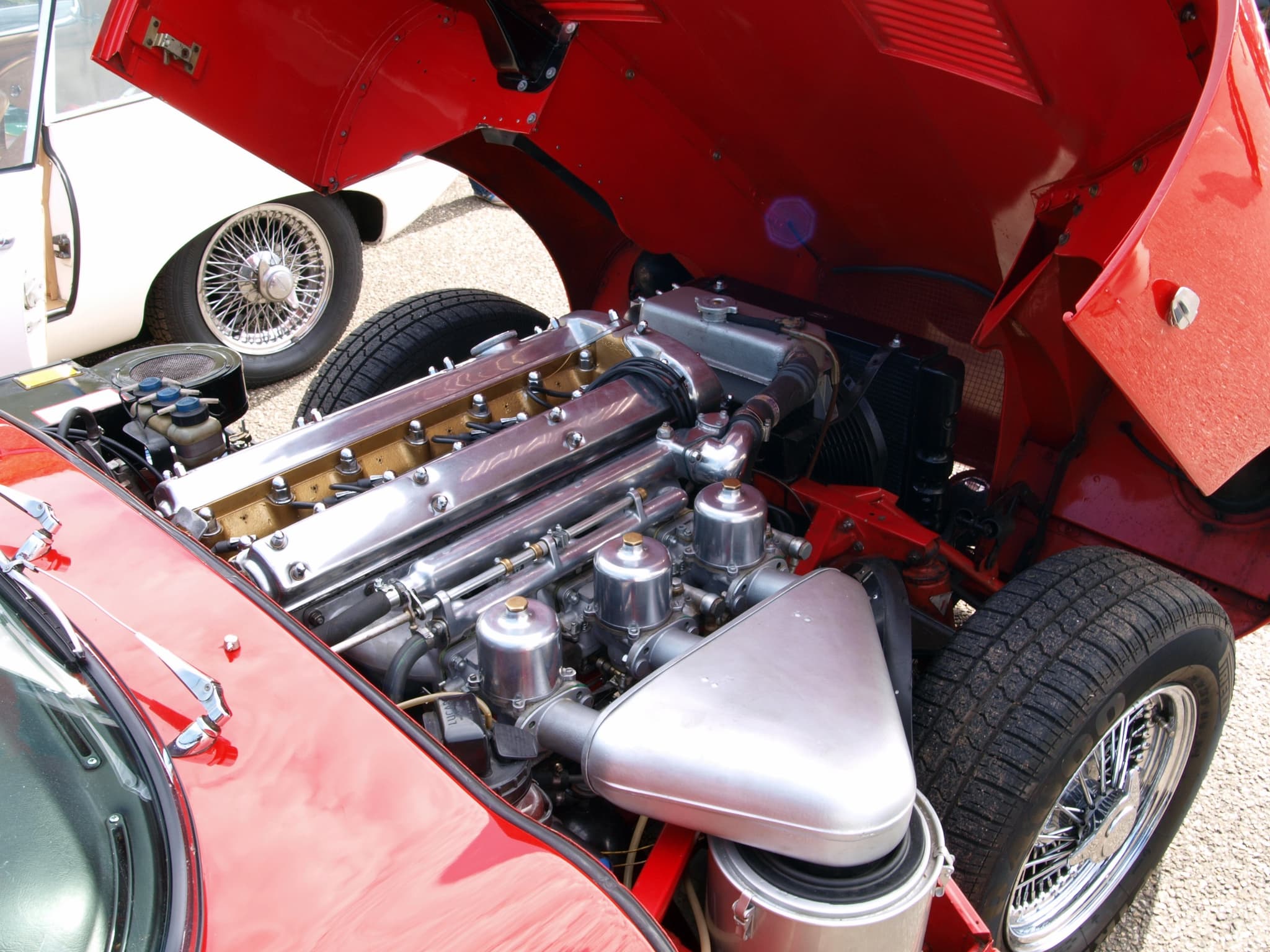
The year the floors changed. Footwells were let into the floor and the seats moved back for taller drivers, at car numbers that fall early in the year by our arithmetic, though Jaguar's bulletin is dated June; the brake pedal's angle was altered and new pads fitted. In July the hardtop's mounting brackets were modified. In Britain a cut in purchase tax brought the price down by July. By car numbers it was the 3.8's busiest year.
In America, a memo from Jaguar Cars Inc. dated December 1961 had dropped all the two-tone colour schemes and British Racing Green from the American range; Jaguar E-Type Colours follows the paints.source 7source 3source 9source 10source 1
1963
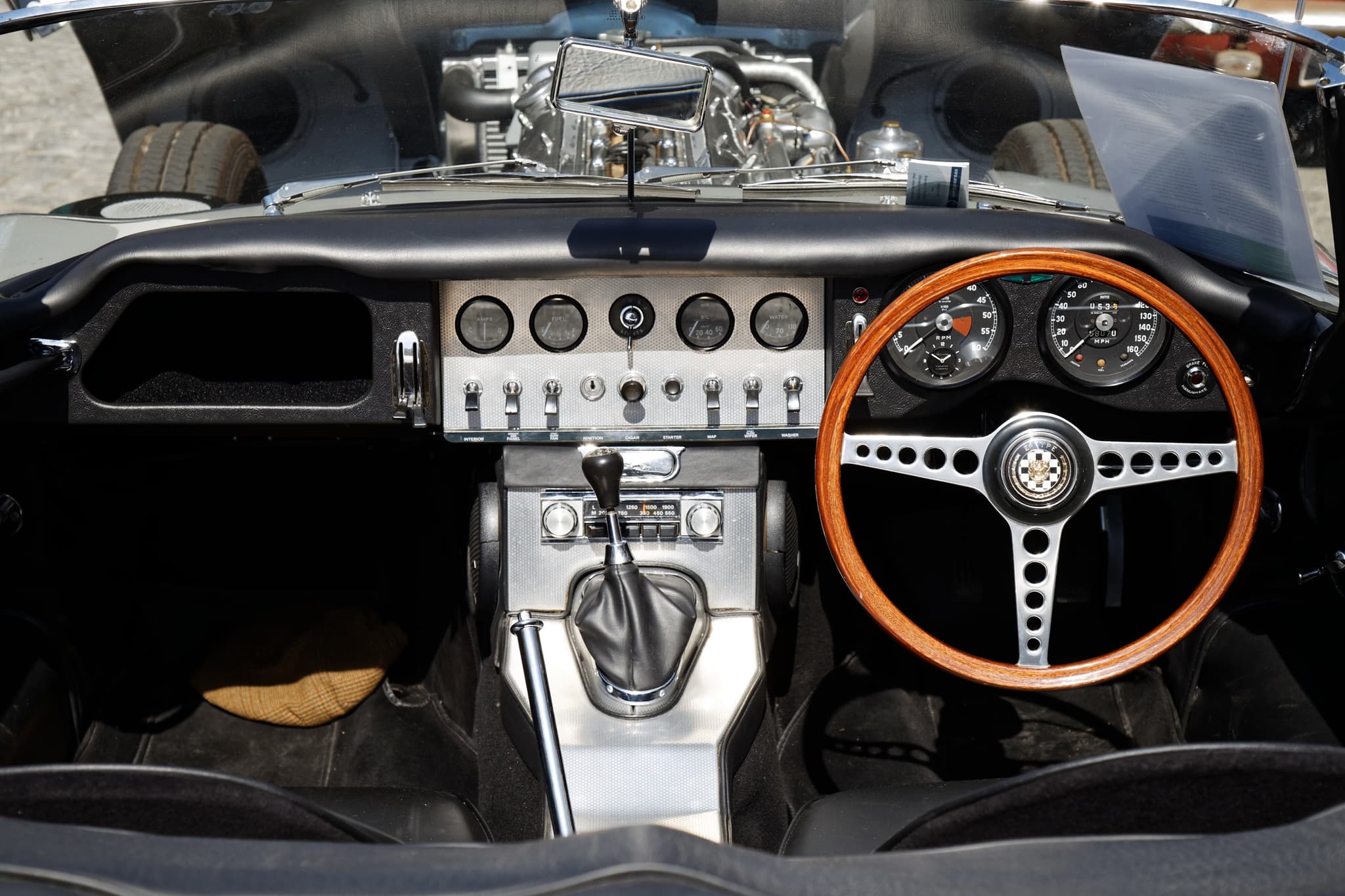
From February or March the engine numbers carried an RA prefix. Jaguar tried a 3.07 axle before returning to the 3.31; the rear suspension was changed to spare its universal joints, the rear discs grew thicker, and new pads, Dunlop SP41 radials and a stowage box between the seats arrived. From October the silencers were shorter and the tail pipes longer, and from November the wiper blades were longer. The Heritage Trust's own coupé, YKE 374A, was built on 8 October. It was also the year of the Lightweight, the factory's competition car.source 1source 7source 3source 11source 12
1964
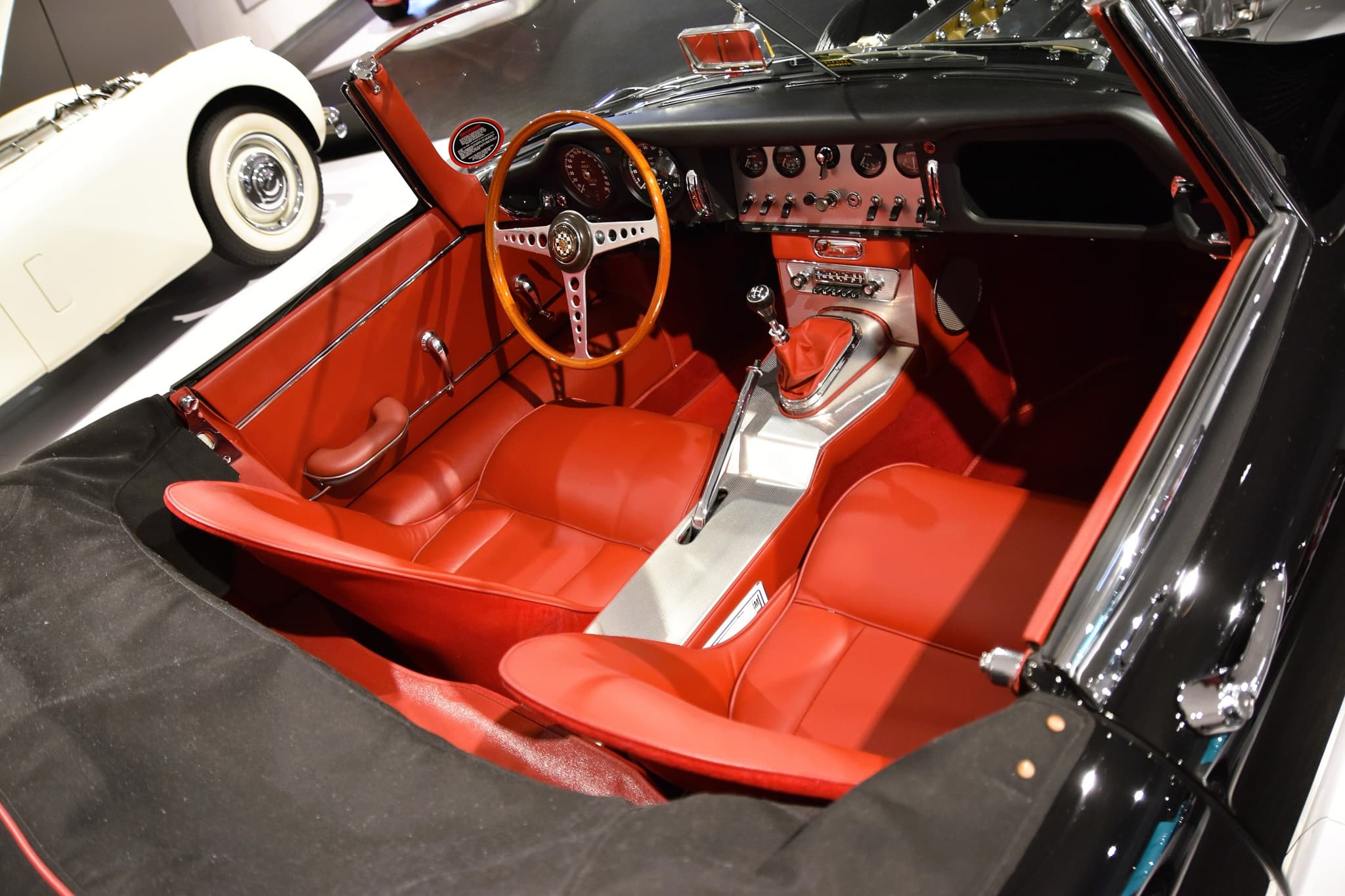
A car of 1964 can be either of two engines, and its number decides which. The last 3.8 cars were built in August. The 4.2 followed from August and September, with the 1E prefix, and was announced at the London Motor Show in October with an all-synchromesh gearbox (transmission), an alternator, a new brake servo and new seats; from October the boot (trunk) lid carried the E-Type name and the 4.2 badge. The roadster's outer door panels were modified in April and its hood (soft top) envelope in October. American cars ran a 3.54 to 1 final drive.source 3source 1source 13source 14
1965
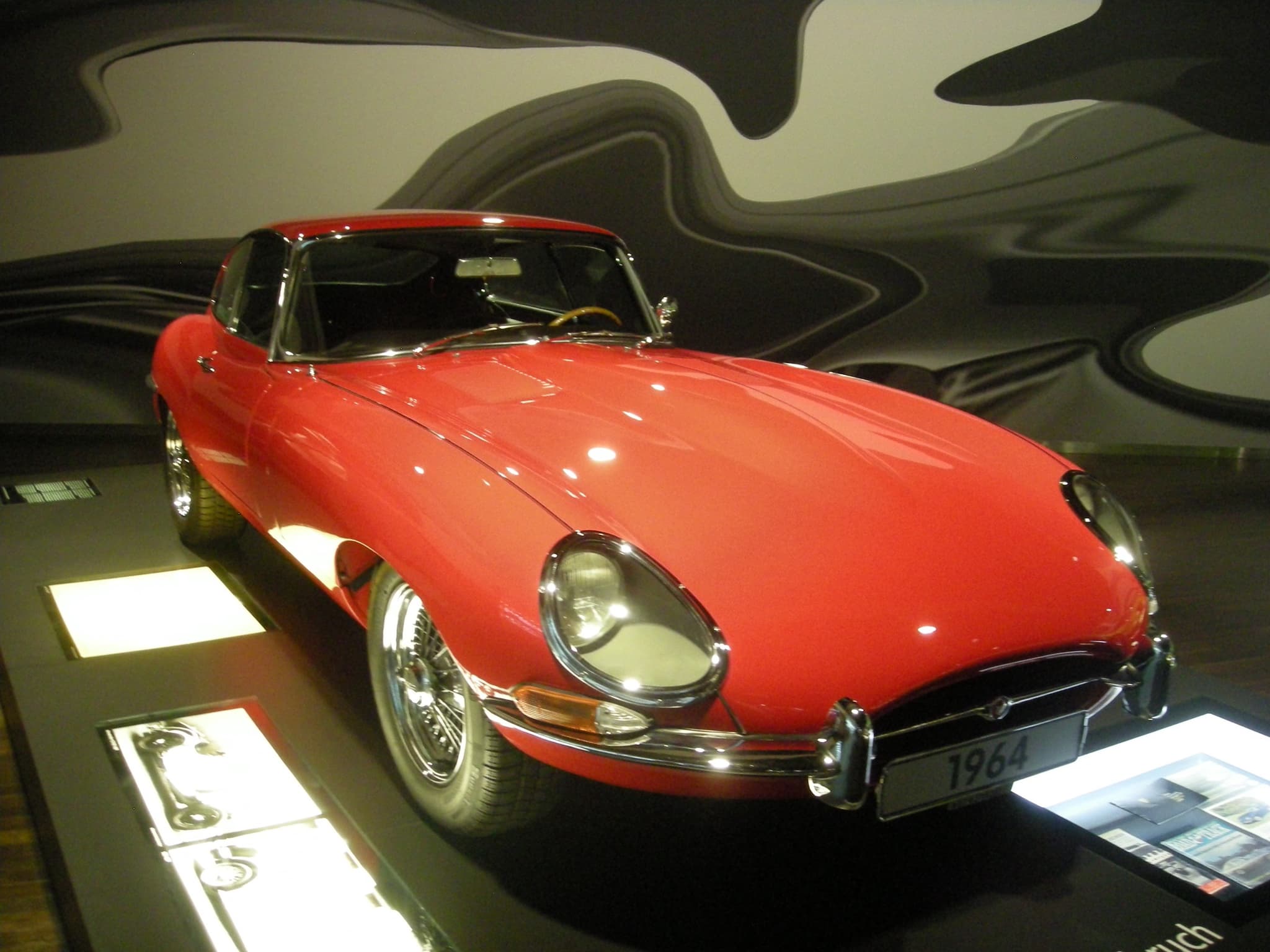
The first full year of the 4.2. Jaguar's list adds an improved screen washer, SP41 HP tyres and better protection for the distributor cap. Production of the 2+2 began in September with right-hand drive and in October with left, though the car was not yet announced. Denis Jenkinson of Motor Sport took delivery of his 4.2 coupé in March and kept it for two years.source 7source 1source 15
1966
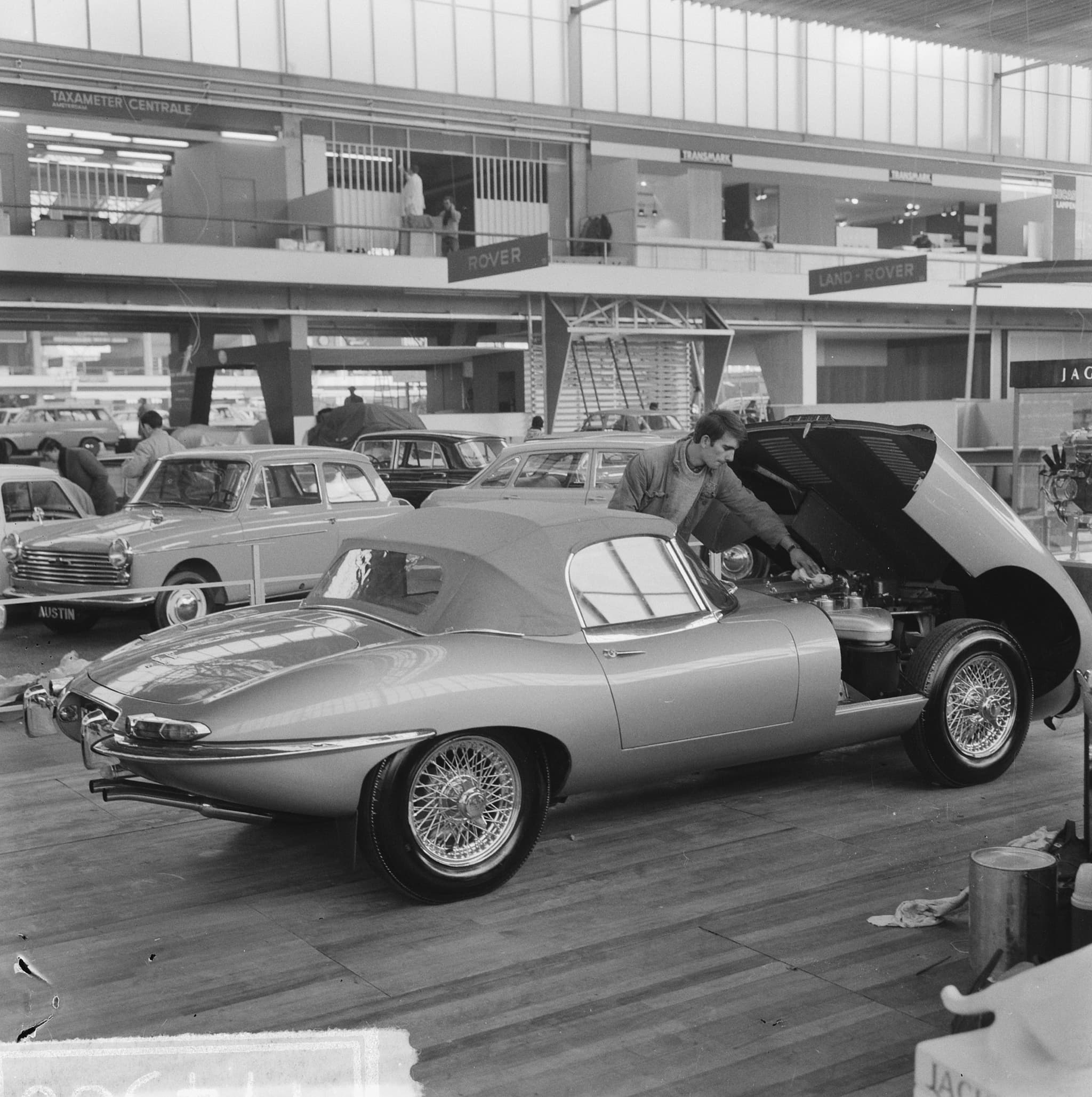
The 2+2 was shown at Geneva in March, and with it came the Borg-Warner automatic gearbox, offered on the 2+2 only. The coupé and the 2+2 had a gearbox with wider ratios, and the clutch pedal's angle could be adjusted. The Heritage Trust's tables have no first number for the right-hand-drive 2+2s of 1966; the appendix to the Jaguar Clubs of North America's judges' guide, by Alan Karpovitch, shows that only the first few of them were numbered in 1965.source 10source 16source 7source 1
1967
Three different E-Types can carry the year 1967. Early in the year cars still had glass covers over their headlamps. From about January, by our arithmetic, North American cars began to lose them, and between June and September cars for every market did, at car numbers that Jaguar's bulletin SDB P.59 gives. And from the autumn, American cars of the 1968 model year had two Zenith-Stromberg carburettors, emission controls and rocker switches: the cars enthusiasts call the "Series 1½", which the Series 2 page explains. The Heritage Trust's tables split the year at September. Jaguar's list also has the roadster's hood now made of plastic, and the wider-ratio gearbox in every model.source 7source 3source 1source 10
1968
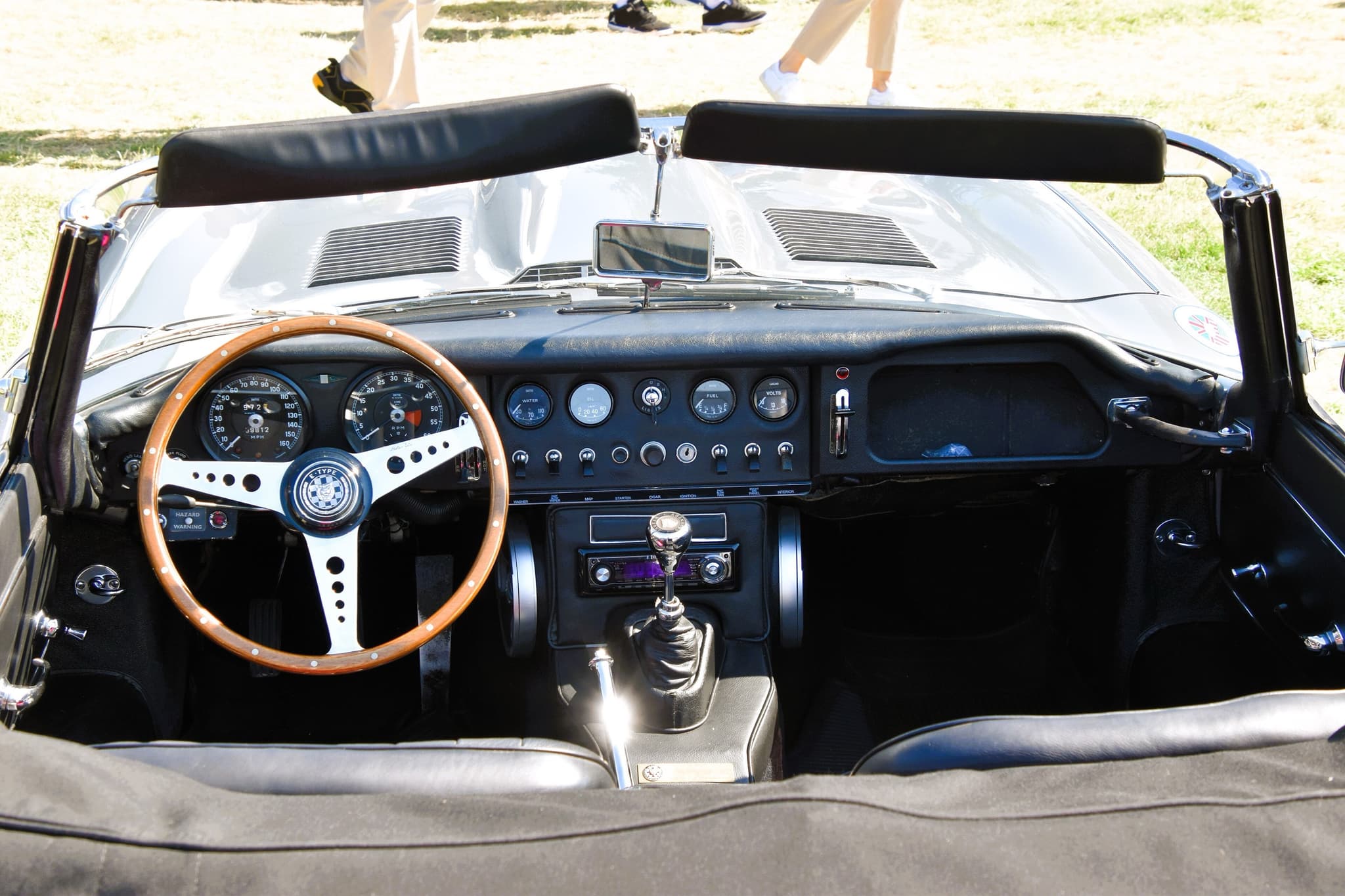
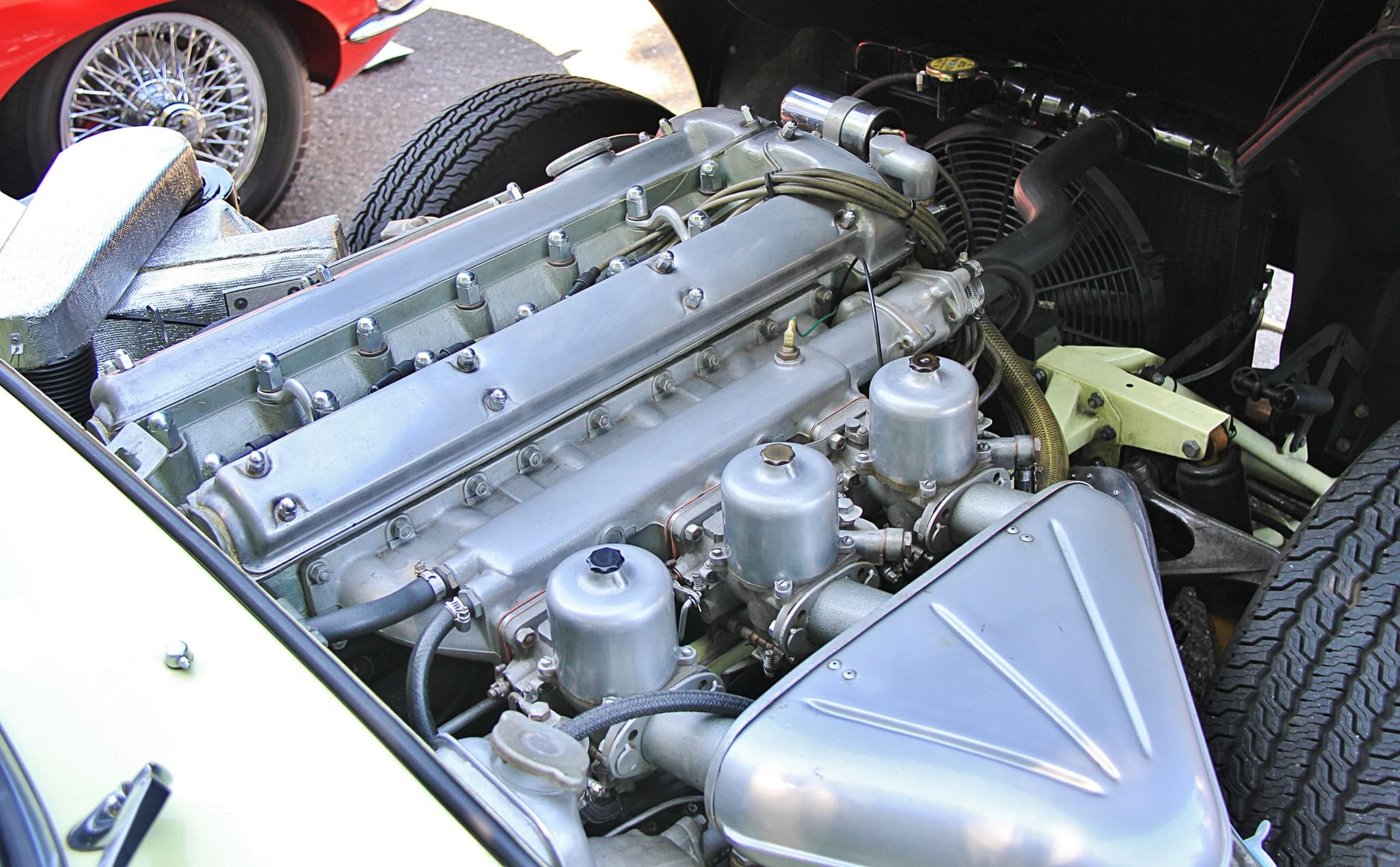
The year opened with America's new safety and emissions rules in force from 1 January, and that month improved wire wheels came in. The Series 1 ended in July. The Series 2 was built from August, with the new 1R prefix, and shown at the London Motor Show in October: open headlamps, a larger air intake, the lamps below raised bumpers, twin cooling fans, Girling brakes, optional power steering and rocker switches. In America, cars of the 1969 model year were Series 2 cars.source 17source 3source 1source 7
1969
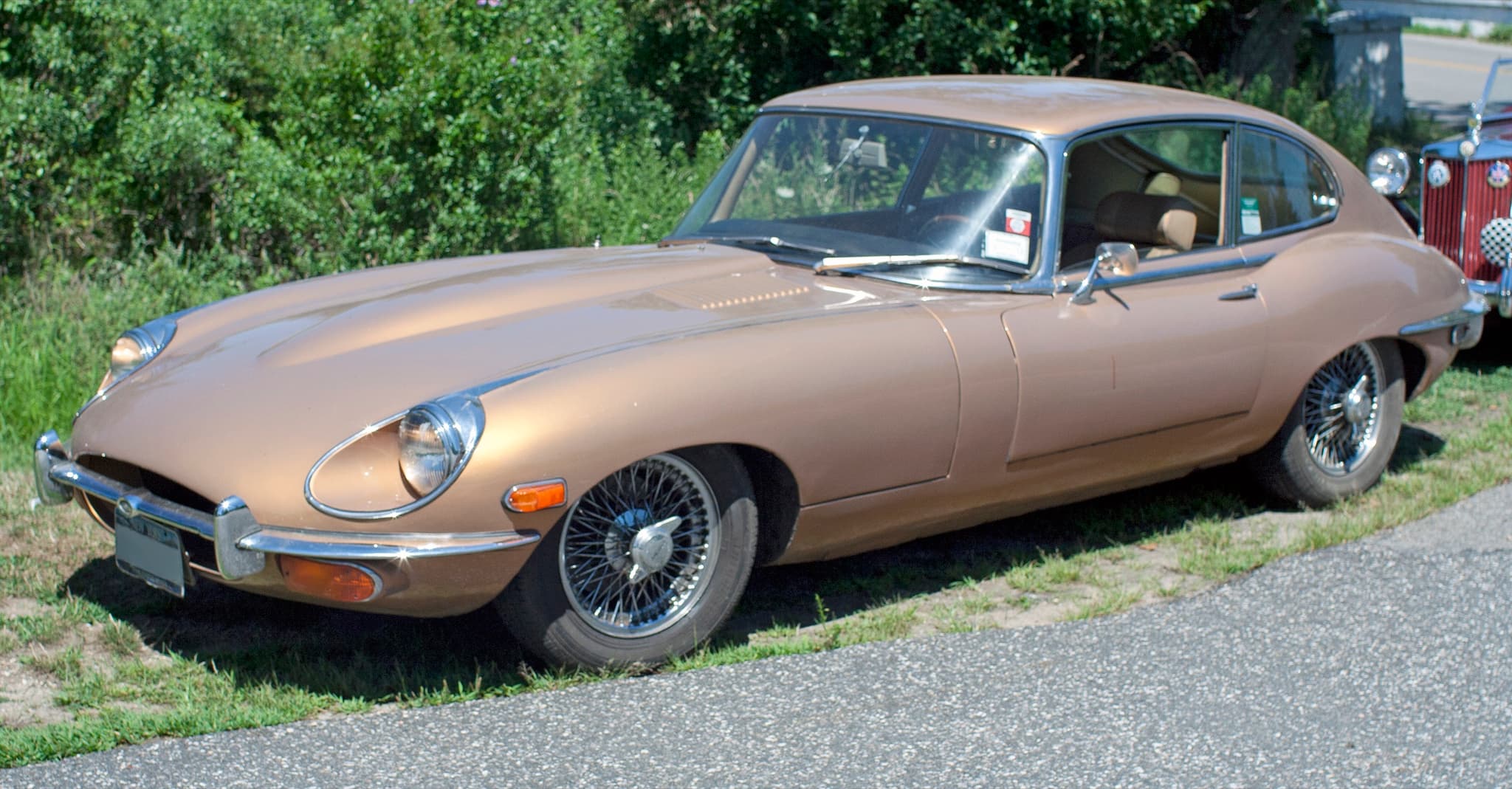
The busiest year the E-Type had, by the car numbers in the Heritage Trust's tables, and every car built was a Series 2. Jaguar's list for 1969–70: quieter camshafts, better ignition, a lock on the steering column, hub caps without ears, and steel disc wheels offered at extra cost instead of wires.source 1source 7
1970
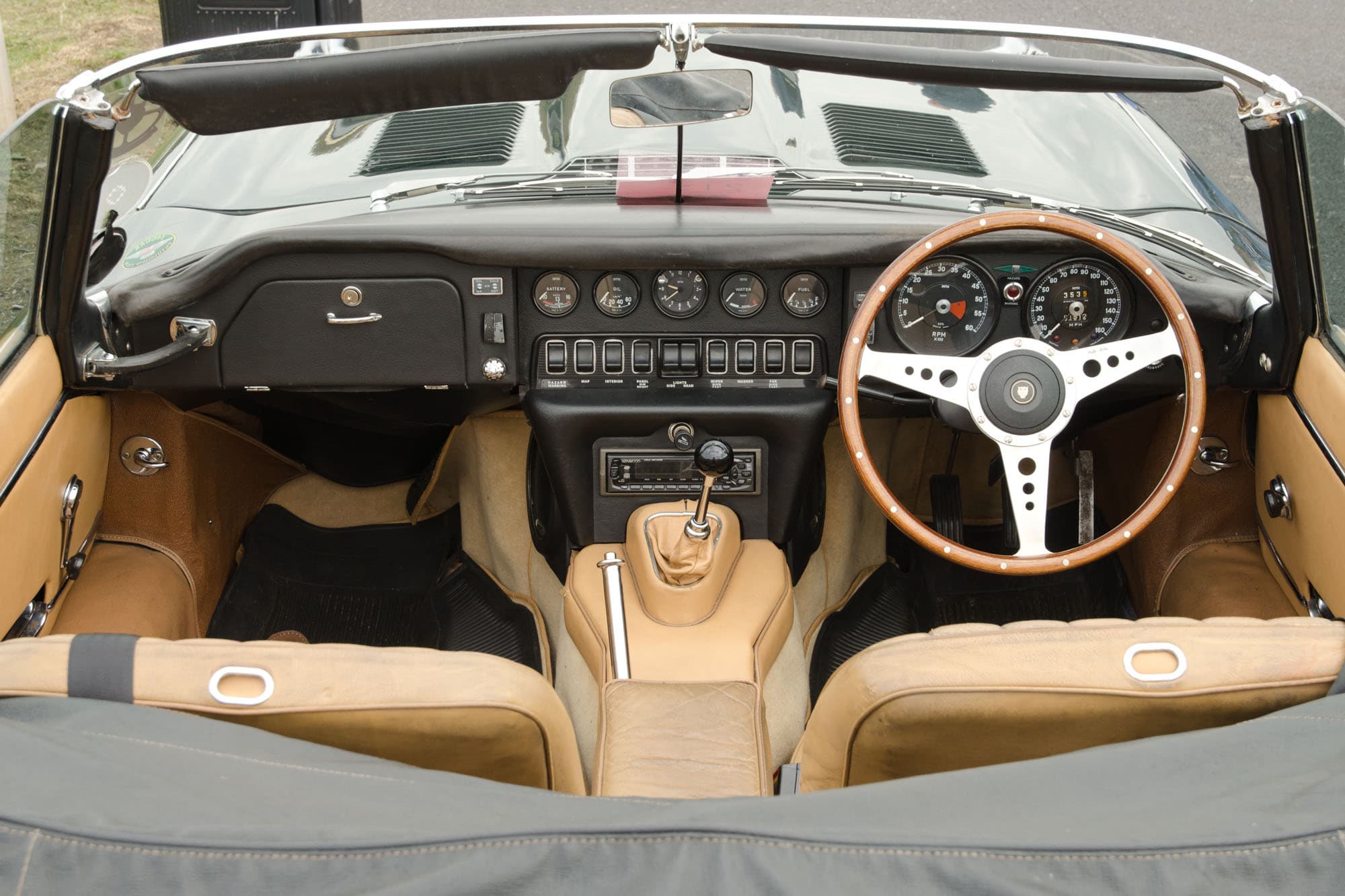
Series 2 building wound down between July and October. American cars for the 1971 model year, built from about April or May, carry a 2R prefix. AROnline notes that the Series 2 was selling well in America in all three versions. In December the first Series 3 was built, a left-hand-drive roadster, 1S 20001, and the first Series 3 2+2 cars were numbered that year too.source 1source 18
1971
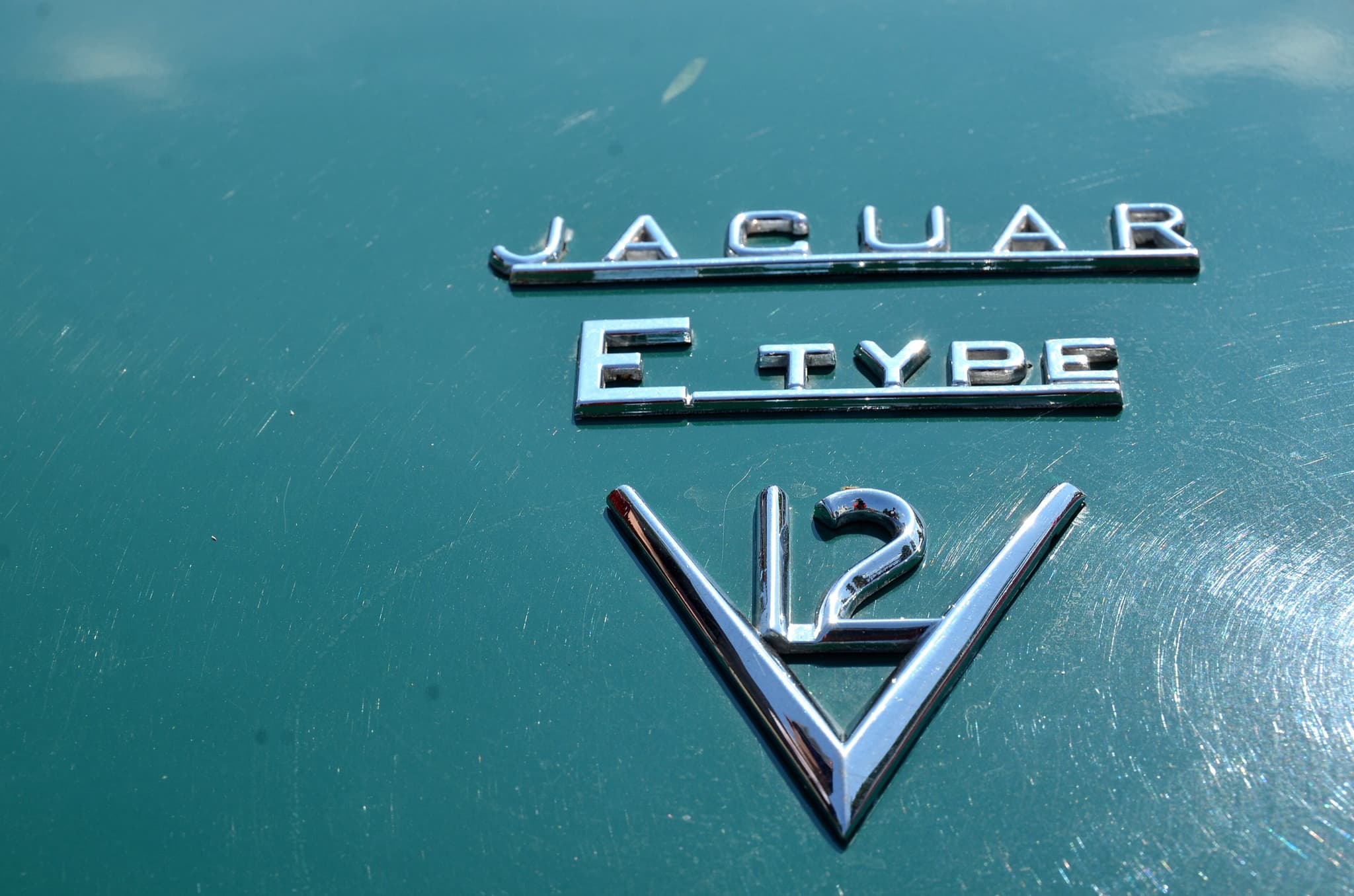
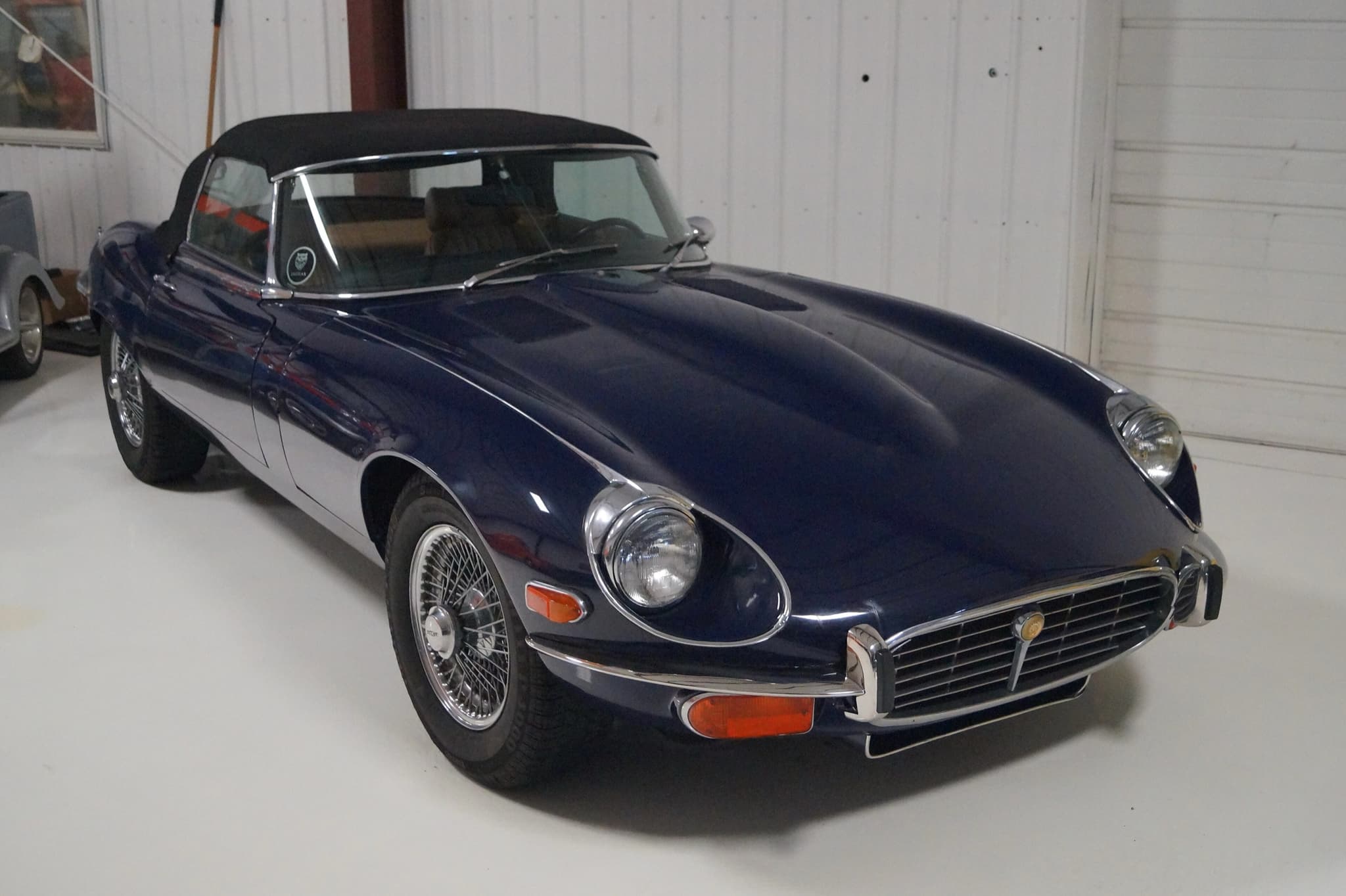
The Series 3, the V12, was announced at the end of March, and was introduced to the American press at Palm Springs, California, that month. Both bodies now shared the 2+2's longer wheelbase. Nearly four in five of the early V12 cars went to America, by Jenkinson's figure, and there the car took a new name.
Initial advertising for the Series III E-type in the USA called it simply the Jaguar V12, highlighting the feature which set it apart from the competition. The XKE name used previously was dropped.
A six-cylinder Series 3 was listed beside the V12, but Motor Sport reported in 1975 that one alone was built as a six, though at least three V12 cars were converted.source 19source 7source 18source 20source 6source 1
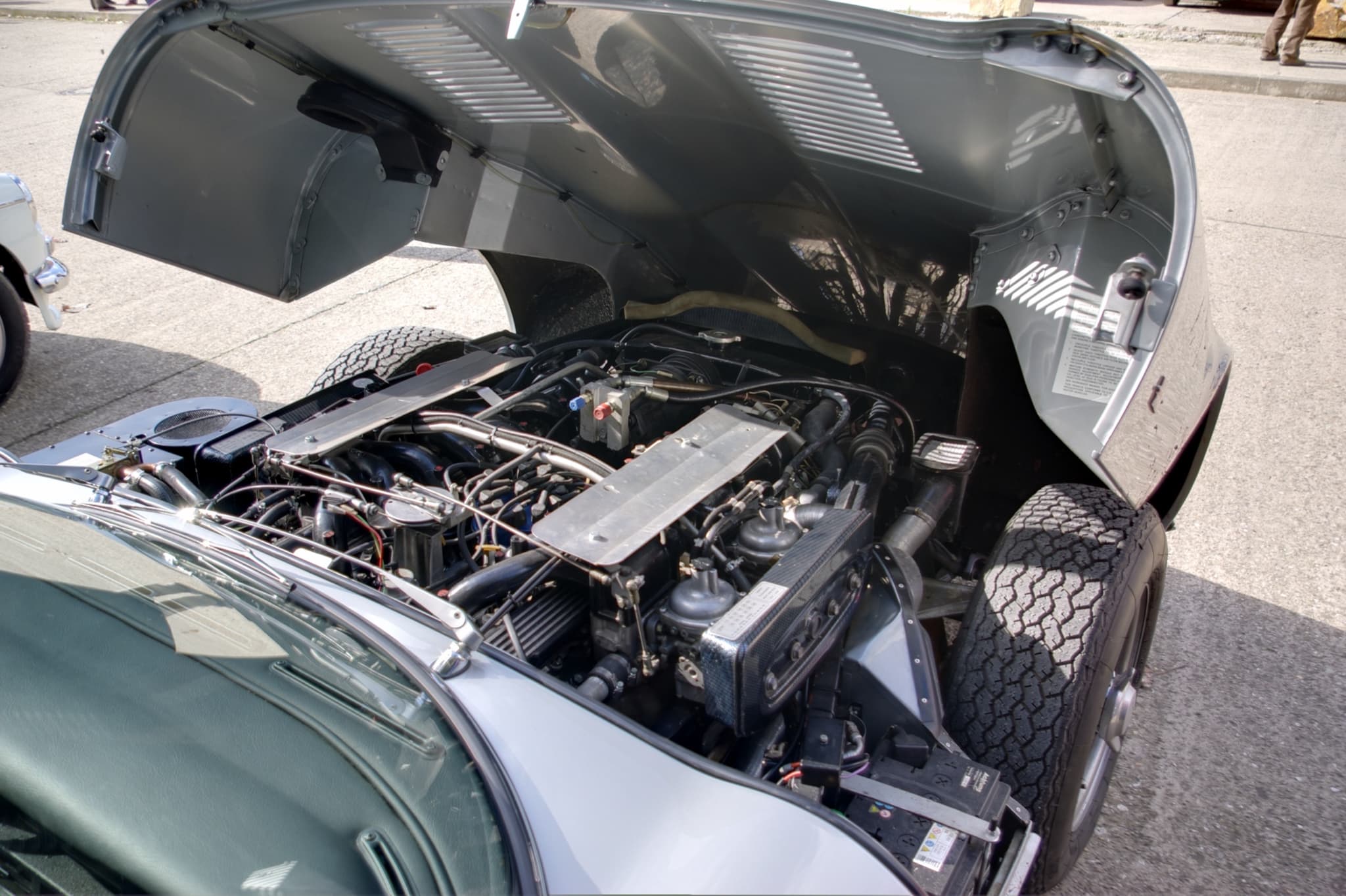
1972
1973
1974
Only roadsters were built. The last cars were the Commemorative roadsters, all but one of them black, with a plaque bearing a facsimile of Sir William Lyons's signature, a run the V12 page tells in full; the last E-Type, a right-hand-drive roadster, 1S 2872, was built on 12 June, and the last left-hand-drive roadster, 1S 26120, that month too. In America the 1974 model year, with a UE prefix, brought rubber overriders at both ends, and only the convertible was offered.
No E-Type was built in 1975. The last car was registered that February, as HDU 555N, which is why 1975 sometimes appears as the E-Type's last year.source 2source 1source 18
Sources
Sources are given as plain text; their addresses are on the sources page.
- Primarymade at the time, by the maker or by people who were there
- Referenceserious later work: clubs, specialists, magazines, books
- Jaguar Daimler Heritage Trust, Research Guide No. 001F: Chassis Number Runs and Change Points by model – Jaguar E-type, Issue 3, January 2023, pp. 1–2, the first car number of each year in each run; pp. 1–2, the year rows; the 2R, UC, UD and UE prefixes; 3.8 table, 1961; 3.8 table, 1962; notes: the RA prefix; 3.8 table, 1963; 3.8 and 4.2 tables, 1964; 4.2 table, 1965: the first 2+2 numbers; 4.2 table, 1966; 4.2 table: the 1967 and September 1967 rows; 4.2 and Series 2 tables, 1968; Series 2 table, 1969; Series 2 and Series 3 tables, 1970; the 2R prefix; Series 3 table, 1971; notes: the UC prefix; Series 3 table, 1972; Series 3 table: the last 2+2 numbers; the UD prefix; Series 3 table: the last roadster numbers; the UE prefix. Primary
- Jaguar Daimler Heritage Trust, "1974 Jaguar E-type Series 3 V12 OTS HDU 555N: The Last E-type Built", the last car, 12 June 1974; the special run; the last car, built and registered. Primary
- Jaguar Clubs of North America, Series 1 E-Type Judge's Guide (draft), part 1: Intro–Exterior, Draft, version of 21 Jul 2026, introduction: the 1968 model year; New York; the bonnet locks (SDB P.46, SB N.8); the door finisher (SDB P.43); the floors (SDB P.51); the hard-top brackets (SDB P.64); the exhaust (SDB M.23) and the wiper blades (SDB Q.74); the door panel (SDB P.119), the hood envelope (SDB P.131), the boot lid emblems; headlamp section (p. 22): SDB P.59 and the Spares Bulletins; the 1968 model year; the wire wheels (SB M.20). Reference
- François Prins, "Evolution of the E-Type", Jaguar Daimler Heritage Trust, "E-Type Production": 1961. Reference
- Jaguar Land Rover (Jaguar media newsroom), "Jaguar Celebrates 50 Years of Iconic E-type" (press release), 24 Jan 2011, facts for editors, 15 March 1961. Primary
- Motor Sport, "Jaguar E-type: the end of production and end of an era – but not of a legend", May 1975, p. 29, the Geneva show, 16 March 1961; the six-cylinder Series 3. Primary
- Bill Boddy, "On the road with the V12 E-type Jaguar", Motor Sport, Jan 1972, p. 36, Jaguar's list: the first year; Jaguar's list: the second year; Jaguar's list: the third year; Jaguar's list: 1965; Jaguar's list: 1966; Jaguar's list: 1967; the Series 2 at the Motor Show; Jaguar's list: 1969–70; "in March last year"; the road test. Primary
- William Kimberley, "The Jaguar E-Type 3.8, 4.2 & V12", Motor Sport, Apr 1989, p. 81, p. 81, sales from July 1961. Reference
- Bill Boddy, "By E-Type To Monaco", Motor Sport, Jul 1962, p. 59, p. 59, the prices after the tax cut. Primary
- Jaguar Clubs of North America, Series 1 E-Type Judge's Guide (draft): Appendices, Draft, version of 21 Jul 2026, pp. 167 ff., Appendix A: the Jaguar Cars Inc. memo of December 1961; Appendix B (Karpovitch): the right-hand-drive 2+2s of 1965 and 1966; Appendix D: the Zenith-Stromberg change point. Reference
- Jaguar Daimler Heritage Trust, "1963 Jaguar E-type Series 1 Coupé YKE 374A", the car's build date. Primary
- Jaguar Land Rover (Jaguar media newsroom), "The Lightweight E-type is Reborn" (press release), 14 May 2014, editors' notes: the Lightweight project. Primary
- Motor Sport, "New cars" (Earls Court), Nov 1964, p. 13, p. 13, the 4.2 announced. Primary
- Motor Sport, "The 4.2-Litre Jaguar E-type" ("A lengthy road test of the 150 m.p.h. E-Type"), Jan 1965, p. 23, p. 23, the 4.2's changes; the American axle. Primary
- Denis Jenkinson, "Two years with the Jaguar E-type", Motor Sport, Apr 1967, p. 22, p. 22, the car's delivery. Primary
- Bill Boddy and Denis Jenkinson, "The Jaguar E-type 2+2", Motor Sport, Apr 1966, p. 18, p. 18, the 2+2 at Geneva. Primary
- Jaguar Daimler Heritage Trust, "E-Type Evolution Exhibition", the American rules of 1 January 1968; the Series 2. Reference
- Chris Cowin, "History: Exporting British cars to the USA – Part Two", AROnline, 31 May 2025, updated 21 Oct 2025, 1970: the Series 2 selling well; 1971: Palm Springs and the Jaguar V12; the 1973 model year; the 1974 model year. Reference
- Jaguar Daimler Heritage Trust, "1970 Jaguar E-type Series 3 V12 2+2 WHP 205J", "launched on 29 March 1971". Primary
- Denis Jenkinson, "Driving the V12 Jaguar", Motor Sport, Apr 1971, p. 64, p. 64, the American share; the six-cylinder car. Primary