Lightweight S850668 (2 GXO)
Whereabouts unknown
The E-Types whose numbers matter: the prototypes, the three cars at the Geneva launch, the first racers, the Low Drag Coupé, the twelve Lightweights, the V12 racers and the last car of all.
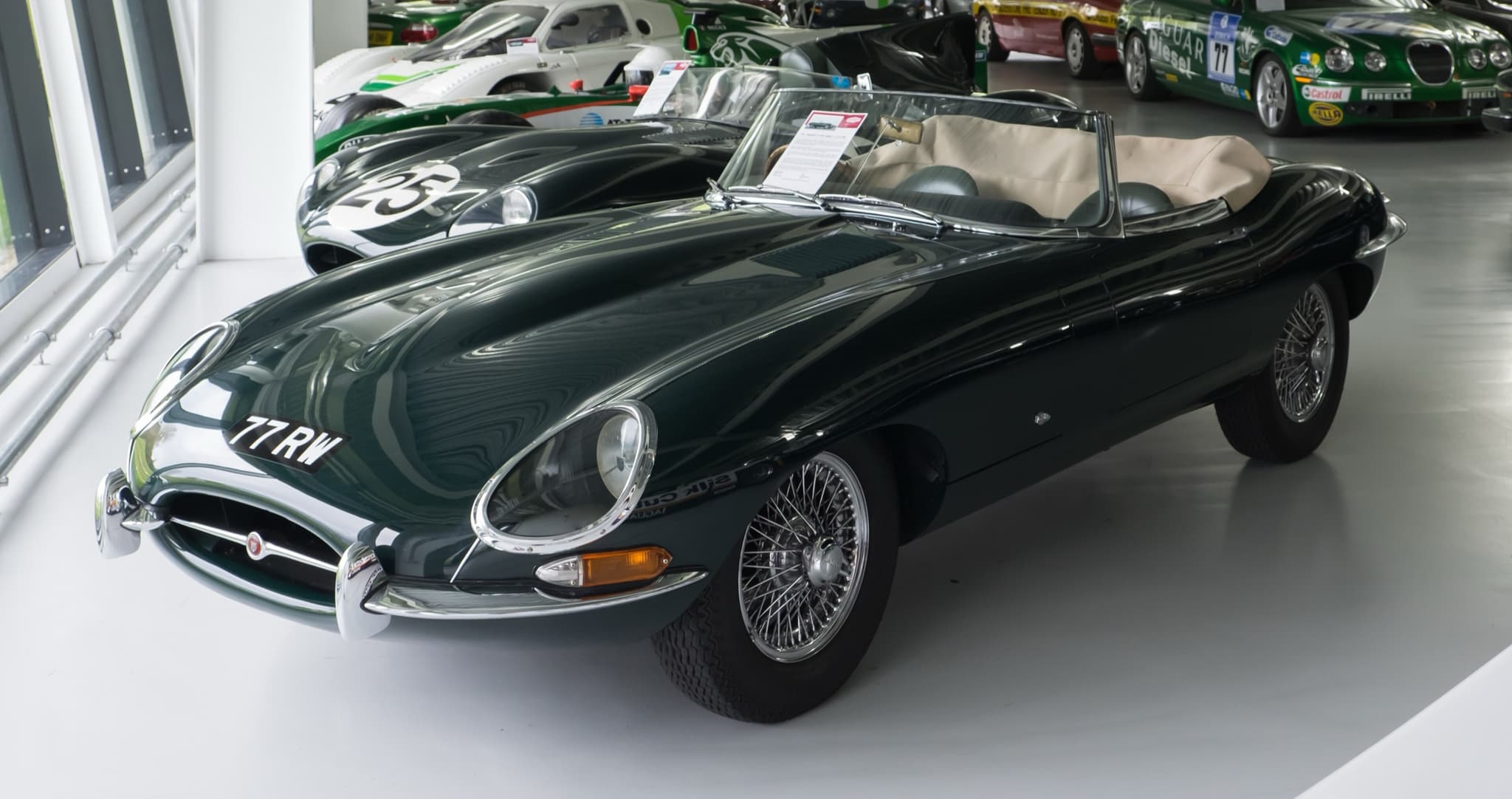
In the middle of March 1961 three E-Types were in Geneva: the coupé 885005 on Jaguar's stand, the coupé 9600 HP that Bob Berry had driven out for the press, and the roadster 77 RW, which Norman Dewis brought through the night when one demonstrator was not enough. On 12 June 1974, 13 years later, the last E-Type left the line, and Jaguar kept it.
Between them come the cars on this register: prototypes, launch cars, racers, the twelve Lightweights and the cars made long after. Most have a card below; seven have pages of their own, and the others are told on the page that holds their story.source 1source 2source 3
E1A, built on chassis XK 101 in 1957, was Jaguar's experimental test car; it was broken up at the end of 1958 or early in 1959. The development cars followed; of the development cars of 1959–60, the coupé 885002, later 9600 HP, survives. E2A, the racing prototype of 1960, raced at Le Mans for Briggs Cunningham, and of the two experimental cars, E1A and E2A, it is the only one to survive.source 4source 5source 9
9600 HP, car 885002, was the press coupé at Geneva and The Autocar's test car. 77 RW, car 850003, was the second demonstrator and The Motor's test car, and is on loan to the Trust. 885005 was the display coupé, on the stand and at the press presentation; it survives with a private owner (Switzerland). The cars at the New York launch in April are on the 1961 page.source 1source 10source 11source 12source 7
Jaguar set aside seven of the first cars for chosen racers in the 1961 season. ECD 400, car 850005, Equipe Endeavour's, won the first race an E-Type started, at Oulton Park in April. John Coombs's car, raced as BUY 1 and later registered 4 WPD, was lightened through 1962 and rebuilt in Lightweight form by 1963. Sir Gawaine Baillie's GB 8488, car 850008, was sold as a road car after its season and raced again in 2018.
At Le Mans in 1962 Cunningham's coupé, 860630, registered 1337 VC, was 4th with Roy Salvadori, and Peter Sargent's own car was 5th. Dick Protheroe raced the coupé 860004 as CUT 7 in 1962, the first of three cars to carry that number. Jack Lambert's early car was rebuilt by the factory to the competition specification on its steel shell.source 13source 14source 15source 16source 17source 18source 19
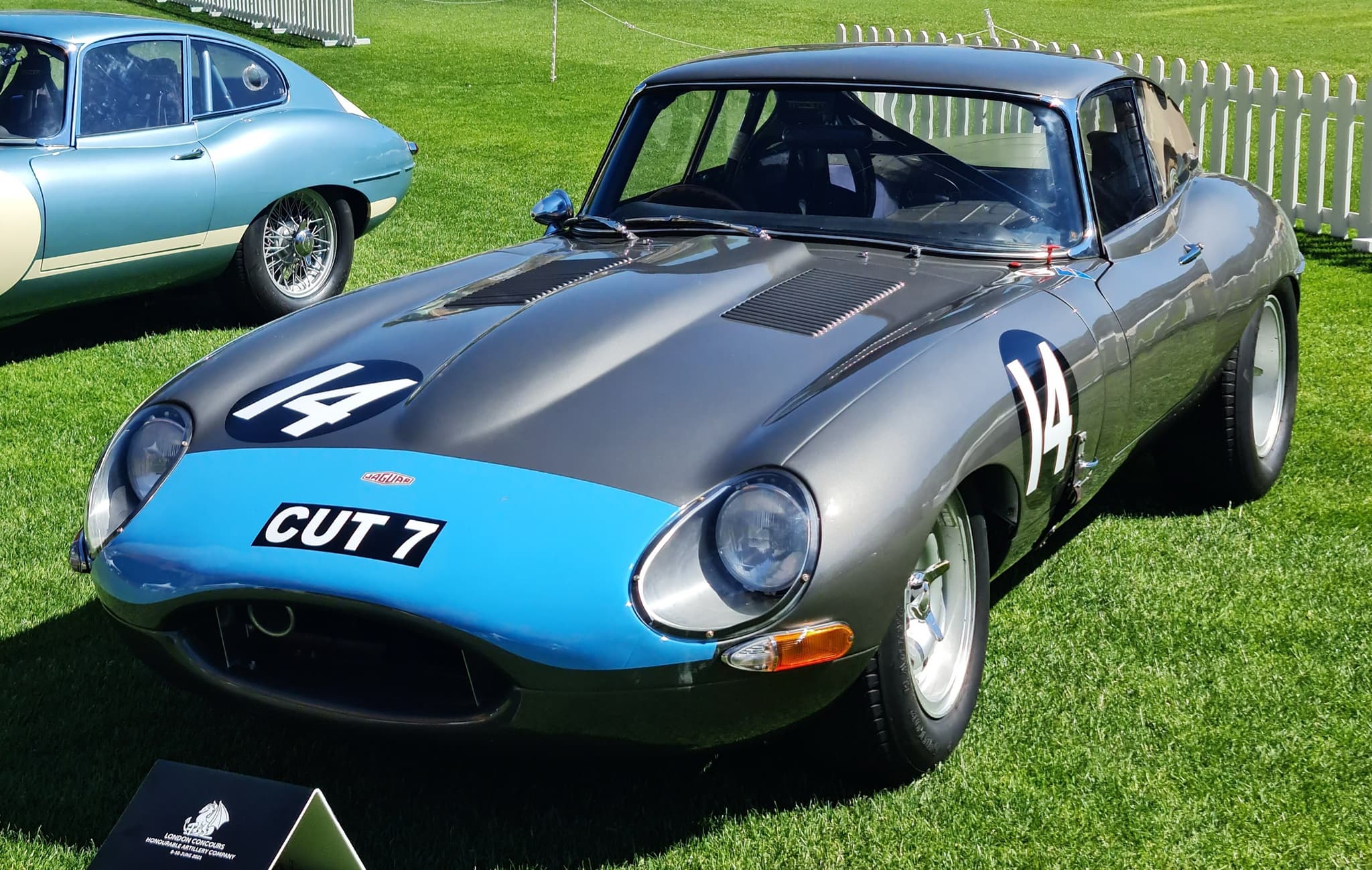
One car, EC1001: Malcolm Sayer's low-drag coupé, built by the factory in 1962 and sold to Protheroe in 1963, who raced it as CUT 7, the third car to carry the number. Its first race in the published histories is Reims, on 30 June 1963, where Protheroe was 2nd overall and won the GT class.source 18source 20source 21source 22
Jaguar built twelve Lightweights in 1963–64, of eighteen planned: open two-seaters with aluminium hardtops. By the register's count they are John Coombs's 1961 car, rebuilt as S850006, and eleven new cars, S850659 to S850669; S850670 does not exist. Jaguar said in 2014 that eleven survive. Among them:
5113 WK, Kjell Qvale's car, won the GT 4-litre class at Sebring in March 1963, the Lightweights' first race, and was found in a Los Angeles garage in 1998.
5114 WK, Cunningham's, was 9th at Le Mans in 1963.
86 PJ, Tommy Atkins's, was 3rd in the 1963 Tourist Trophy with Salvadori.
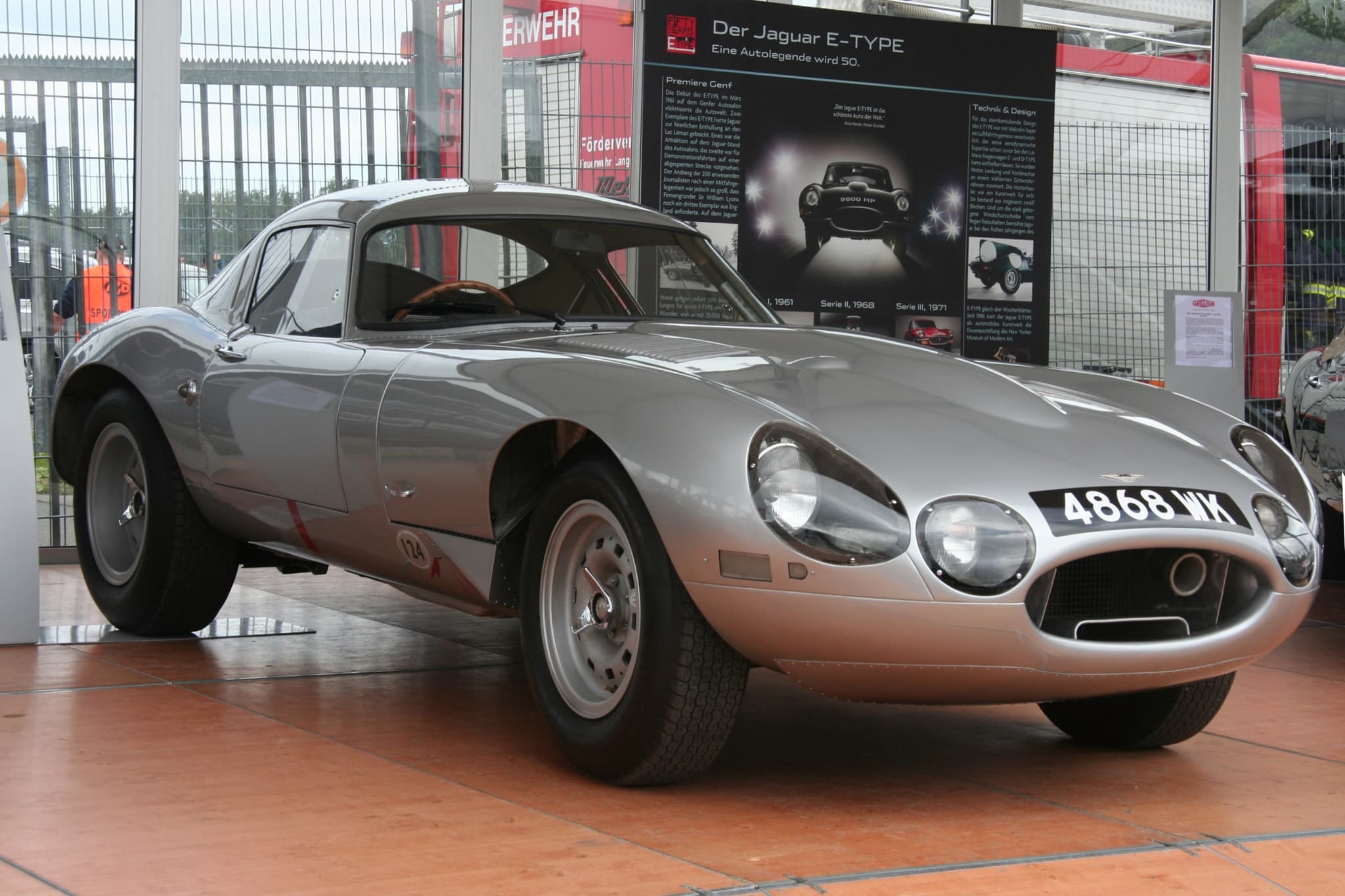
4868 WK, Peter Lindner's, was the only one the factory rebodied with a low-drag roof and tail. The car was badly damaged at Montlhéry in October 1964, in the accident in which Lindner died, and was restored and shown again in 2011.
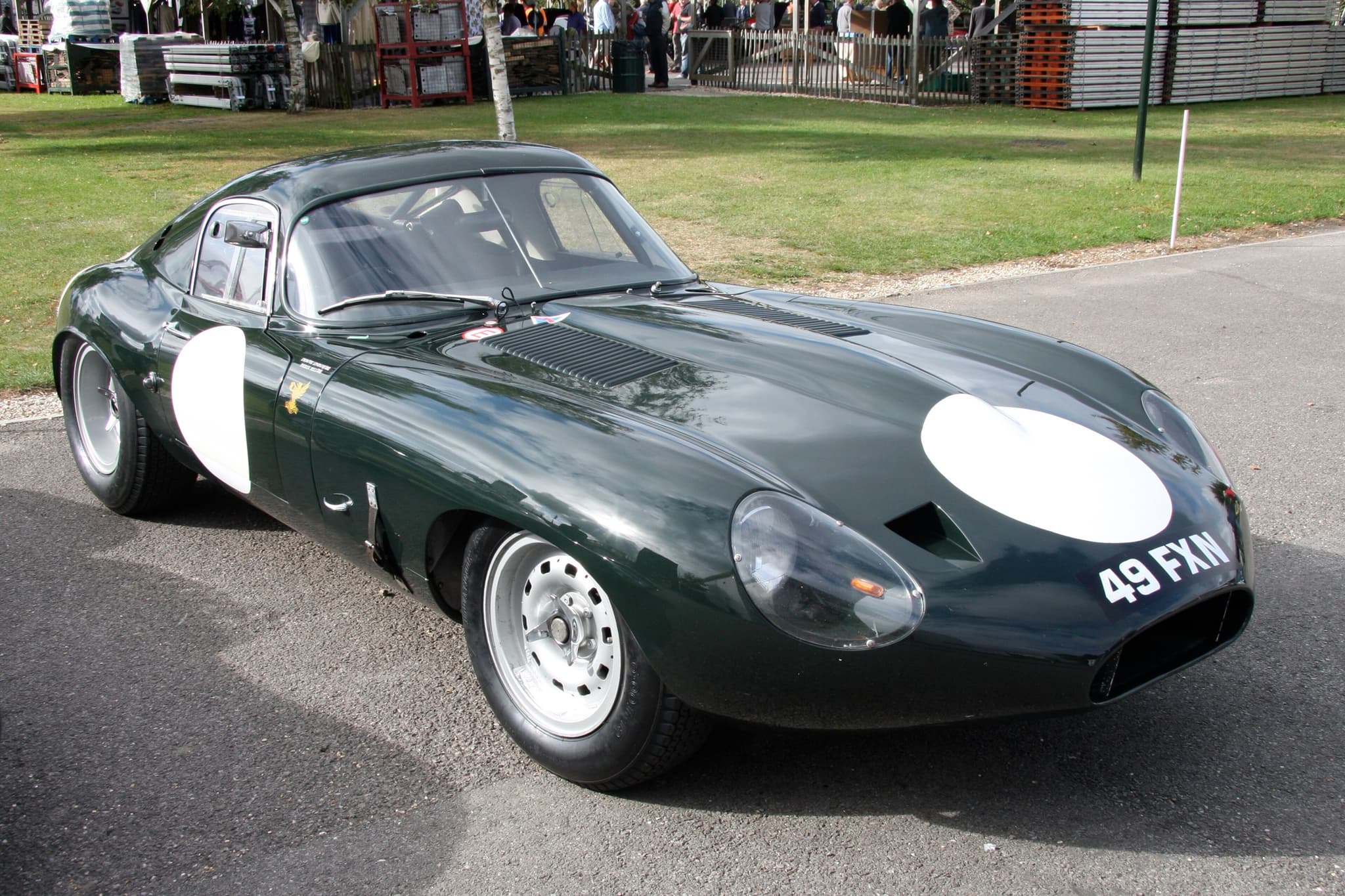
49 FXN, Lumsden and Sargent's, was given a low-drag coupé body of its own for 1964.
YVH 210, Peter Sutcliffe's, was 3rd in the Kyalami 9 Hours of 1964 and won the Goodwood Revival's TT Celebration in 2006 and 2007.
BEN 152, Bob Jane's, won the Australian GT Championship in 1963.
The first owners of the last two, 2 GXO and PS 1175, are not established. A factory "semi-lightweight", Sir Hugh Ropner's road car of 1964, is not one of the twelve.source 3source 21source 23source 19source 24source 25source 26source 27source 28source 29source 30source 31
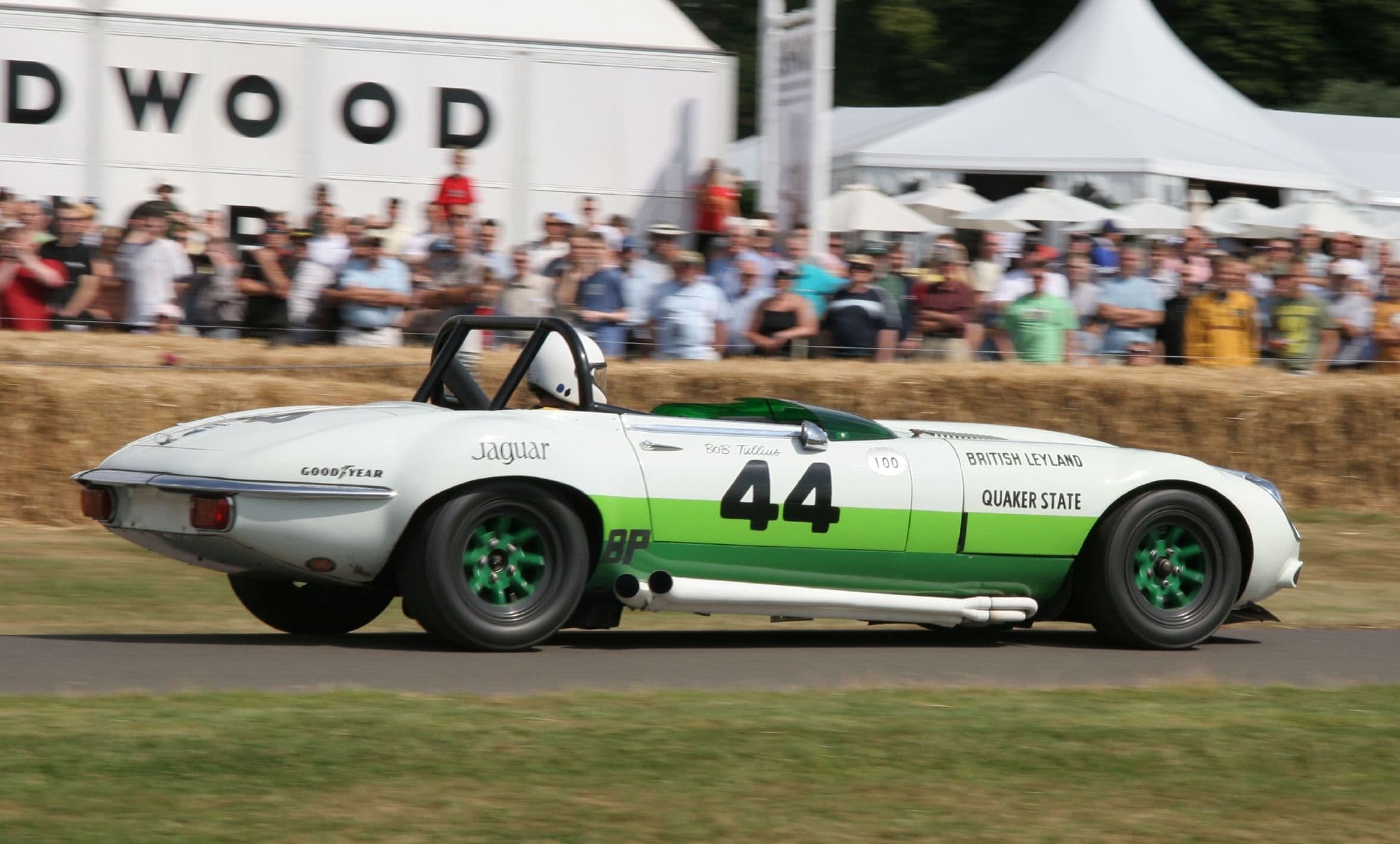
Group 44's V12 roadster won the American B Production title for Bob Tullius in 1975 and belongs to the Jaguar Heritage Trust. Huffaker Engineering's car, raced by Lee Mueller in the west, has no published chassis number, and no source read gives its later history. Both raced in the V12 programme of 1974–75.source 32source 33
In 2014 Jaguar announced six new Lightweights, to be built on the six chassis numbers left unused from the 1963 project, and showed a prototype, Car Zero, at Pebble Beach on 14 August. Built in 2014–15 by Jaguar Heritage, now Jaguar Classic, they are new cars, not restorations; which numbers they carry has not been published, though Jaguar has called one "chassis number 15".source 3source 34source 35
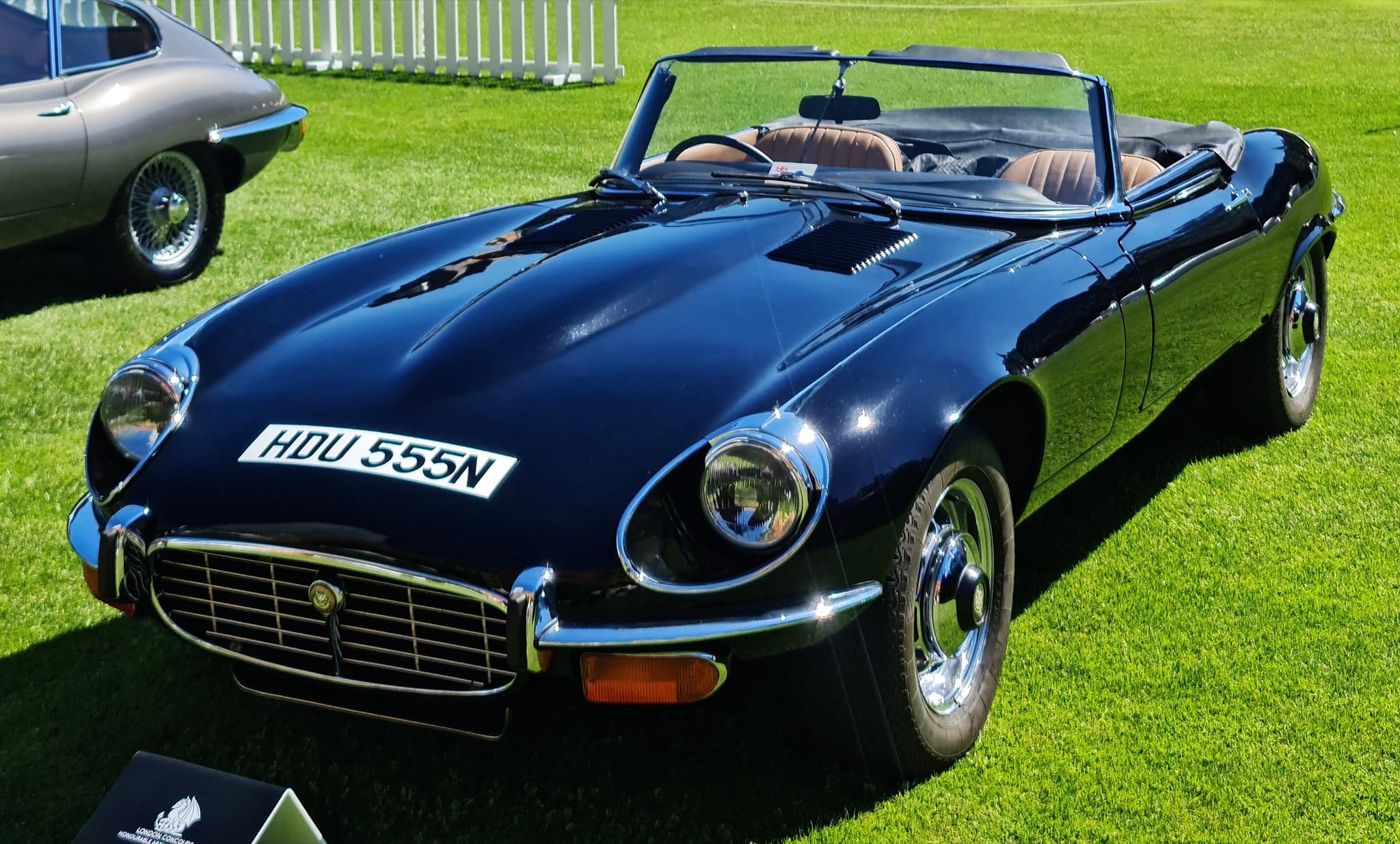
The last E-Type, HDU 555N, car 1S 2872, a black V12 roadster, was built on 12 June 1974, the last of fifty Commemorative roadsters, and has belonged to the Trust since 1983. The Trust keeps other E-Types too, among them the 1963 coupé YKE 374A, which it has held since January 2003.source 2source 15source 36
Whereabouts unknown
Built 1961
Survives
Built 1963
Whereabouts unknown
Built 1963
Whereabouts unknown
Built 1963
Whereabouts unknown
Built 1963
Whereabouts unknown
Built 1963
Whereabouts unknown
Built 1963
Whereabouts unknown
Built 1963
Whereabouts unknown
Built 1957
Destroyed
Built 1962
Survives
Built 1974
Whereabouts unknown
Whereabouts unknown
Built 1963
Survives
Sources are given as plain text; their addresses are on the sources page.