Gawaine Baillie
British entrant and driver of one of Jaguar's 1961 Project Specification E-Types, 850008 (GB 8488): 4th in the Scott-Brown Memorial at Snetterton in July 1961 and 6th at Brands Hatch in August.
Sir William Lyons had the last word on its looks, Malcolm Sayer drew the shape, William Heynes's engineers built it and Norman Dewis tested it; then came the publicity men who launched it, the racers, and the historians who wrote it down.
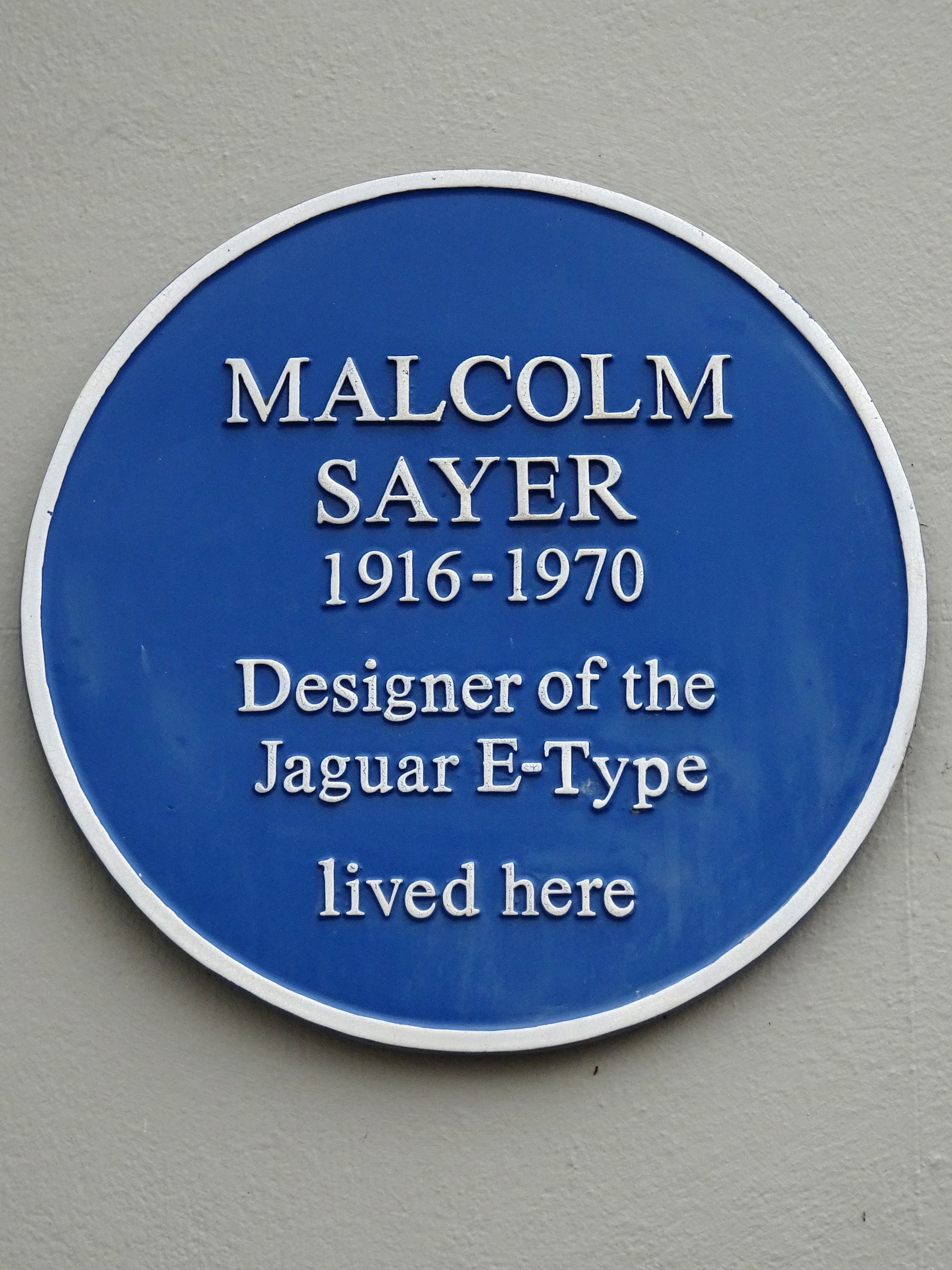
About the pictureA blue plaque in Leamington Spa
In 1996 the Museum of Modern Art in New York took an E-Type roadster into its collection and credited it to three men: Sir William Lyons, Malcolm Sayer and William Heynes. It was a fair summary, and an incomplete one. Behind those three stood an engineering team, a test driver who drove one of the launch cars through the night, two publicity men, and the racers who took the car to Oulton Park, Le Mans and Sebring.
Each has a card below. This page tells how they fitted together.source 1source 2source 3
Sayer drew the E-Type's body by calculation; Lyons, as Chief Stylist, kept the final say on how it looked; and the coupé's roof and tailgate began with a mock-up by Bob Blake. Who did what is told on Sayer's page.source 1source 4source 5source 6
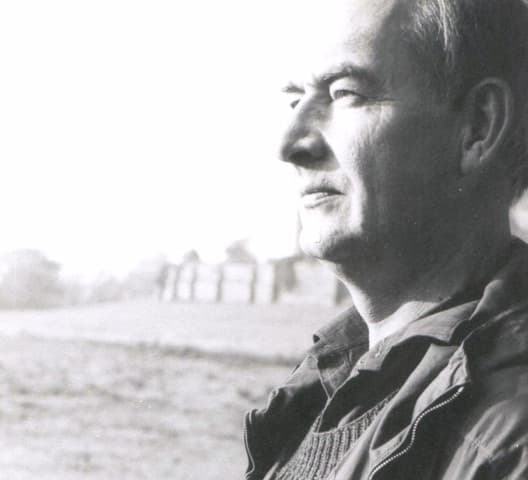
William Heynes led the engineering team, and Motor Sport's first description of the car, in April 1961, credited his design team. He hired both Sayer and Norman Dewis, the test driver, and his team included Bob Knight, who designed the car's independent rear suspension. In a lecture four years after the launch Heynes set out what the car had been for.
In designing the E-type we set out to make a car which would incorporate the experience we had learnt through the years on competition cars—a car to give a performance which would be acceptable as a competition car and yet could be sold at a price that was within the reach of a very large market.
A decade later the V12 of the Series 3 came from Walter Hassan and Harry Mundy, as the Jaguar Heritage Trust records.source 7source 8source 9source 1source 10source 11source 12
Bill Rankin and Bob Berry were in charge of the launch's publicity at Geneva in March 1961. Berry drove the press coupé, 9600 HP, to Geneva himself.
F. R. W. "Lofty" England, Jaguar's racing manager in the 1950s, was at Geneva too, when Dewis arrived with 77 RW. Dewis, who had driven for him at Le Mans, had a view of him.
Lofty England did a good job as team manager, but he was very dictatorial, and he did have the habit of being always right.
With no full works team of Jaguar's own, the E-Type's racers were privateers and importers. Graham Hill raced Equipe Endeavour's ECD 400 in 1961 and John Coombs's Lightweight in 1963. Roy Salvadori and Jack Sears drove for Coombs and Tommy Atkins; Dick Protheroe raced three cars called CUT 7, the last of them the Low Drag Coupé; Peter Lumsden and Peter Sargent raced from 1961 to 1964.
Abroad, Briggs Cunningham, a Jaguar distributor in America, ran E2A at Le Mans in 1960 and his own E-Types until 1963, with Walt Hansgen among his drivers. Peter Lindner and Peter Nöcker raced Lindner's Lightweight in 1963–64. Bob Tullius drove Group 44's V12 in America in 1974–75, and Lee Mueller drove Huffaker Engineering's. The racing page has all of them.source 16source 17source 18source 19source 20source 21source 22
The car's historians include Paul Skilleter and Philip Porter, whose books are on the sources page.source 23source 24source 25source 26
British entrant and driver of one of Jaguar's 1961 Project Specification E-Types, 850008 (GB 8488): 4th in the Scott-Brown Memorial at Snetterton in July 1961 and 6th at Brands Hatch in August.
Won the SCCA C Production national championship at the Runoffs, Road Atlanta, on 26 October 1980, in Gran Turismo Jaguar's six-cylinder E-Type.
In the Nürburgring 1000 km on 31 May 1964 with McNally: 25th and 2nd in GT+3.0 (the source prints the surname only).
public relations manager
Jaguar publicity man and racing driver. He joined Jaguar's publicity department under Bill Rankin after helping the team at Le Mans in 1951, and raced an XK120 and a D-type in the 1950s, finishing 5th in the 1955 Goodwood Nine Hours with Norman Dewis. By 1961 he was public relations manager, and with Rankin he ran the E-Type's launch at Geneva in March 1961, driving the press coupé 9600 HP there. He became director of marketing and public relations in 1970 and a main-board director for sales in 1979. He died on 1 January 2021.
Raced Gran Turismo Jaguar's six-cylinder E-Type in SCCA C Production: 16th at the 1974 Runoffs (not running at the finish), 5th in 1975 and 9th in 1976.
13th in an E-Type entered by Celerity Inc. in the 1965 Tourist Trophy at Oulton Park.
Australian racing driver; he drove E2A for Jaguar of New York Distributors in the Los Angeles Times Grand Prix at Riverside on 16 October 1960, finishing 10th.
Sutcliffe's co-driver in a Lightweight in the Reims 12 Hours on 5 July 1964: 14th and 2nd in GT+3.0 (the source prints the surname only).
American racing driver; in an XKE sponsored by Kjell Qvale's British Motors he won B Production at the first American Road Race of Champions, Riverside, on 15 November 1964, finishing 4th overall.
With de Siebenthal, 31st in an E-Type in the Nürburgring 1000 km on 19 May 1963 (the source prints the surname only).
With Klukaszewski, drove an E-Type in the 1963 Tour de France Automobile, retiring (the source prints the surname only).
With "Victor", drove an E-Type in the 1962 Tour de France Automobile, retiring (the source prints the surname only).
In the Le Mans 24 Hours on 23 June 1962 with Coundley, entered by Maurice Charles: retired (engine) (the source prints the surname only).
entrant
Guildford motor dealer and racing entrant. His E-Type, raced as BUY 1 and later as 4 WPD, was 3rd in the E-Type's first race in 1961 and won at Crystal Palace that May with Roy Salvadori; rebuilt as a Lightweight, it won four British GT races for Graham Hill in 1963. Brian Redman raced it for Red Rose Motors in 1965.
In the Le Mans 24 Hours on 23 June 1962 with Charles, entered by Maurice Charles: retired (engine) (the source prints the surname only).
In the Paris 1000 km on 11 October 1964 with Protheroe, entered by Dick Protheroe: 7th and 1st in GT+3.0 (the source prints the surname only).
In the Reims 12 Hours on 5 July 1964 with Protheroe, entered by Protheroe Cars: 8th and 1st in GT+3.0 (the source prints the surname only).
With Oliver, 3rd overall and 1st in GT+2.6 in an E-Type 4.2 in the Brands Hatch 1000 Miles on 23 May 1965 (the source prints the surname only).
Shared E2A with Walt Hansgen at the Le Mans test weekend on 9 April 1960, where it was 3rd.
In the Sebring 12 Hours on 23 March 1963 with Fitch, entered by Briggs S. Cunningham: retired (clutch) (the source prints the surname only).
In the Road America 500 on 8 September 1963 with Fitch, entered by B. Cunningham/Momo Auto Dist. of NY: 20th (the source prints the surname only).
In the Sebring 12 Hours on 24 March 1962 with Fitch, entered by Briggs Cunningham: 14th and 1st in GT4.0 (the source prints the surname only).
entrant, entrant and driver
American entrant, driver and Jaguar distributor. He ran E2A at Le Mans in 1960 on loan from Jaguar, drove his own E-Types to 4th at Le Mans in 1962 with Roy Salvadori and to 9th in 1963, his last Le Mans as a driver, and entered the E-Types that won the GT 4.0 class at Daytona and Sebring in 1962 and the Lightweights he ran at Sebring, Le Mans and Bridgehampton in 1963.
chief test and development engineer, test driver, adviser
Jaguar's chief test and development engineer from 1952 to 1985. Born in Coventry, he was an RAF air gunner in the Second World War and chief test engineer at Lea-Francis before joining Jaguar. He developed the Jaguar–Dunlop disc brake, rode with Stirling Moss in the 1952 Mille Miglia, drove a modified XK120 at Jabbeke in 1953 and shared a works D-type at Le Mans in 1955. He drove E1A in 1957, sorted the E-Type at MIRA, and on the night of 15–16 March 1961 drove the roadster 77 RW to the Geneva show. In January 1971 he crashed the XJ13 at MIRA while filming for the V12 E-Type's launch. Motor Sport estimated that he covered more than a quarter of a million miles at over 100 mph. He was appointed OBE in the 2015 New Year Honours and died on 8 June 2019.
team manager, chief executive
Jaguar's racing team manager in the 1950s, later its chief executive. By Norman Dewis's account, England sent him straight out giving demonstration drives when he reached the Geneva show with 77 RW in March 1961. In 1972 he succeeded Sir William Lyons at the head of Jaguar.
In the Sebring 12 Hours on 23 March 1963 with Cunningham, entered by Briggs S. Cunningham: retired (clutch) (the source prints the surname only).
In the Sebring 12 Hours on 24 March 1962 with Cunningham, entered by Briggs Cunningham: 14th and 1st in GT4.0 (the source prints the surname only).
In the Road America 500 on 8 September 1963 with Cunningham, entered by B. Cunningham/Momo Auto Dist. of NY: 20th (the source prints the surname only).
With Vehling, drove Peter Lindner's second E-Type entry in the Nürburgring 1000 km on 19 May 1963, retiring (the source prints the surname only).
In the Road America 500 on 8 September 1963 with Thompson, entered by B. Cunningham/Momo Auto Dist. of NY: 39th (the source prints the surname only).
In the Le Mans 24 Hours on 15 June 1963 with Briggs Cunningham, entered by Briggs S. Cunningham: 9th and 2nd in GT+3.0 (the source prints the surname only).
8th in John Coombs's Lightweight in the GT race at the International Trophy meeting, Silverstone, on 2 May 1964 (the source prints the surname only).
American racing driver. He shared E2A with Walt Hansgen at Le Mans in 1960, where it retired after 89 laps with engine failure that began with a fuel-injection fault. Entered in a works BMW M1 for the non-championship Procar race at Donington Park on 3 June 1979, he did not start; the results page gives the reason as "No driver license".
With McLaren, 8th in Briggs Cunningham's Lightweight in the Sebring 12 Hours on 23 March 1963 (the source prints the surname only).
In the Road America 500 on 8 September 1963 with Richards, entered by B. Cunningham/Momo Auto Dist. of NY: 11th (the source prints the surname only).
In the Le Mans 24 Hours on 15 June 1963 with Pabst, entered by Briggs S. Cunningham: retired (gearbox) (the source prints the surname only).
Drove a Briggs Cunningham E-Type in the Daytona 3 Hours on 17 February 1963 and was disqualified for a push start (the source prints the surname only).
American racing driver who drove E-Types for Briggs Cunningham: he won at Bridgehampton in E2A in August 1960, was 17th and 1st in GT 4.0 at Daytona in 1962, and 3rd in the Bridgehampton 500 km in September 1963.
In the Spa 1000 km on 22 May 1966 with Merrick: 16th (the source prints the surname only).
engine designer
Engine designer. The Jaguar Daimler Heritage Trust credits him and Harry Mundy with the design and development of the 5.3-litre V12 that powered every Series 3 E-Type from 1971, and heads its biography of him "Chief Experimental Engineer and Engine Designer".
chief engineer
Jaguar's chief engineer from 1935, later engineering director, until he retired in 1969. He led the team that engineered the C-type, D-type and E-Type, set the project that became E1A in 1956, and hired Malcolm Sayer and Norman Dewis. MoMA's catalogue credits the E-Type to Lyons, Sayer and Heynes. Sources differ on his year of birth; he died in 1989.
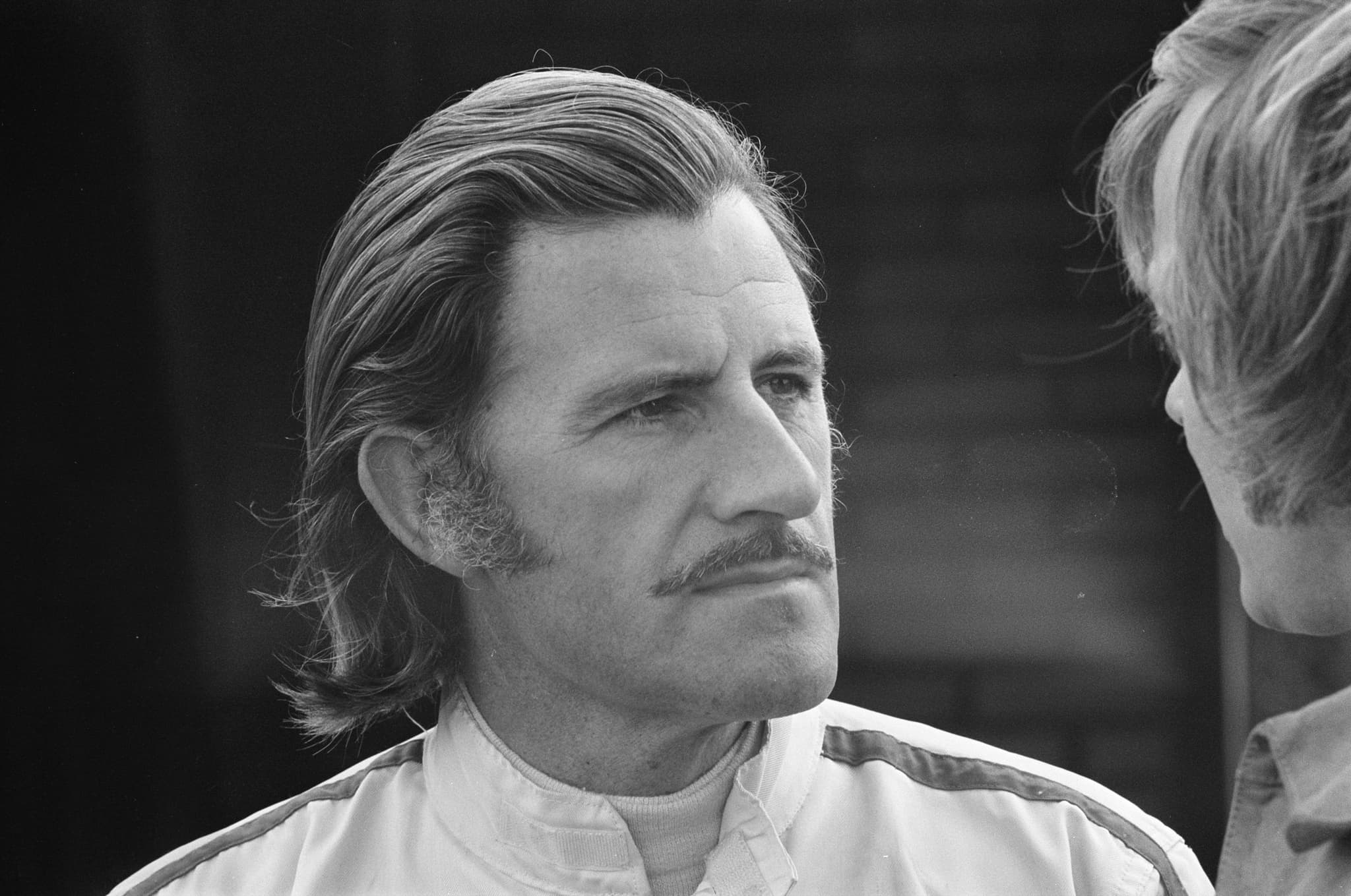
British racing driver. He won the first race the E-Type started, at Oulton Park on 15 April 1961 in Equipe Endeavour's ECD 400, and in 1963 won four British GT races in John Coombs's Lightweight: Snetterton, Goodwood, Silverstone and Mallory Park.
British racing driver. As a Jaguar apprentice he spun the prototype E2A in a test at Silverstone, by his own account; in the Daytona 3 Hours of February 1962 he drove Peter Berry Racing's E-Type, retiring with fuel-system trouble. He drove for the works Spitfire team at Le Mans in 1964 and 1965. In the non-championship BMW M1 Procar race at Donington Park on 3 June 1979 he was 9th, in BMW Switzerland's M1 (serial 4301063).
3rd in an E-Type in the Australian GT Championship at Calder on 8 December 1963.
Australian racing driver; he won the Australian GT Championship at Calder on 8 December 1963 in the Lightweight BEN 152.
With Richards, 19th in a third Briggs Cunningham E-Type in the Sebring 12 Hours on 23 March 1963 (the source prints the surname only).
With Cardi, drove an E-Type in the 1963 Tour de France Automobile, retiring (the source prints the surname only).
engineer, deputy director of engineering, managing director
Jaguar vehicle and suspension engineer. He designed the C-type's tubular frame and the independent rear suspension first fitted to E1A in 1957, which he and William Heynes then mounted in its own rubber-insulated cage for the E-Type. MoMA describes him as Jaguar's deputy director of engineering in the E-Type's years, and Norman Dewis recalled that he was managing director until 1980.
American racing driver; for Frank Millard Sports Cars he was 3rd and 1st in C Production at Santa Barbara on 3 September 1961, the first E-Type result racingsportscars records in the United States, and 2nd and 1st in B Production at Riverside in October 1961.
In the Sebring 12 Hours on 23 March 1963 with Morrill, entered by Kjell Qvalle: 7th and 1st in GT4.0 (the source prints the surname only).
American racing driver; he drove Kjell Qvale's Lightweight to 8th in the United States Road Racing Championship round at Laguna Seca in June 1963.
In the RAC Tourist Trophy on 29 August 1964 with Peter Nöcker, entered by Peter Lindner: did not start (the source prints the surname only).
importer, owner and driver
German racing driver and Jaguar's importer for West Germany, who raced the Lightweight S850662 (4868 WK) with Peter Nöcker in 1963–64, rebodied by the factory in low-drag form for 1964. Peter Lindner was killed at the Paris 1000 km at Montlhéry in October 1964, in an accident that also killed Franco Patria and three marshals.
In the Nürburgring 1000 km on 31 May 1964 with Sargent: 51st (the source prints the surname only).
In the RAC Tourist Trophy on 18 August 1962: retired (spin) (the source prints the surname only).
In the Le Mans Test Weekend on 19 April 1964 with Sargent: 7th (the source prints the surname only).
In the RAC Tourist Trophy on 29 August 1964 with Sargent: 8th and 5th in GT+2.0 (the source prints the surname only).
In the Le Mans 24 Hours on 20 June 1964 with Sargent, entered by P. J. Sargent: retired (gearbox) (the source prints the surname only).
In the Nürburgring 1000 km on 27 May 1962 with Sargent: retired (suspension) (the source prints the surname only).
In the Le Mans 24 Hours on 23 June 1962 with Sargent, entered by P. J. Sargent: 5th and 2nd in GT4.0 (the source prints the surname only).
driver
British racing driver. He raced an E-Type in British GT races in 1961, 5th in the Molyslip Trophy at Snetterton that September, and from 1963 the Lightweight 49 FXN: he crashed it at the Flugplatz while running 4th in the 1963 Nürburgring 1000 km and was 9th in the 1963 Tourist Trophy.
founder, chairman, Chief Stylist
Founder and chairman of Jaguar. With William Walmsley he founded the Swallow Sidecar Company in Blackpool in 1922; it built Swallow bodies and then SS cars, and became Jaguar Cars in 1945. He was knighted in the New Year Honours of 1956. He backed the E-Type as a race-bred car at a low price, held the final say on its looks as Jaguar's Chief Stylist, and presented it to the press at Geneva on 15 March 1961. He retired as chairman in 1972, handing over to Lofty England; the last E-Types, finished in June 1974, carried a dashboard plaque with a facsimile of his signature. He died at his home, Wappenbury Hall in Warwickshire, on 8 February 1985.
British racing driver; he bought Dick Protheroe's second CUT 7 after its rebuild, and in 1964 drove Tommy Atkins's former Salvadori Lightweight (86 PJ) to 2nd in the Autosport Three Hours at Snetterton on 26 September.
With Hansgen, 8th in Briggs Cunningham's Lightweight in the Sebring 12 Hours on 23 March 1963 (the source prints the surname only).
New Zealand racing driver. He drove E2A at Laguna Seca in October 1960 (14th), and Peter Berry Racing's E-Type in 1961 (2nd in the British Empire Trophy and in the August Peco Trophy at Brands Hatch).
In the Nürburgring 1000 km on 31 May 1964 with Banks: 25th and 2nd in GT+3.0 (the source prints the surname only).
In the Spa 1000 km on 22 May 1966 with Harper: 16th (the source prints the surname only).
In the Sebring 12 Hours on 23 March 1963 with Leslie, entered by Kjell Qvalle: 7th and 1st in GT4.0 (the source prints the surname only).
driver
SCCA national champion in a Spitfire (F Production, 1969) and in a TR7 (D Production, 1979). In 1974–75 he drove Huffaker Engineering's V12 E-Type in SCCA B Production, winning on its debut at Seattle in August 1974.
engine designer
Engine designer. The Jaguar Daimler Heritage Trust credits him and Walter Hassan with the design and development of the 5.3-litre V12 that powered every Series 3 E-Type from 1971, and heads its biography of him "Engine Designer for Coventry Climax and Jaguar Cars".
Won a class race for B, C and D cars at St-Eugène, Quebec, on 18 June 1961 in an E-Type entered by Canada Track & Traffic, the first E-Type result racingsportscars records in North America.
German racing driver from Düsseldorf and Peter Lindner's co-driver in the Lightweight S850662 in 1963–64; he won GT races in it at the Avus on 30 June 1963 and at the Norisring that July. He won the first European Touring Car Championship in 1963 in the team's Mark II, according to the JDHT.
With Craft, 3rd overall and 1st in GT+2.6 in an E-Type 4.2 in the Brands Hatch 1000 Miles on 23 May 1965 (the source prints the surname only).
Werner's co-driver in an E-Type in the Nürburgring 1000 km on 27 May 1962: 15th and 2nd in class (the source prints the surname only).
Werner's co-driver in an E-Type in the Nürburgring 1000 km on 19 May 1963: 18th (the source prints the surname only).
In the Le Mans 24 Hours on 15 June 1963 with Hansgen, entered by Briggs S. Cunningham: retired (gearbox) (the source prints the surname only).
American racing driver; for Briggs Cunningham he was 10th and 1st in GT 4.0 in the Daytona 3 Hours of February 1963.
British racing driver and engineer; in Equipe Endeavour's ECD 400 in 1961 he was 2nd in the Grand Prix de Spa and won the Scott-Brown Memorial at Snetterton, and he won the October Peco Trophy at Brands Hatch in an E-Type.
historian, founder
E-Type historian and publisher. His books on the car include Jaguar E-type: The Definitive History, Original Jaguar E-type, Ultimate E-type: The Competition Cars and 9600 HP: The World's Oldest E-type (2021). He founded the International XK Club in 1997 and the Jaguar E-type Club in 2004, and organised the E-Type's 60th-anniversary gathering at Shelsley Walsh in June 2021.
Drove a Peter Berry Racing E-Type in the Scott-Brown Memorial at Snetterton on 23 July 1961, retiring.
In the Nürburgring 1000 km on 31 May 1964 with Taylor, entered by E. Protheroe: did not start (the source prints the surname only).
In the Paris 1000 km on 11 October 1964 with Coundley, entered by Dick Protheroe: 7th and 1st in GT+3.0 (the source prints the surname only).
In the Reims 12 Hours on 5 July 1964 with Coundley, entered by Protheroe Cars: 8th and 1st in GT+3.0 (the source prints the surname only).
driver, owner and driver
British racing driver who raced three cars registered CUT 7: a 1962 coupé (five overall wins that year and 6th in the Tourist Trophy), a second car that crashed on its debut in 1963, and the factory's Low Drag Coupé, in which he was 2nd and 1st in GT at Reims on 30 June 1963 and 6th in the 1963 Tourist Trophy.
British racing driver; in 1965 he won two GT races at Oulton Park, on 24 April and 12 June, in Red Rose Motors' Lightweight, John Coombs's former car.
In the Road America 500 on 8 September 1963 with Hansgen, entered by B. Cunningham/Momo Auto Dist. of NY: 11th (the source prints the surname only).
With Kimberly, 19th in a third Briggs Cunningham E-Type in the Sebring 12 Hours on 23 March 1963 (the source prints the surname only).
In the Le Mans 24 Hours on 15 June 1963 with Salvadori, entered by Briggs S. Cunningham: retired (accident) (the source prints the surname only).
Drove Briggs Cunningham's Lightweight to 4th in the Bridgehampton 500 km in September 1963.
With Therstappen, won GT+3.0 in a standard E-Type in the Nürburgring 1000 km on 19 May 1963, 16th overall (the source prints the surname only).
In the Le Mans 24 Hours on 15 June 1963 with Richards, entered by Briggs S. Cunningham: retired (accident) (the source prints the surname only).
British racing driver. He drove John Coombs's E-Type in 1961–62 (1st at Crystal Palace on 21 May 1961; 4th in the 1962 Tourist Trophy), shared Briggs Cunningham's coupé to 4th at Le Mans in 1962, and drove Tommy Atkins's Lightweight to 3rd and 1st in GT+3.0 in the 1963 Tourist Trophy, the E-Type's best result in the race.
In the RAC Tourist Trophy on 29 August 1964 with Lumsden: 8th and 5th in GT+2.0 (the source prints the surname only).
In the Nürburgring 1000 km on 31 May 1964 with Lumsden: 51st (the source prints the surname only).
In the Nürburgring 1000 km on 19 May 1963 with Peter Lumsden: 32nd and 4th in GT+3.0 (the source prints the surname only).
In the Nürburgring 1000 km on 27 May 1962 with Lumsden: retired (suspension) (the source prints the surname only).
In the Le Mans Test Weekend on 19 April 1964 with Lumsden: 7th (the source prints the surname only).
In the Le Mans 24 Hours on 20 June 1964 with Lumsden, entered by P. J. Sargent: retired (gearbox) (the source prints the surname only).
In the Le Mans 24 Hours on 23 June 1962 with Lumsden, entered by P. J. Sargent: 5th and 2nd in GT4.0 (the source prints the surname only).
driver
British racing driver. He raced the 1961 E-Type 850009, 7th at the Nürburgring in August 1961 and 3rd in the Autosport Three Hours at Snetterton that September, and drove the Lightweight 49 FXN in the Guards Trophy at Brands Hatch in August 1963.
aerodynamicist
Aerodynamicist who drew the bodies of Jaguar's C-type, D-type and E-Type. After Loughborough College he worked at the Bristol Aeroplane Company from 1938 and taught engineering in Baghdad in the late 1940s, then joined Jaguar in 1950 after an interview with William Heynes. He worked from calculation, not sketches, and tested his shapes in wind tunnels and with wool tufts at MIRA. The E-Type's shape grew from his D-type through E1A and E2A; Lyons kept the final say on its looks, and the fixed-head coupé's roof and tailgate began as Bob Blake's mock-up, according to the Jaguar Daimler Heritage Trust. He also led the Low Drag Coupé of 1962, shaped the XJ13 and made the first studies for the car that became the XJ-S. He died of a heart attack in Leamington Spa in April 1970; a blue plaque marks his home there.
Won the Bahamas Cup at Nassau Speed Week in an XKE on 9 December 1962 and again on 8 December 1963.
2nd in John Coombs's E-Type in the GT race at the British Grand Prix meeting, Aintree, on 15 July 1961 (the source prints the surname only).
British racing driver; 2nd at Crystal Palace on 21 May 1961 in Equipe Endeavour's ECD 400, and 4th in the 1963 Tourist Trophy in Coombs's Lightweight.
historian
Jaguar historian, author of Jaguar Sports Cars (1975) and The Jaguar E-type: A Collector's Guide (1979), whose production tables are among the earliest book sources this site uses.
Sutcliffe's co-driver in a Lightweight in the Kyalami 9 Hours on 31 October 1964: 3rd overall and 1st in GT class D (the source prints the surname only).
Sutcliffe's co-driver in a Lightweight in the Nürburgring 1000 km on 31 May 1964, out after being pushed off (the source prints the surname only).
10th in an E-Type in the Molyslip Trophy at Snetterton on 30 September 1961.
In the Reims 12 Hours on 5 July 1964 with Bradley, entered by Peter Sutcliffe: 14th and 2nd in GT+3.0 (the source prints the surname only).
In the Nürburgring 1000 km on 31 May 1964 with Stoop, entered by Peter Sutcliffe: retired (pushed off by another car) (the source prints the surname only).
In the Kyalami 9 Hours on 31 October 1964 with Stoop, entered by Peter Sutcliffe: 3rd and 1st in GT class D (the source prints the surname only).
British racing driver who raced his own Lightweight, YVH 210, in 1963–64: 4th at Mallory Park in July 1963, 1st in the Prix de Paris at Montlhéry on 23 May 1964 and 2nd at Zolder that July.
Entered with Protheroe in the Low Drag Coupé for the Nürburgring 1000 km on 31 May 1964; the car did not start after an accident in practice (the source prints the surname only).
Drove a Peter Berry Racing E-Type to 4th in the GT race at the British Grand Prix meeting, Aintree, on 15 July 1961.
With Ruthardt, won GT+3.0 in a standard E-Type in the Nürburgring 1000 km on 19 May 1963, 16th overall (the source prints the surname only).
Shared an E-Type entered by B. Cunningham/Momo Auto Dist. of NY with Grossman in the Road America 500 on 8 September 1963, finishing 39th (the source prints the surname only).
founder, driver
American racing driver. He bought a TR3 in 1960 and raced from 1961. In TR4s he won the SCCA national E Production championship in 1962, Triumph's first national class title by the importer's account, and D Production in 1963 and 1964; Triumph gave him one of Kas Kastner's Sebring TR4s. With Brian Fuerstenau and Dick Gilmartin he founded Group 44 Inc. in 1965; it won 14 SCCA national titles and three Trans-Am championships before closing in 1990. In 1968 he raced Group 44's TR250 in SCCA C Production. By the importer's count in September he had six wins in the Northeast Division, enough for at least a tie for its title, and three outside it. He was 3rd in C Production at the ARRC, and he co-drove the TR250K at Sebring. From 1969 to 1974 he raced Group 44's TR-6 in SCCA C Production, 2nd at the 1972 American Road Race of Champions, and showed it on British Leyland's stand at the 1972 London Motor Show; Severson writes that the last TR6 built went to him. In 1974–75 he raced Group 44's V12 E-Type in SCCA B Production: 2nd at the 1974 Runoffs by 0.8 s, and national champion in 1975. He had won the SCCA Trans-Am drivers' championship in 1977 and 1978 with a Jaguar XJ-S. From 1979 to 1981 Group 44, Jaguar Rover Triumph's official US racing team, raced the TR8 in IMSA and the Trans-Am. It won its class on the car's debut, the Watkins Glen 6 Hours of July 1979; Tullius won his class four times in 1979, in IMSA GTO and the Trans-Am, as Car and Driver and Lamm count them, and Group 44's No. 44 won the IMSA GTO class four times in 1980. British Sports Car Hall of Fame, first class (2017).
With Fleck, drove Peter Lindner's second E-Type entry in the Nürburgring 1000 km on 19 May 1963, retiring (the source prints the surname only).
A pseudonym under which an E-Type was entered, with Cardi, in the 1962 Tour de France Automobile; it retired.
Drove the Low Drag Coupé in the 1965 Tourist Trophy at Oulton Park: after crashing it into the lake in practice, he finished 11th, the best E-Type.
In the Nürburgring 1000 km on 27 May 1962 with Olson: 15th and 2nd in P4.0 (the source prints the surname only).
In the Nürburgring 1000 km on 19 May 1963 with Olson: 18th (the source prints the surname only).
7th in an E-Type in the Molyslip Trophy at Snetterton on 30 September 1961.
With Caillet, 31st in an E-Type in the Nürburgring 1000 km on 19 May 1963 (the source prints the surname only).
Sources are given as plain text; their addresses are on the sources page.