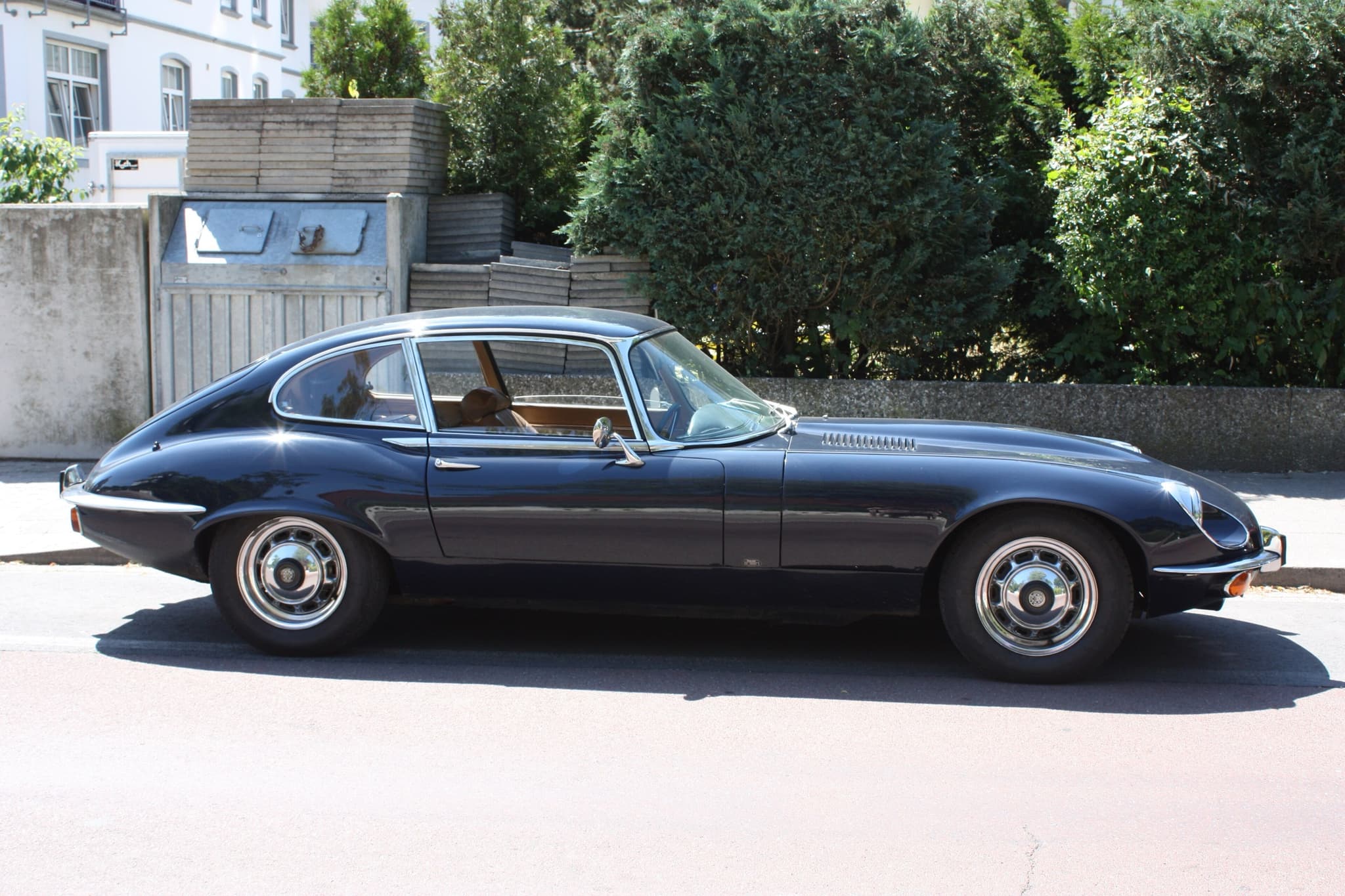
Jaguar E-Type 2+2
The longer E-Type coupé with two small rear seats, shown in March 1966 and built in all three series until 1973: taller, roomier, and the only E-Type with an automatic gearbox (transmission) before the V12.
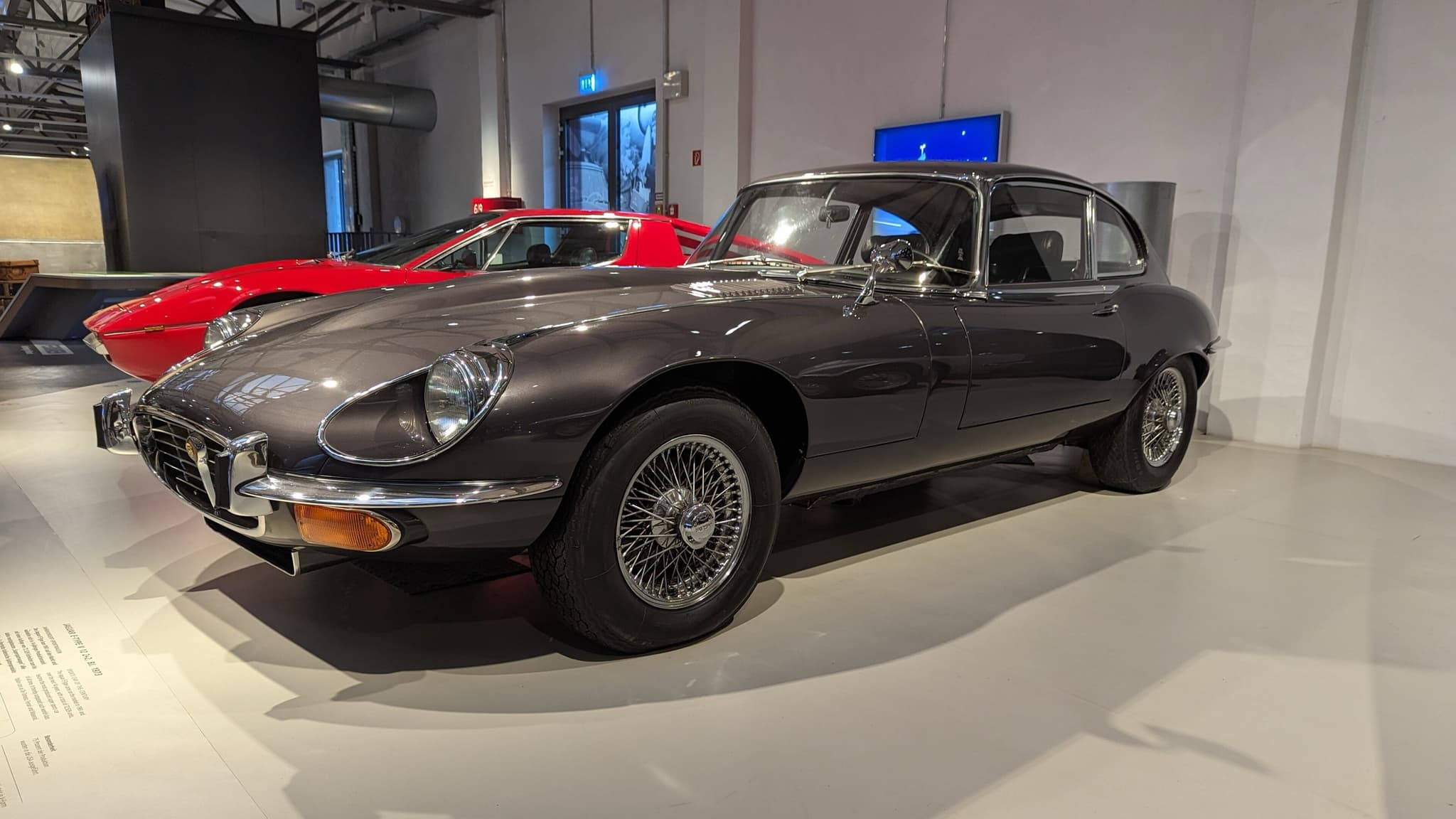
A Series 3 V12 2+2 in profile at Timmendorfer Strand, Germany, in July 2010, showing the long roof and tall door glass.Bin im Garten, CC BY-SA 3.0
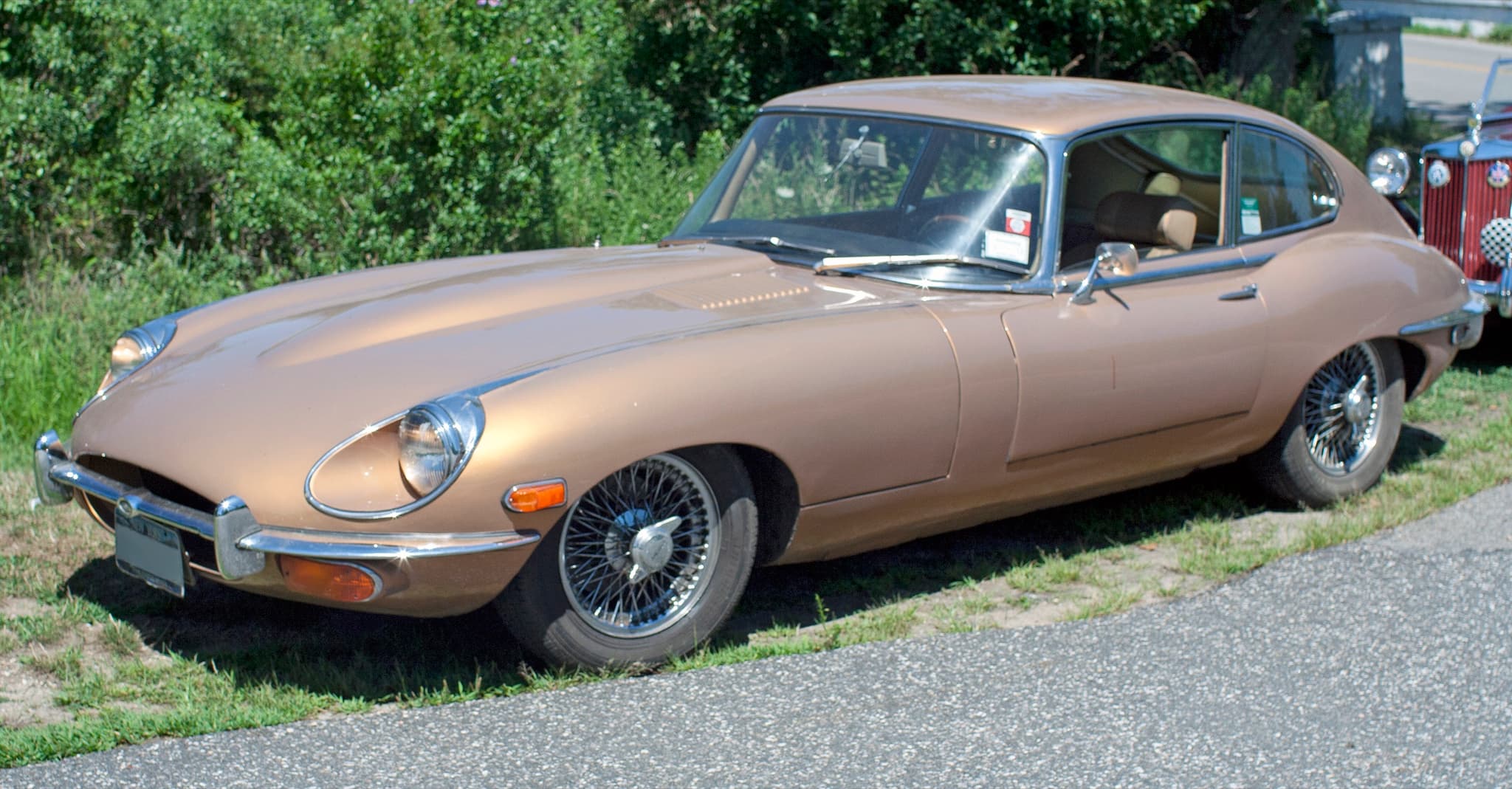
In the week before the 1966 Geneva show, Sir William Lyons gave a cocktail party at Henlys' Piccadilly showrooms in London to show off a new E-Type: a coupé with a taller roof, longer doors and two small seats in the back. The 2+2, as Jaguar called it, was meant to have been at the London Motor Show the October before, and Denis Jenkinson of Motor Sport blamed a strike for keeping it away. It was shown at Geneva in March 1966; the Jaguar Clubs of North America date its introduction to 7 March. The Jaguar Heritage Trust's car numbers show it was already being built, from September 1965 with right-hand drive and October with left. It lasted until 1973, through all three series.source 1source 2source 3source 4
Why Jaguar built it
Motor Sport gave Jaguar's reasons when the car appeared:
Some owners find themselves in need of enough space to carry their children or to give an occasional lift to a second passenger, and for this reason, and to increase its dollar-earning capacity, a longer-wheelbase 2+2 coupe version was put in hand, the floor re-formed to enable a Borg-Warner automatic gearbox to be fitted, if desired.
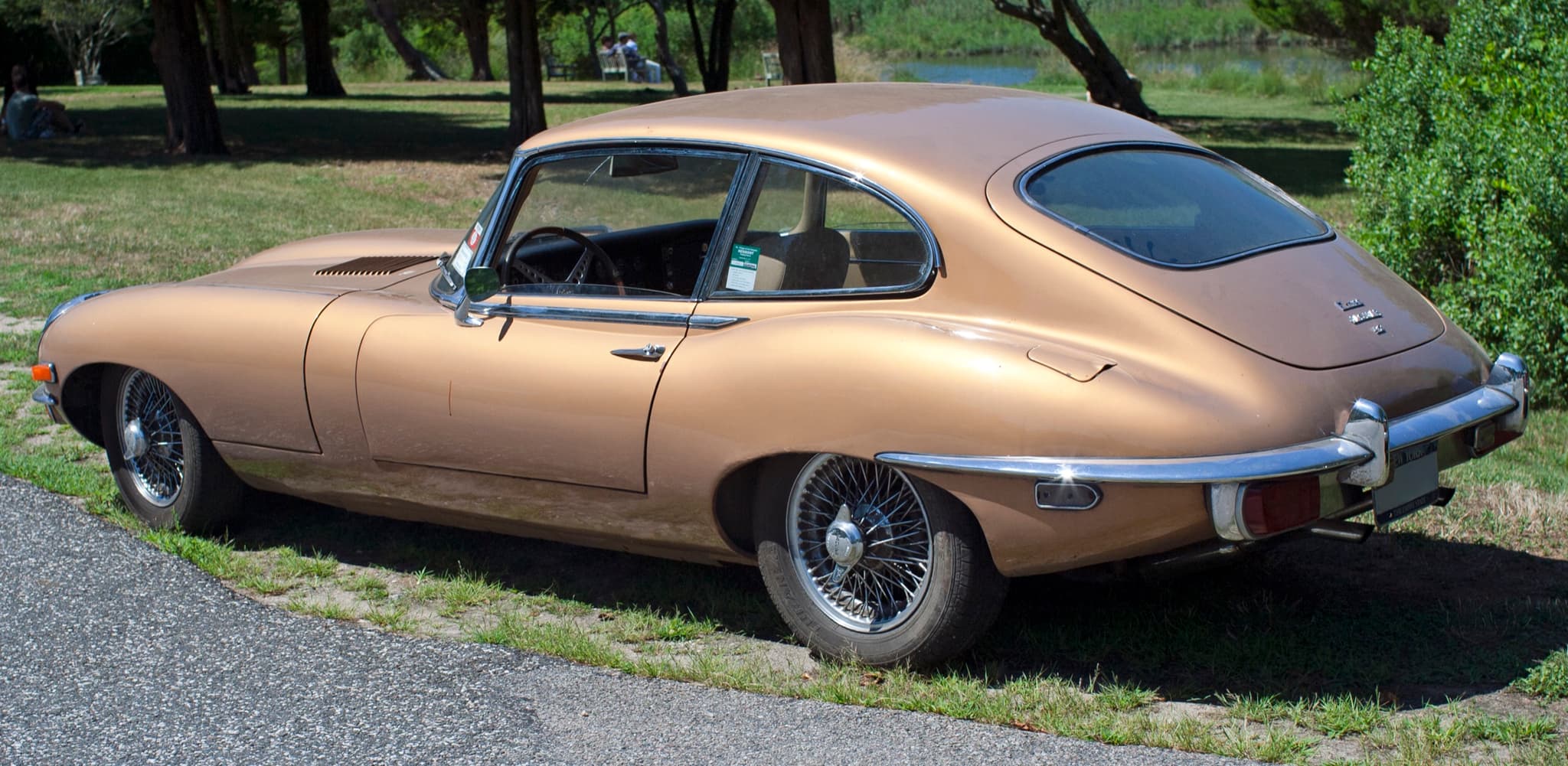
The wheelbase grew, and Jenkinson measured the other changes himself rather than trust the handouts: the windscreen (windshield) was 29 mm (1⅛ in.) taller at its centre, though, he noted, many handouts and write-ups said 1½ in.; the doors were 216 mm (8½ in.) longer and their openings 51 mm (2 in.) taller; and the roof rose further back, giving about 51 mm (2 in.) more headroom over the rear seat by the judges' guide. A chrome strip ran from the base of the windscreen along the top of each door. Motor Sport summed up the cost in 1975: the 2+2 was "roughly 1 cwt. heavier than its two-seater brothers, and slightly slower".
Not everyone liked the look. Bill Boddy, testing a manual 2+2 in January 1967, thought the higher roof line made the E-Type look "top-heavy" seen head-on, and he and Jenkinson both found exhaust fumes drawn into the cabin with the rear quarter windows open. Jenkinson still thought it good value: "for the price of a Ferrari", he wrote, "you can have three E-types!"source 1source 5source 4source 6
Inside
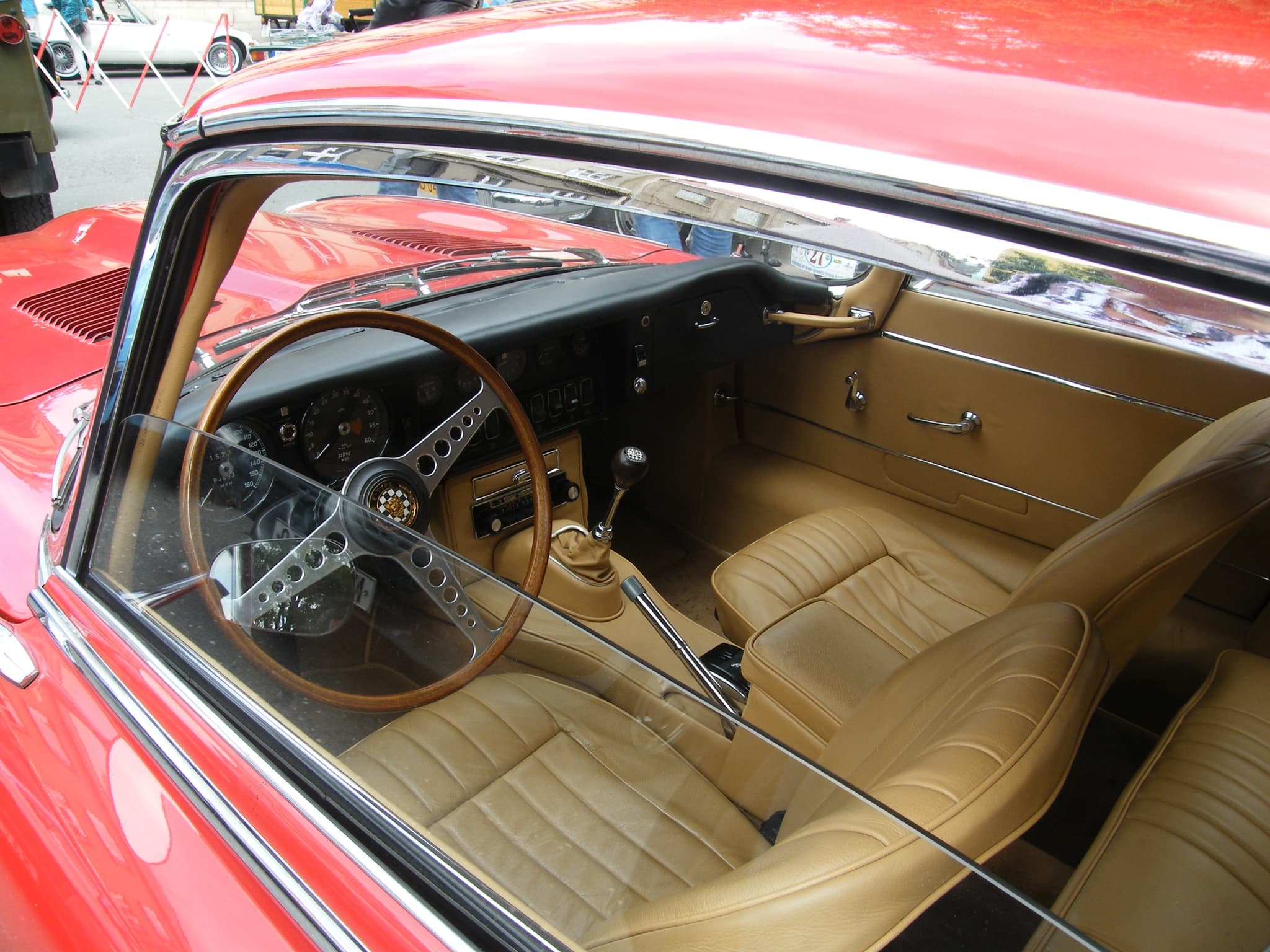
The rear seat was shaped into two small ones, and its backrest slid forward on swinging links to give a luggage floor as long as a two-seater's. Jenkinson was clear about what the car was and was not:
To talk of the 2+2 as a 4-seater E-type is all wrong I feel, unless you intend to carry two small children
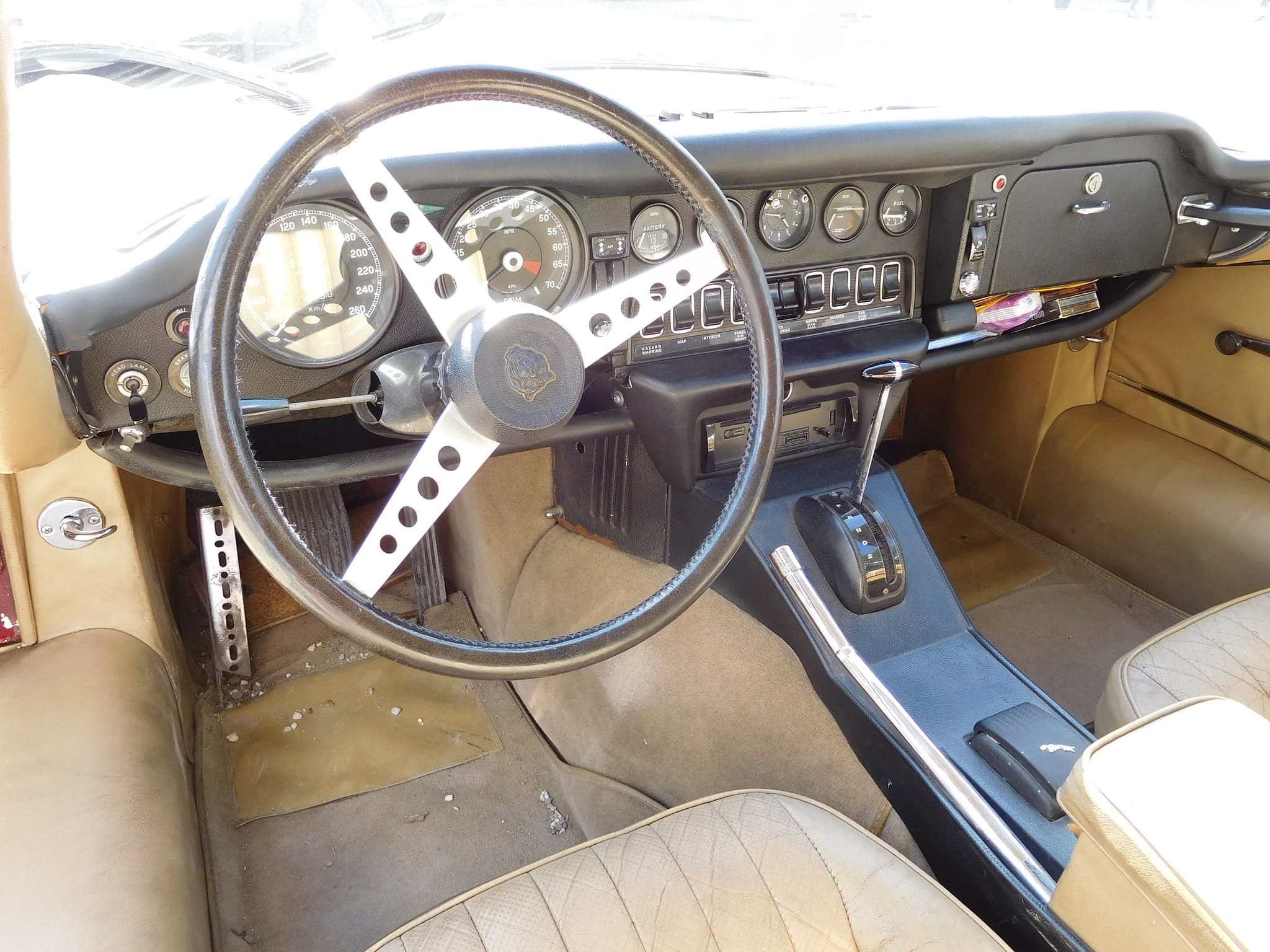
The front of the cabin gained a shelf below the scuttle and remote knobs for the footwell air.source 1source 5
The 2+2 by series
The first 2+2s belonged to the Series 1, with the 4.2 engine, and were built until July 1968, and from 1967 they shared the open headlamps of the cars enthusiasts call "Series 1½". The Series 2 2+2, built from August 1968 to July 1970, had the Series 2's changes and, as Motor Sport noted, a different rake to its windscreen.
In the Series 3, the Jaguar E-Type V12, the 2+2's longer floor became every E-Type's floor, and the roadster was built on it too; the 2+2 was the only closed body left. The first Series 3 cars were mostly 2+2 cars, by our arithmetic on the Heritage Trust's tables, and before the announcement Jenkinson watched lorry-loads of the new coupés setting off for the dealers. He disliked its driving seat, too high and too flat, and Boddy thought the tall windscreen gave a bubble-top effect, but the Series 3 2+2 at last had a ventilation outlet in its tail.
By the XKEdata register's count the 2+2 was a quarter of all E-Types, and three in four had left-hand drive. Some were later turned into roadsters by specialists, Motor Sport noted in 1989, so a car's number, not its body, says what it was built as; Jaguar E-Type Chassis Numbers explains how to read it. The 2+2 had no forerunner among E-Types; its idea lived on in the Series 3 and in the XJ-S of 1975, another closed Jaguar with small rear seats.source 3source 2source 7source 8source 9source 10source 11
Automatic
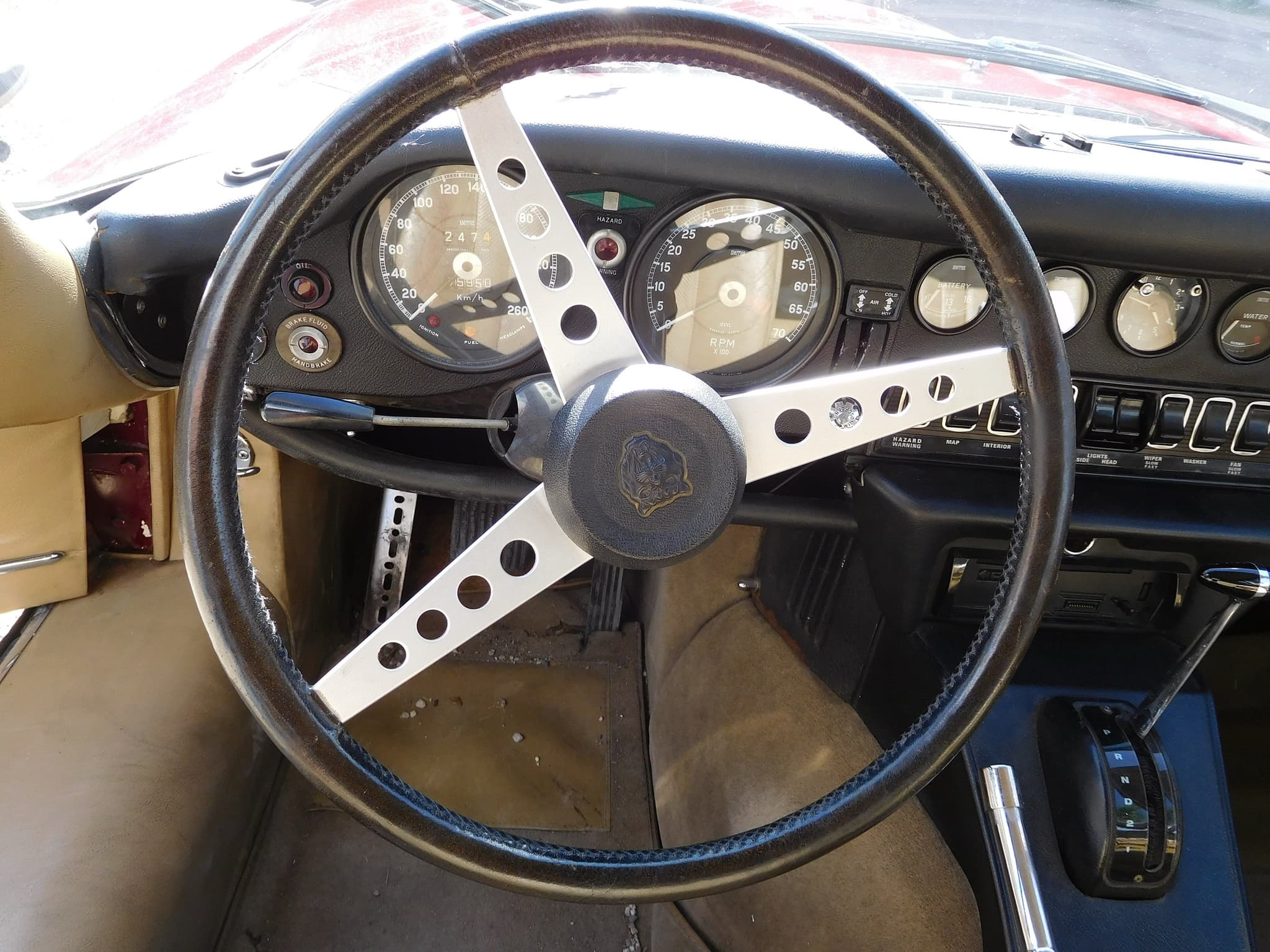
The 2+2's floor was shaped to take an automatic gearbox, and until the Series 3 it was the only E-Type that could have one. It was a three-speed Borg-Warner, the Model 8 by Motor Sport's account and Jaguar's own Series 2 brochure, worked by a lever between the seats whose positions ran, front to back, P, R, N, D2, D1 and L. D1 used all three ratios and D2 started in the second; full throttle gave a kick-down. With it the final drive was 2.88 to 1 against the manual car's 3.07, and Jenkinson found the automatic car slightly over-geared. He was not a convert:
Personally I am not sold on the Borg Warner automatic gearbox, for if you are going to drive the car properly it is anything but automatic, relying on a lot of stirring about by the driver.
He felt the same about the V12's automatic five years later, wanting, with only three ratios, "the one that isn't there". By the Heritage Trust's guide to car numbers, an automatic carries the letters BW after its number, and they are found on 2+2s of the Series 1 and 2 and on every model of the Series 3, where, the Trust says, most cars had the automatic.
How many automatics were built is not published in any source read: the factory's build records, counted by their BW suffixes, would settle it, but no total from them has appeared. A car's own number shows whether it left the factory as one.source 1source 11source 12source 3source 13source 7
Sources
Sources are given as plain text; their addresses are on the sources page.
- Primarymade at the time, by the maker or by people who were there
- Referenceserious later work: clubs, specialists, magazines, books
- Bill Boddy and Denis Jenkinson, "The Jaguar E-type 2+2", Motor Sport, Apr 1966, p. 18, p. 18, the car at Geneva and Henlys; the strike; p. 18, the reasons; the body measured; the interior; "for the price of a Ferrari"; p. 18, the rear seat, the squab and the luggage floor; p. 18, the gearbox, its selector, the axle and Jenkinson's view. Primary
- Bill Boddy, "On the road with the V12 E-type Jaguar", Motor Sport, Jan 1972, p. 36, "added to the E-type range in March 1966"; the Series 2 screen rake; the Series 3 floor pan; the bubble-top. Primary
- Jaguar Daimler Heritage Trust, Research Guide No. 001F: Chassis Number Runs and Change Points by model – Jaguar E-type, Issue 3, January 2023, 4.2 table: the first 2+2 numbers, September and October 1965; Series 3 table, the last; the 2+2 runs in each series; notes: the BW suffix. Primary
- Jaguar Clubs of North America, Series 1 E-Type Judge's Guide (draft), part 1: Intro–Exterior, Draft, version of 21 Jul 2026, introduction: 7 March 1966; the 2+2's wheelbase and cabin height. Reference
- Bill Boddy, "Jaguar E-type 2+2 with manual gearbox", Motor Sport, Jan 1967, p. 22, p. 22, the roof line seen head-on; the fumes; p. 22, the interior. Primary
- Motor Sport, "Jaguar E-type: the end of production and end of an era – but not of a legend", May 1975, p. 29, the 2+2's weight. Primary
- Denis Jenkinson, "Driving the V12 Jaguar", Motor Sport, Apr 1971, p. 64, p. 64, the Series 3 2+2: transporters, ventilation, seat; p. 64, the automatic's three ratios. Primary
- XKEdata (xke.collectordata.com), "Statistics", statistics, 2+2 by series and steering side. Reference
- Chris Cowin, "History: Exporting British cars to the USA – Part Two", AROnline, 31 May 2025, updated 21 Oct 2025, the 1974 model year. Reference
- Jaguar Daimler Heritage Trust, "1975 Jaguar XJ-S V12 Coupé OOM 555R", the XJ-S. Primary
- John Davenport, "Classic cars: Jaguar E-type" ("Back from the dead"), Motor Sport, Oct 1989, p. 62, p. 62, 2+2s converted to roadsters; p. 62, the Model 8. Reference
- Jaguar Cars Ltd, Coventry, Jaguar "E" Type range Series 2 (sales brochure), UK, 10/1968, specification: the automatic transmission. Primary
- Jaguar Daimler Heritage Trust, "1974 Jaguar E-type Series 3 V12 OTS HDU 555N: The Last E-type Built", the Series 3: most cars automatic. Primary