Jaguar E-Type Roadster
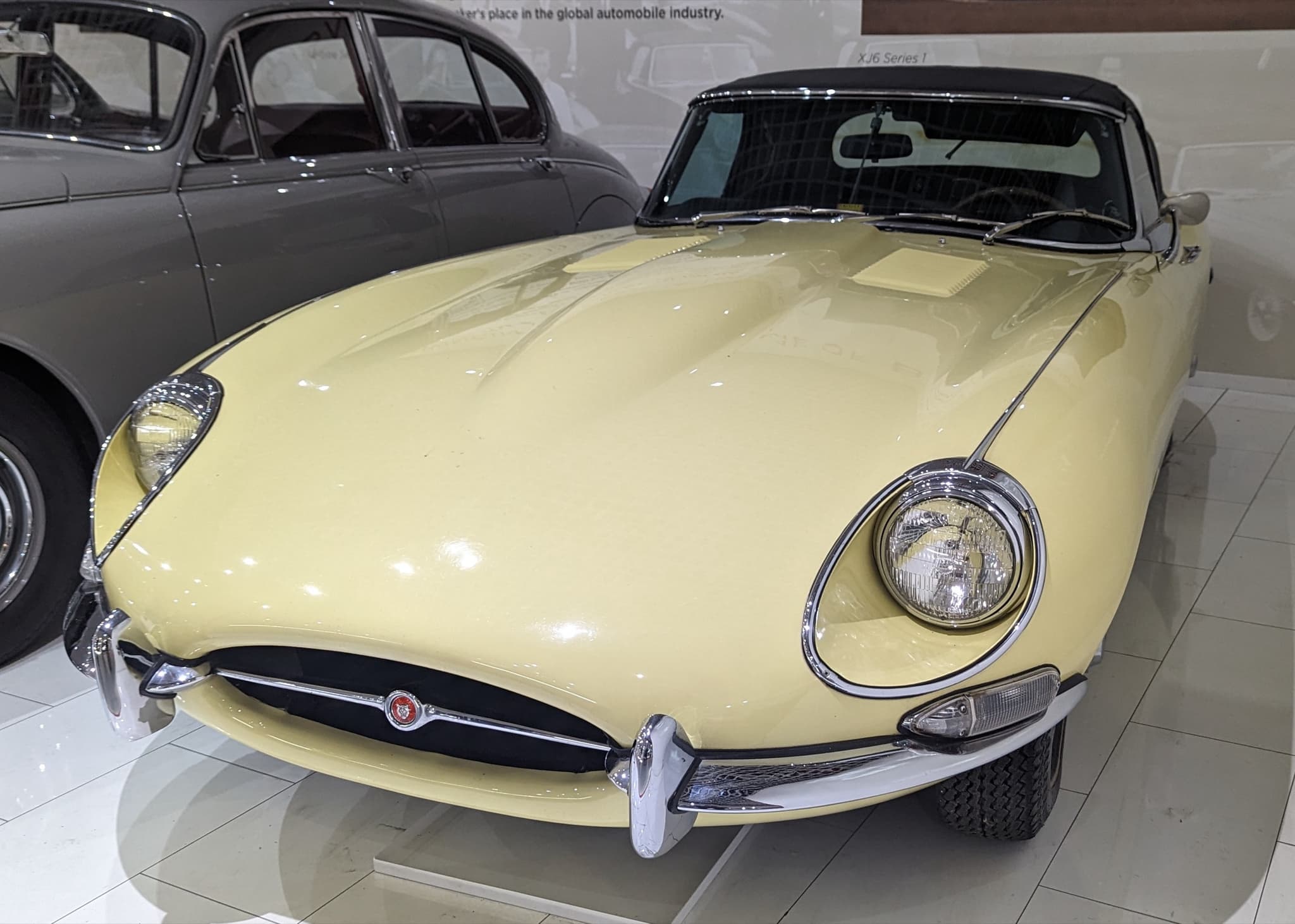
The open E-Type, the convertible or roadster that Jaguar called the Open Two-Seater (OTS): the only body built in all three series, from 1961 to 1974, and the body of the last E-Type of all.
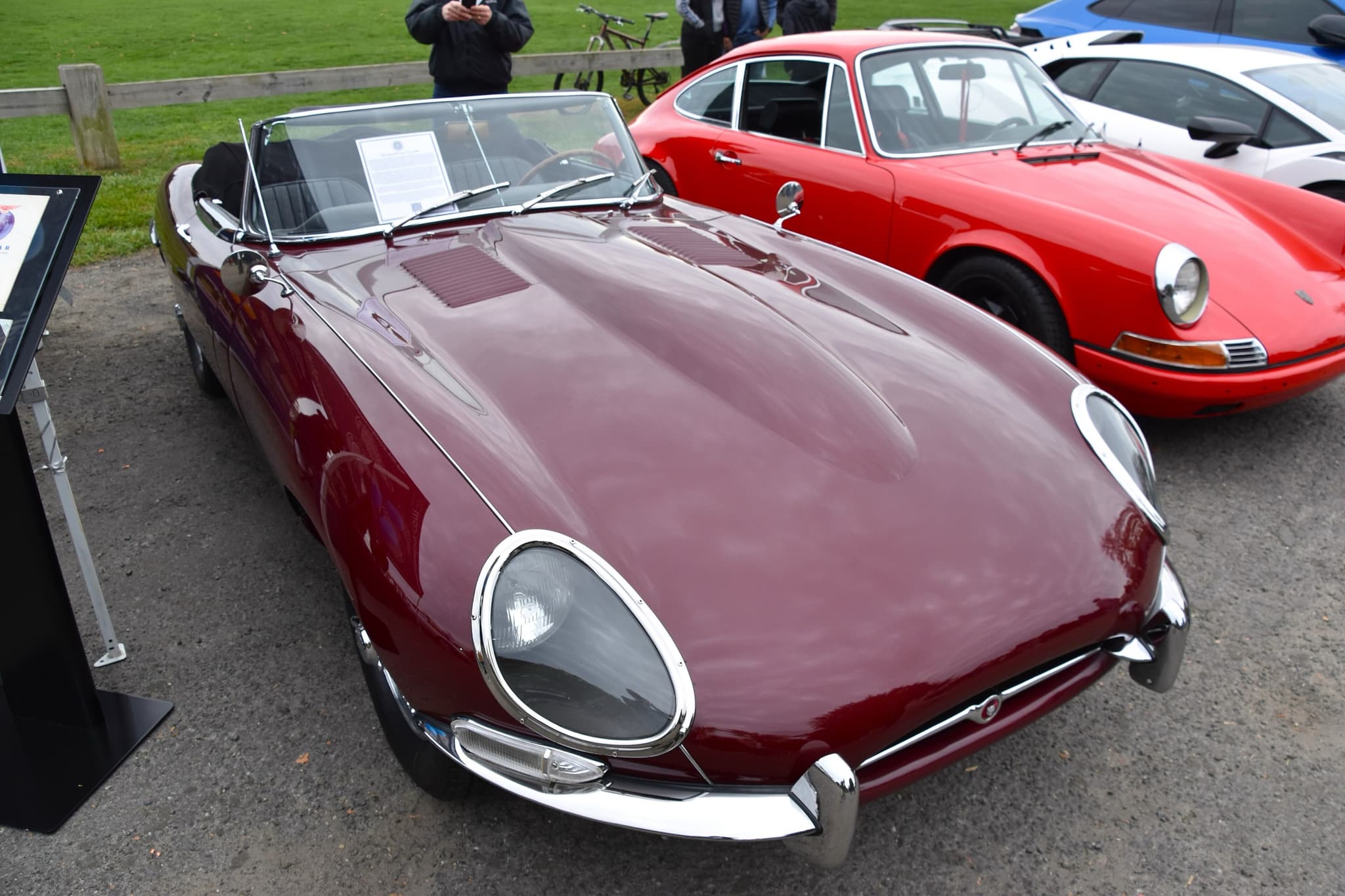
A maroon Series 1 roadster beside an early Porsche 911 at Lime Rock, Connecticut, in 2022.Charles from Port Chester, New York, CC BY 2.0
Jaguar called it the Open Two-Seater, OTS for short. Motor Sport in 1961 wrote "two-seater", and Americans said roadster or, as in AROnline's account of Jaguar's own price list of 1971, convertible. All three words mean the same car: an E-Type with a folding hood (soft top) and two seats. It was the only body built in all three series, it was the most common, at nearly half of all E-Types by the XKEdata register's count, and it was the last: the final E-Types of 1974 were all roadsters.source 1source 2source 3source 4
The roadster by series
The roadster came first in the design. The Jaguar Heritage Trust's historian, François Prins, puts it simply: Malcolm Sayer designed the roadster, while the coupé's shape began with Bob Blake. It also dominated the first year. By the Trust's figures, 1,729 roadsters had been completed by the end of 1961, four for every coupé.
Among them was 77 RW, the green roadster that Norman Dewis drove from Coventry to the Geneva launch overnight and that The Motor road-tested. The Trust, which looks after it, calls it the oldest surviving open E-Type.
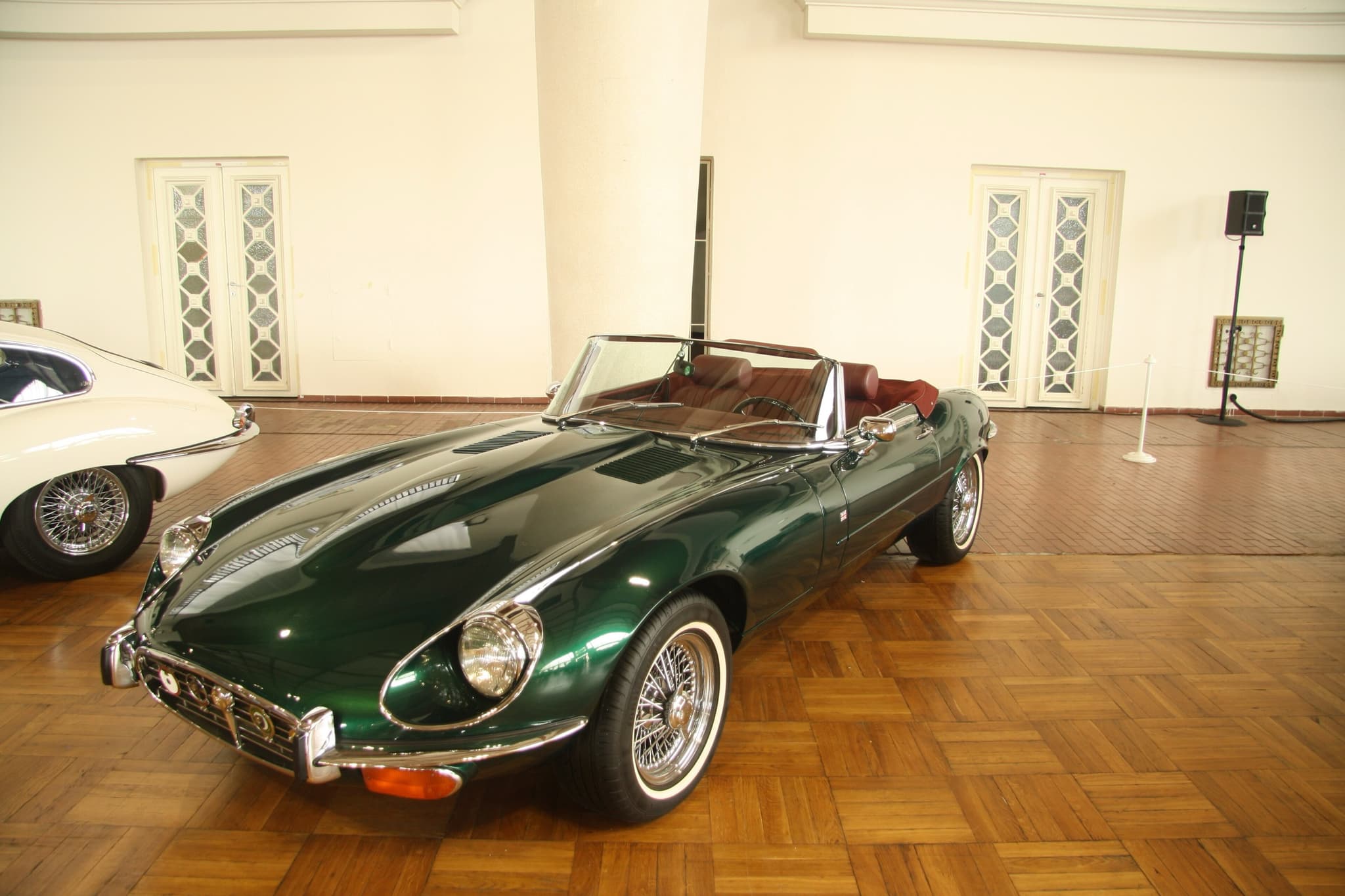
The Series 1 roadster, 3.8 and then 4.2, and the Series 2 were built on the original short wheelbase. With the 4.2 the two-seater gained a lockable boot (trunk). In the Series 3, the Jaguar E-Type V12, the roadster moved to the longer floor of the 2+2, with the 2+2's longer doors, and Denis Jenkinson, driving it for Motor Sport in 1971, found something the open car had never had:
the roadster in the new long wheelbase is interesting as there is now a useful luggage shelf behind the seats and it lifts up to reveal compartments on each side of the transmission tunnel.
The Heritage Trust calls the Series 3 the best E-Type for taller drivers, with much more legroom and headroom. When the 2+2 ended in 1973, the roadster was the only E-Type left. The last 50 were the Commemorative roadsters of June 1974, and the very last of them, built on 12 June 1974, is the last E-Type. In America only the convertible was offered for the 1974 model year.
By the register's count, more than four in five roadsters had left-hand drive. Production figures gives the counts for each series.source 1source 5source 6source 7source 8source 9source 2source 3source 4
Hood, hardtop and the open-car details
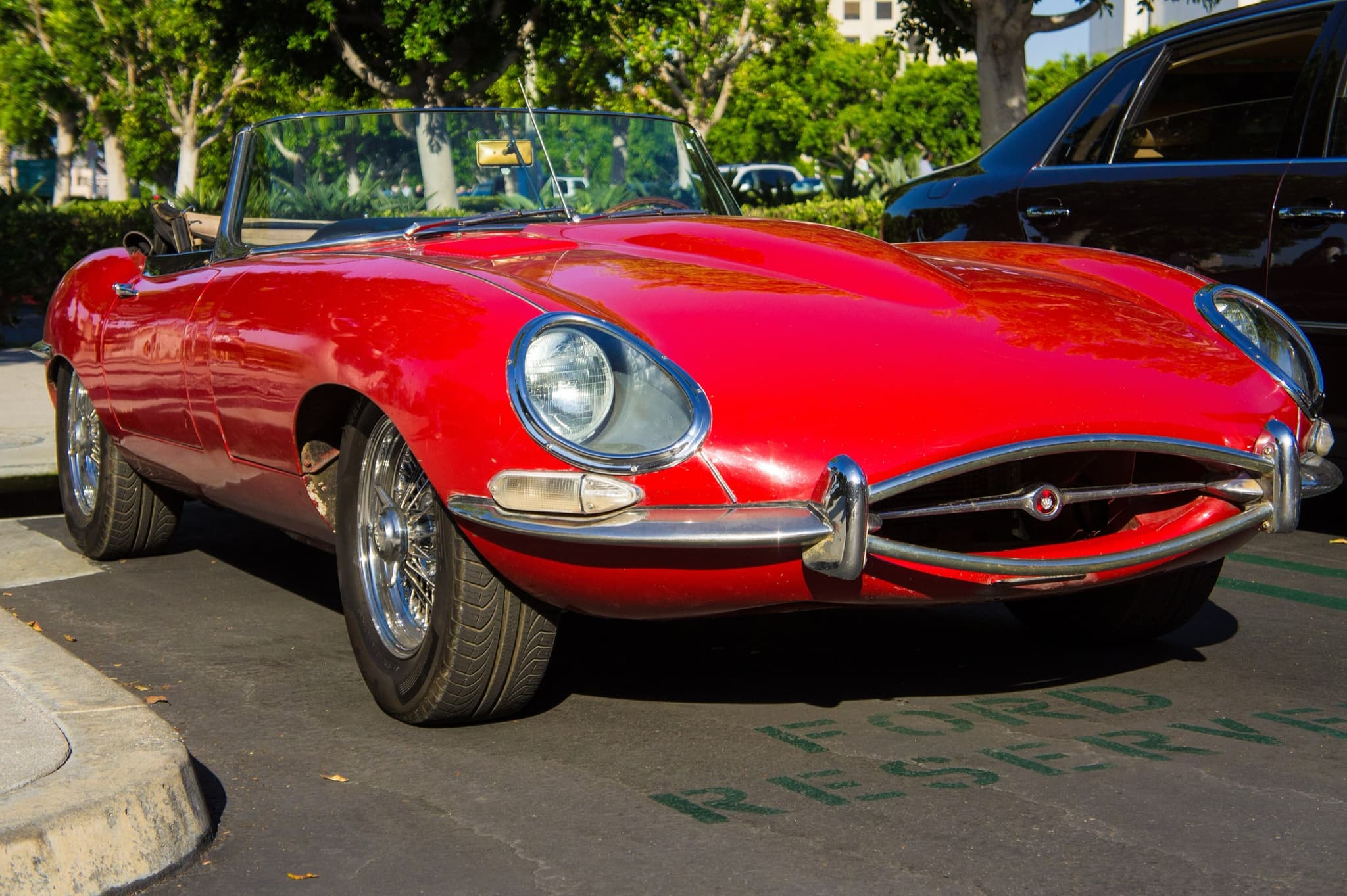
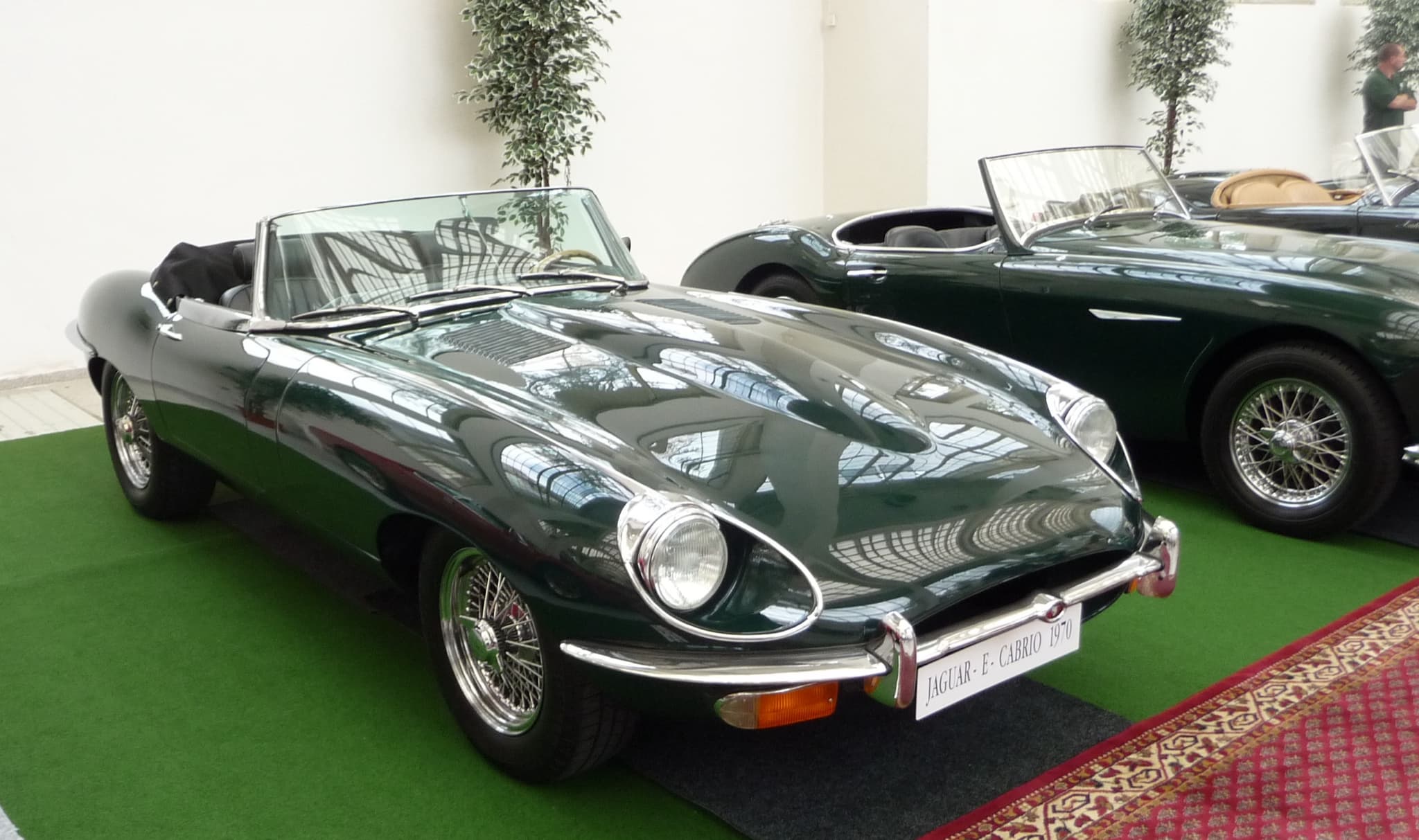
The hood folds away behind the seats. In 1967, by Jaguar's own list of changes, the hoods of the two-seaters were made of plastic in place of canvas.
Jaguar also made a detachable hardtop. The Jaguar Clubs of North America's judges' guide records a fitting kit for the early roadsters, a hardtop of the factory's own from 1961, and its mounting brackets modified in July 1962:
Fiberglass detachable hardtops were provided by Jaguar Cars. The color is believed to be gloss black for all hardtops.
The same guide notes the details that mark an open car: a chrome finisher along the top of each door, modified in October 1961 and again in 1964, and a chrome surround to the rear number plate (license plate); and, like the closed cars, no outside handle on the boot lid. On Motor Sport's 1962 run to Monaco in a 3.8 roadster that lid opened by itself at speed on rough roads, a fault the magazine said was not confined to its car.source 10source 7source 11
Before, after and beside it
The roadster's predecessor was the open XK150, still listed when the E-Type was launched. The history tells how the two overlapped, and what British Leyland said in 1975 when the V12 roadster went out of production.
In America in 1971, AROnline notes, the V12 convertible cost more than either of Triumph's open sports cars, the Stag and the TR6; Jaguar E-Type Rivals sets the E-Type beside its rivals of each period. The open car's first road test was The Motor's, published on 22 March 1961, of 77 RW, the car Dewis drove to Geneva; Jaguar E-Type Review gathers the press of 1961 and after.source 12source 13source 3source 6
Sources
Sources are given as plain text; their addresses are on the sources page.
- Primarymade at the time, by the maker or by people who were there
- Referenceserious later work: clubs, specialists, magazines, books
- Jaguar Daimler Heritage Trust, Research Guide No. 001F: Chassis Number Runs and Change Points by model – Jaguar E-type, Issue 3, January 2023, the Open Two-Seater runs in each series; first and last Open Two-Seater numbers. Primary
- Jaguar Daimler Heritage Trust, "1974 Jaguar E-type Series 3 V12 OTS HDU 555N: The Last E-type Built", "OTS"; the last car; the special run. Primary
- Chris Cowin, "History: Exporting British cars to the USA – Part Two", AROnline, 31 May 2025, updated 21 Oct 2025, 1971: the V12 convertible; the 1974 model year; 1971: American prices against the Triumph Stag and TR6. Reference
- XKEdata (xke.collectordata.com), "Statistics", statistics, totals by body and steering side; statistics, Open Two-Seater by series and steering side. Reference
- François Prins, "Evolution of the E-Type", Jaguar Daimler Heritage Trust, "E-Type Production": roadsters and coupés in 1961; Sayer and the roadster. Reference
- Jaguar Daimler Heritage Trust, "1961 Jaguar E-type 77 RW: The First E-type OTS", 77 RW: the overnight run, *The Motor*'s test, "the oldest surviving open E-type"; *The Motor*, 22 March 1961. Primary
- Bill Boddy, "On the road with the V12 E-type Jaguar", Motor Sport, Jan 1972, p. 36, the 4.2 changes; the Series 3 floor pan and hardtop; the plastic hood of 1967; the lockable boot. Primary
- Denis Jenkinson, "Driving the V12 Jaguar", Motor Sport, Apr 1971, p. 64, p. 64, the longer doors and the luggage shelf. Primary
- Jaguar Daimler Heritage Trust, "E-Type Evolution Exhibition", the Series 3 and taller drivers. Reference
- Jaguar Clubs of North America, Series 1 E-Type Judge's Guide (draft), part 1: Intro–Exterior, Draft, version of 21 Jul 2026, hard-top section (SDB P.64; the fitting kit); door finishers; rear number-plate surround; the boot lid. Reference
- Bill Boddy, "By E-Type To Monaco", Motor Sport, Jul 1962, p. 59, p. 59, the boot lid at speed. Primary
- Bill Boddy, "The New 3.8-Litre Jaguar E-Type G.T.", Motor Sport, Apr 1961, p. 35, p. 35, the XK150 range at the launch. Primary
- Clive Richardson, "The Jaguar XJ-S" ("A New Breed of Cat"), Motor Sport, Oct 1975, p. 26, p. 26, Keith Hopkins on the V12 roadster. Primary