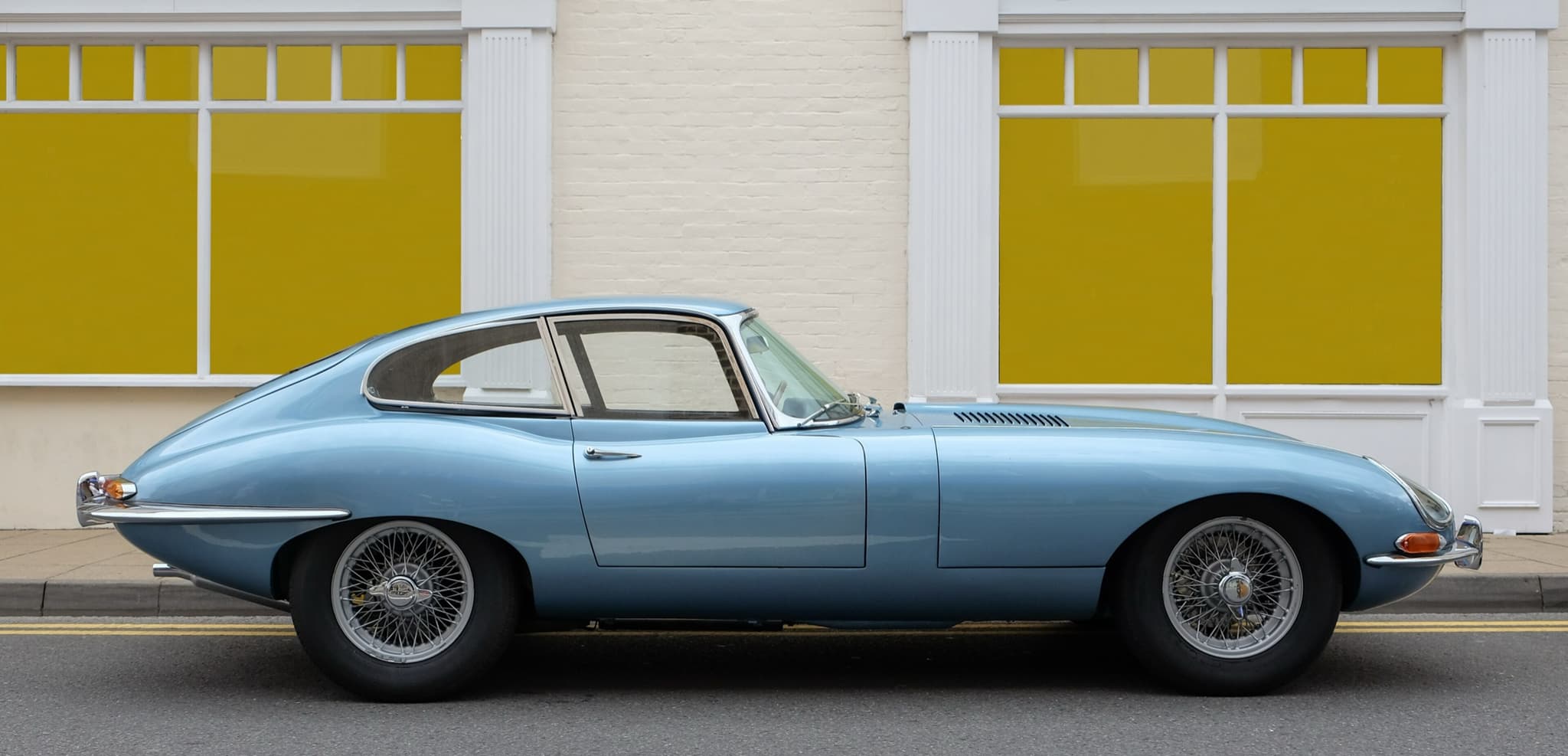
Jaguar E-Type Coupe
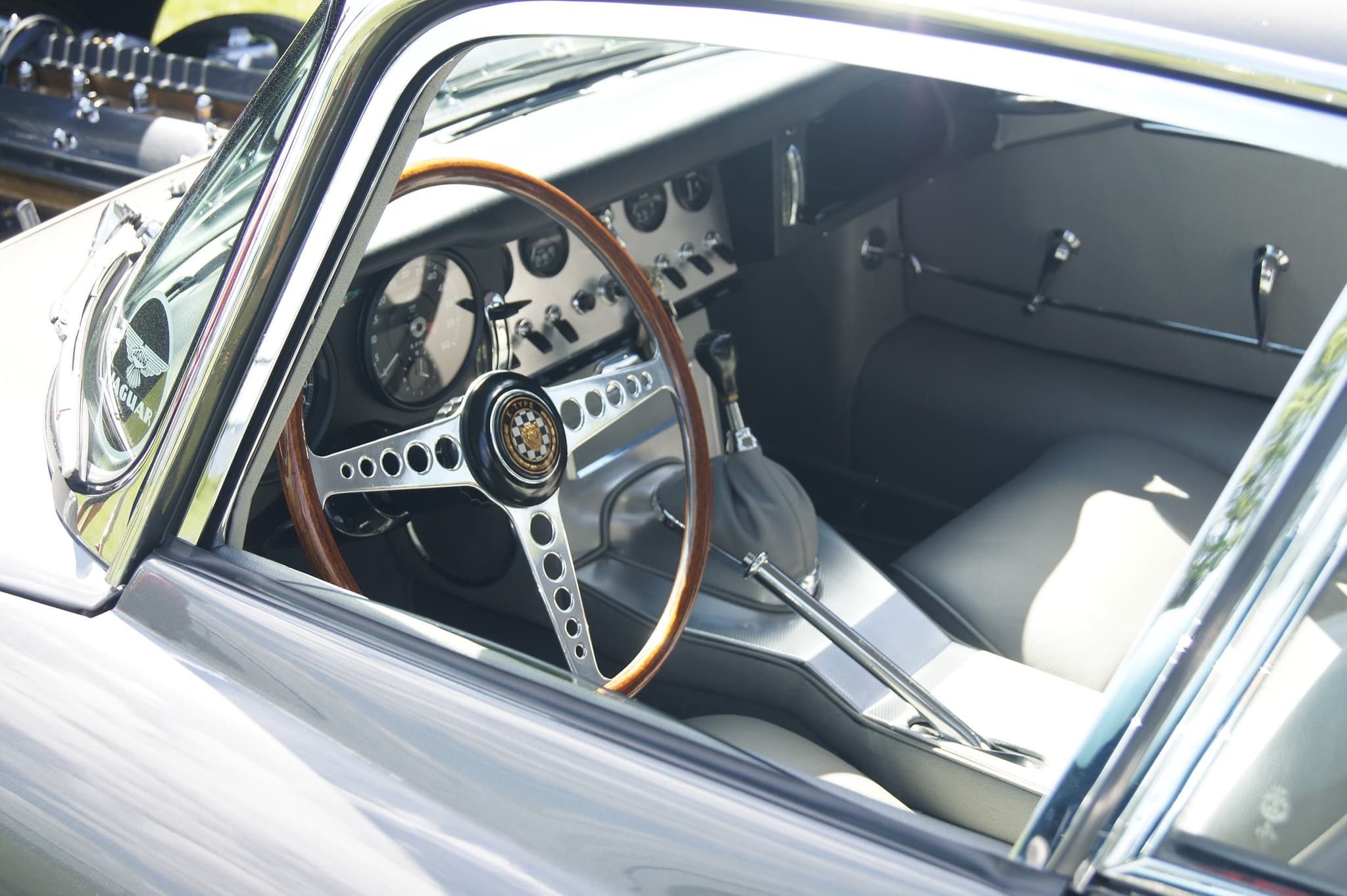
The two-seat E-Type with a fixed roof and a side-hinged rear door, which Jaguar called the Fixed-head Coupé (FHC): built from 1961 to 1970 in the Series 1 and Series 2. There was no two-seat coupé in the Series 3; its only closed car was the longer 2+2.
A Series 1 coupé that its photographer dates to 1964, in profile at the kerb in August 2016.DeFacto, CC BY-SA 4.0
The fixed-head coupé was the E-Type that Geneva saw first in March 1961. Jaguar called it the Fixed-head Coupé, FHC for short, and built it on the original short wheelbase from March 1961 to October 1970, in the Series 1, with the 3.8 and then the 4.2, and in the Series 2. By the XKEdata register's count it was a little over a quarter of all E-Types. Then it stopped: in the Series 3, as the Jaguar Heritage Trust puts it, the two-seat coupé was dropped.source 1source 2source 3source 4
How the coupé came about
The Jaguar Heritage Trust calls the open car Malcolm Sayer's work, and it tells the coupé's story twice, in two slightly different ways. In one, Bob Blake, who had built the body of the experimental E1A, made a mock-up of a coupé roof and a big rear door, and Sir William Lyons liked it. In the other, Lyons asked for a coupé from the start:
However, Sir William Lyons insisted that there should also be a fixed-head coupé version of the car. This design was created by Bob Blake, and became Sir William's favourite E-type.
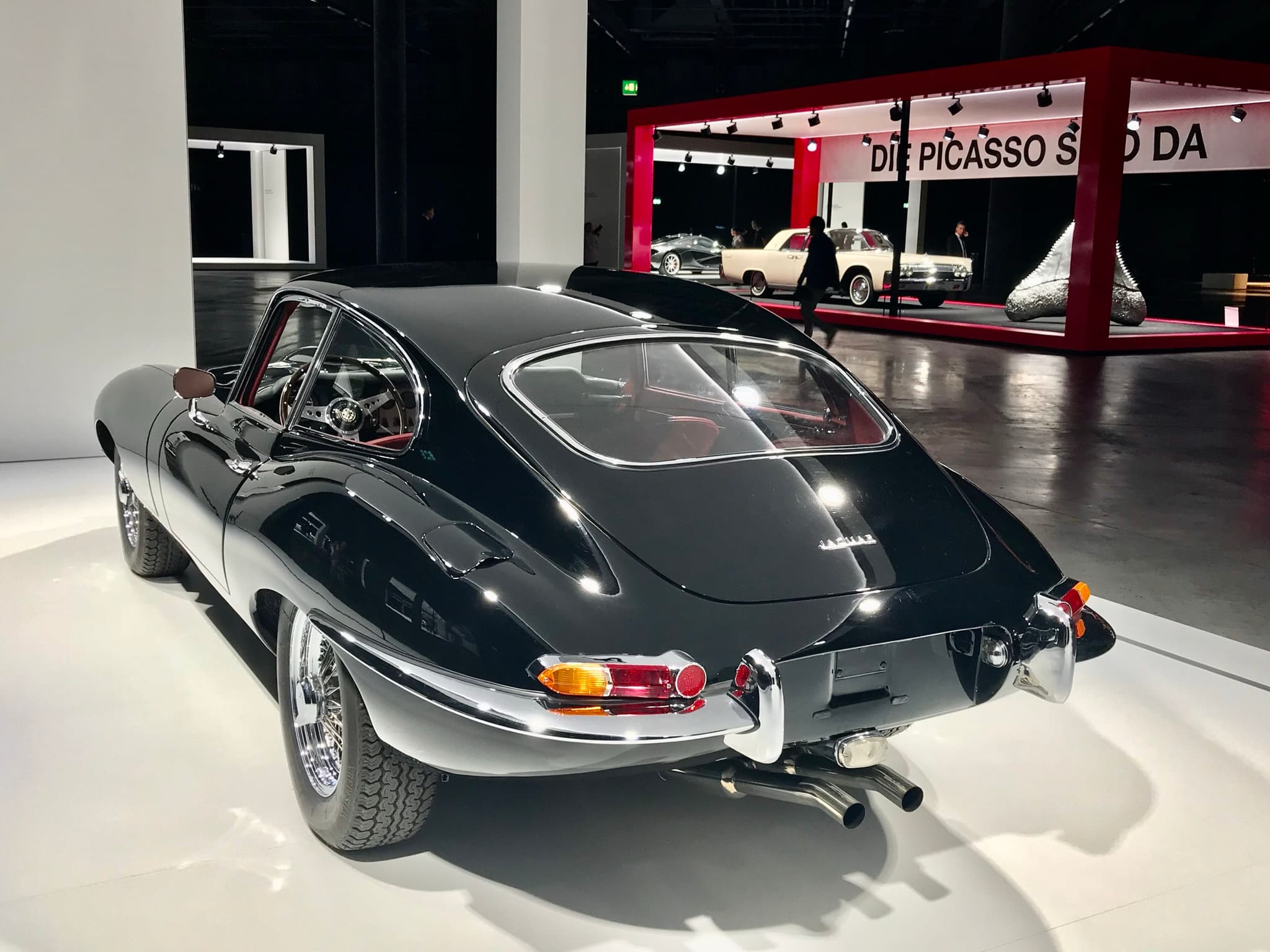
Lyons wanted a coupé, and Blake's mock-up gave it its shape: both of the Trust's tellings fit. The fixed-head coupé's roof and tailgate began as Bob Blake's mock-up, which Lyons approved and refined; Sayer then drew the production shape. All of the evidence for Blake's part comes from the Trust. The mock-up gave the coupé a rear door hinged at the side, opening onto a luggage platform behind the seats.
By July 1960 two of the four prototypes on test were coupés, and a prototype coupé, 885002, survived the testing to become the press car 9600 HP. Both cars Jaguar sent to the Geneva launch were coupés, the display car 885005 and 9600 HP, and the open 77 RW joined them only when Lyons sent for it overnight. The Trust adds that the Geneva display coupé had been built as a roadster and converted by Blake. The Autocar's first road test was of 9600 HP. The 1961 Jaguar E-Type tells the launch.source 5source 4source 6source 7source 8source 9
The coupé by series
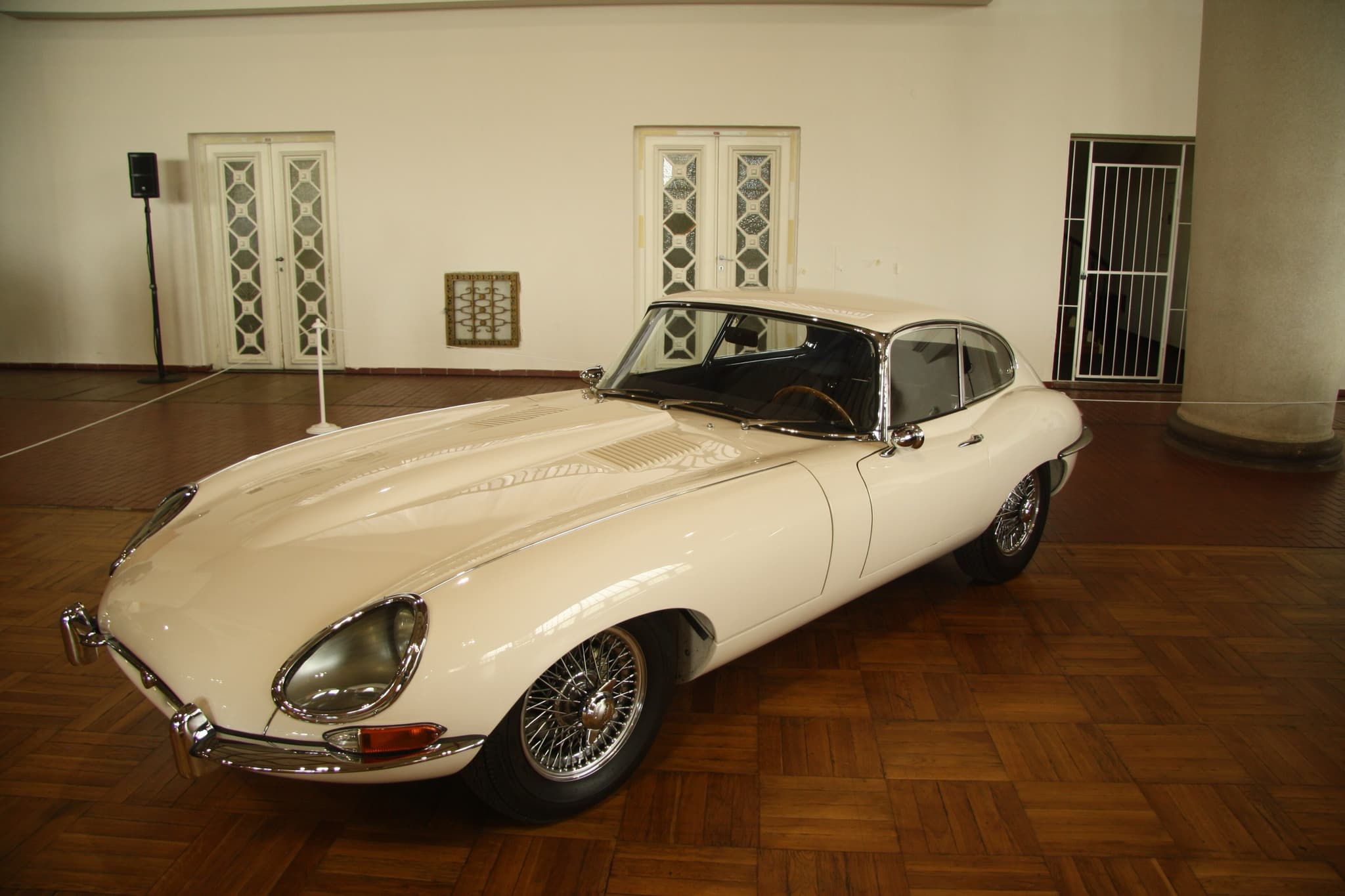
The first coupés were slow to come. By the Heritage Trust's figures only 431 had been completed by the end of 1961, a quarter as many as the roadsters, and the first right-hand-drive coupé, 860001, was built in July 1961, four months after the first left-hand-drive one. At home, though, the coupé was the favourite. The Trust records that 1,559 of the 3.8 coupés were sold in Britain, where the coupé was more popular than the open car, and the register counts nearly twice as many right-hand-drive 3.8 coupés as right-hand-drive 3.8 roadsters.
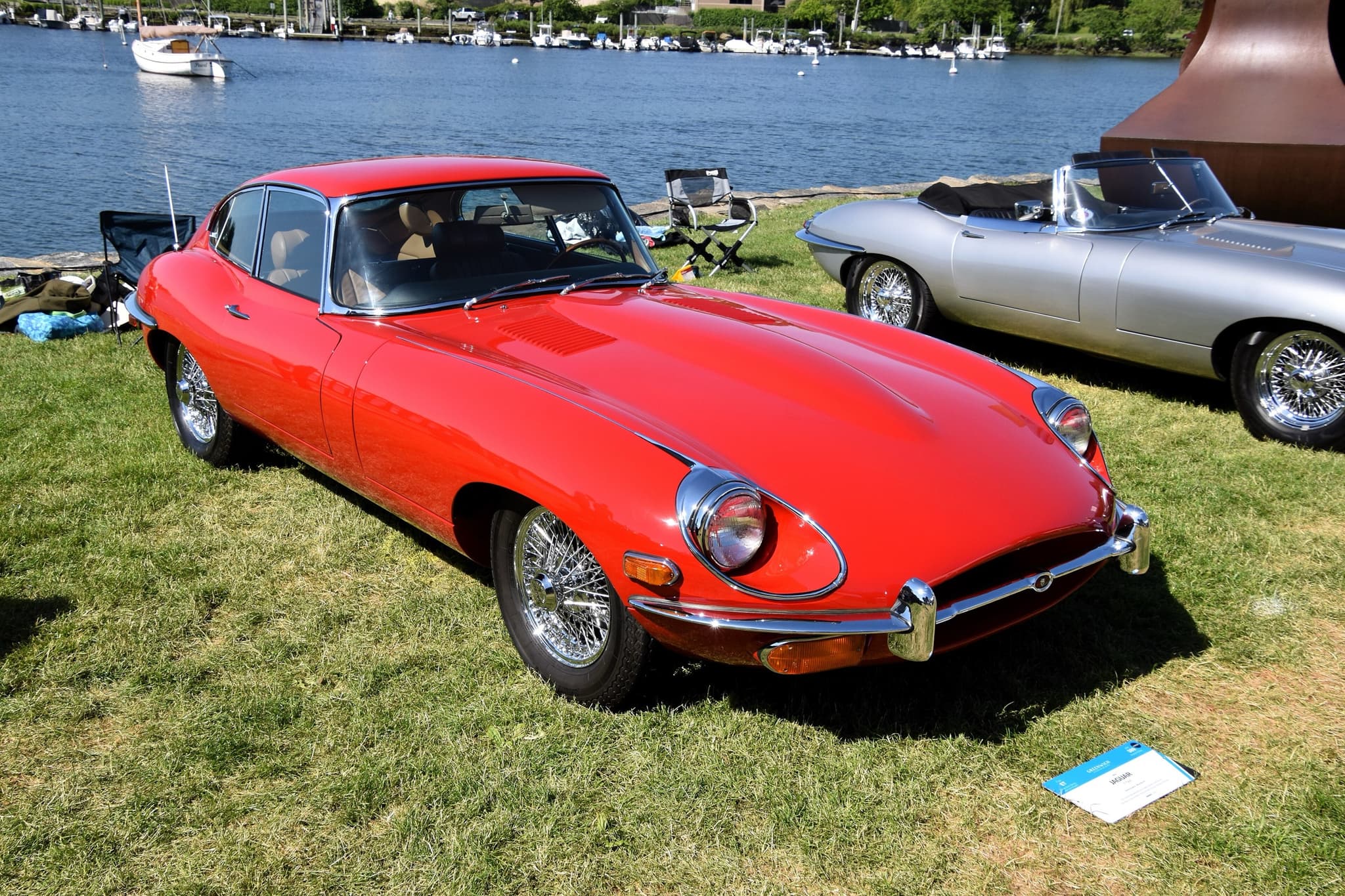
The Series 1 coupé changed with the rest of the range: the 4.2 engine and its new gearbox (transmission) from 1964, covered boot (trunk) hinges, and from March 1966 a wider-ratio gearbox shared with the new 2+2. Motor Sport's long road test of a 4.2 coupé in January 1965 found the car close to perfect, and Denis Jenkinson kept a 4.2 coupé for two years and wrote about it in 1967. The Series 2 coupé of 1968 carried the open headlamps, larger mouth and lower lamps of the American-led changes; the last were built in September 1970 with right-hand drive and October 1970 with left. About three in four coupés had left-hand drive.
Coupé details
A few details mark a coupé. The Jaguar Clubs of North America's judges' guide notes that it has no chrome strip along the top of the doors, unlike the roadster, but complete chrome surrounds to its side windows, and no chrome surround to the rear number plate (license plate). A heated rear window was an extra in the first year, and the early 3.8 coupés have a squarer fuel-filler lid than the later ones, whose lids look more pointed.
One complaint followed the coupé through its life, and Jenkinson, driving the Series 3 2+2 in 1971, greeted the cure:
Having built the fixed-head coupé since 1961 with no way for hot air to get out of the tail, apart from opening rear quarter windows which cause an intolerable wind roar at 100 m.p.h., Jaguar have at last built in an air-flow system with an outlet grille on the tail. They do learn in Coventry, albeit rather slowly!
The coupé has a weak point of its own, Motor Sport noted in 1989: where the outer rear wing (fender) meets the inner wing, the wheel arch can rot away, and with it the underside of the rear bumper's leading edge. The buyers guide covers the rest.
Before the E-Type, Jaguar's closed sports car was the XK150 fixed-head coupé; after it came the XJ-S of 1975, and the history tells both. The coupé's period rivals are on Jaguar E-Type Rivals.source 7source 10source 3source 13
Sources
Sources are given as plain text; their addresses are on the sources page.
- Primarymade at the time, by the maker or by people who were there
- Referenceserious later work: clubs, specialists, magazines, books
- Jaguar Daimler Heritage Trust, Research Guide No. 001F: Chassis Number Runs and Change Points by model – Jaguar E-type, Issue 3, January 2023, the Fixed Head Coupé runs, 3.8, 4.2 and Series 2; first and last coupé numbers. Primary
- XKEdata (xke.collectordata.com), "Statistics", statistics, Fixed Head Coupé by series and steering side; statistics, coupés by series and steering side. Reference
- Denis Jenkinson, "Driving the V12 Jaguar", Motor Sport, Apr 1971, p. 64, p. 64, the short-wheelbase car finished; p. 64, the coupé's ventilation. Primary
- Jaguar Daimler Heritage Trust, "E-Type Evolution Exhibition", the Series 3: the two-seat coupé dropped; Blake and Lyons; the Geneva show coupé. Reference
- François Prins, "Evolution of the E-Type", Jaguar Daimler Heritage Trust, "The Next Prototypes": the coupé prototypes, Blake's mock-up, 885002; "E-Type Production": coupés in 1961. Reference
- Jaguar Daimler Heritage Trust, "1963 Jaguar E-type Series 1 Coupé YKE 374A", Lyons and the coupé; the home market; the 3.8 coupés and the home market. Primary
- Jaguar Clubs of North America, Series 1 E-Type Judge's Guide (draft), part 1: Intro–Exterior, Draft, version of 21 Jul 2026, introduction: the Geneva cars; the door and window trim, the rear window, the fuel-filler lid and the number-plate surround. Reference
- Jaguar Daimler Heritage Trust, "1961 Jaguar E-type 77 RW: The First E-type OTS", the two demonstrators. Primary
- Motor Sport, "Jaguar E-type: the end of production and end of an era – but not of a legend", May 1975, p. 29, *The Autocar*'s test of 9600 HP. Primary
- Bill Boddy, "On the road with the V12 E-type Jaguar", Motor Sport, Jan 1972, p. 36, the 4.2 changes; the wider-ratio gearbox of 1966; the heated rear window; the covered boot hinges. Primary
- Motor Sport, "The 4.2-Litre Jaguar E-type" ("A lengthy road test of the 150 m.p.h. E-Type"), Jan 1965, p. 23, p. 23, the 4.2 coupé tested. Primary
- Denis Jenkinson, "Two years with the Jaguar E-type", Motor Sport, Apr 1967, p. 22, p. 22, two years with a 4.2 coupé. Primary
- William Kimberley, "The Jaguar E-Type 3.8, 4.2 & V12", Motor Sport, Apr 1989, p. 81, p. 81, the coupé's rear wings. Reference